Easy Camping Meals For Groups
easy camping meals for groups
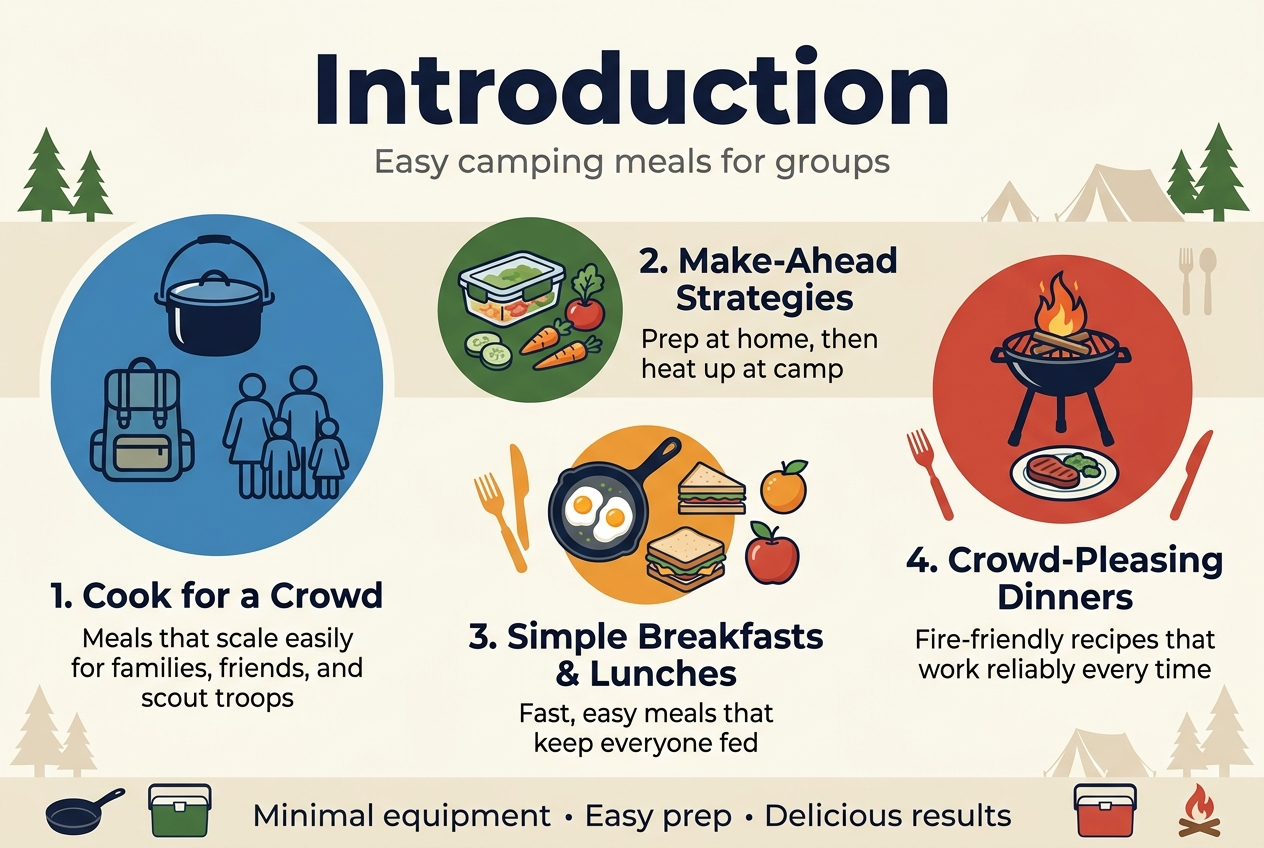
Planning easy camping meals for groups can make or break your outdoor adventure. This guide is for families, friend groups, scout troops, and anyone cooking for multiple hungry campers who want delicious food without the stress.
Feeding a crowd at the campsite doesn’t have to mean hours of prep work or complicated recipes. The key is choosing meals that scale up easily, require minimal equipment, and still taste amazing after a long day of hiking or swimming.
We’ll cover make-ahead strategies that let you prep at home and simply heat up at camp, plus simple breakfast and lunch ideas that keep everyone fed without fuss. You’ll also discover crowd-pleasing dinner recipes designed specifically for large groups and fire-friendly cooking methods that work reliably every time.
Make-Ahead Meals That Save Time and Effort
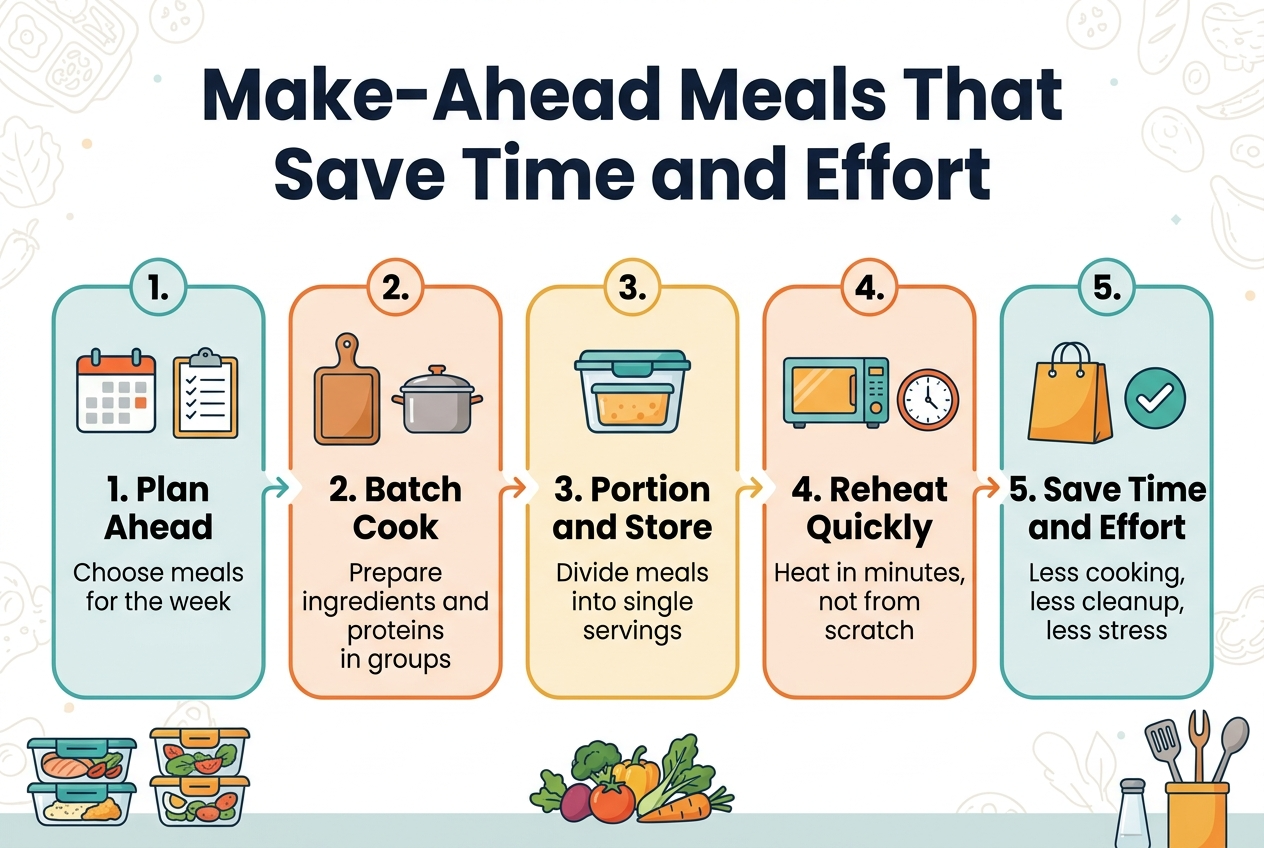
Prepare freezer breakfast burritos at home for easy reheating
Breakfast burritos are one of the most convenient make-ahead camping meals that can feed your entire group with minimal effort at the campsite. These handheld meals eliminate the need for dishes while providing a filling, customizable breakfast that everyone will enjoy.
To prepare make-ahead campfire burritos, start with 8 burrito-sized flour tortillas (12-inch works best). Soften them in the microwave wrapped in a damp paper towel for 30 seconds to make folding easier. Create a filling mixture using 2 cups of cooked Spanish rice (cooled), 2 cans of drained and rinsed black beans, 2 cups of chopped bell peppers, 2 cups of shredded cheddar cheese, 3 thinly sliced scallions, and ½ cup of mild chunky salsa.
Divide the mixture evenly among the tortillas, then wrap each burrito by folding the sides up first and rolling tightly. Wrap each one individually in foil and store them in a resealable plastic bag in the freezer until your camping trip.
At the campsite, warm the burritos (still wrapped in foil) on a grate set over your campfire for 20 minutes if thawed, or 30 minutes if frozen, turning them frequently to ensure even heating. The result is a hot, melty breakfast that requires zero preparation at camp.
Create custom oatmeal mixes with dried fruits and spices
Custom oatmeal mixes offer an excellent way to provide nutritious, warming breakfasts that can be tailored to your group’s preferences while requiring minimal campsite preparation time.
Baked oatmeal cups represent one of the most versatile make-ahead options, as they can be prepared with various flavor combinations before your trip. These portable breakfast cups use healthy, simple ingredients and can be customized with different mix-ins like dried fruits, nuts, and spices. The beauty of this approach lies in creating two to three different flavor variations, allowing each person to select their preferred option.
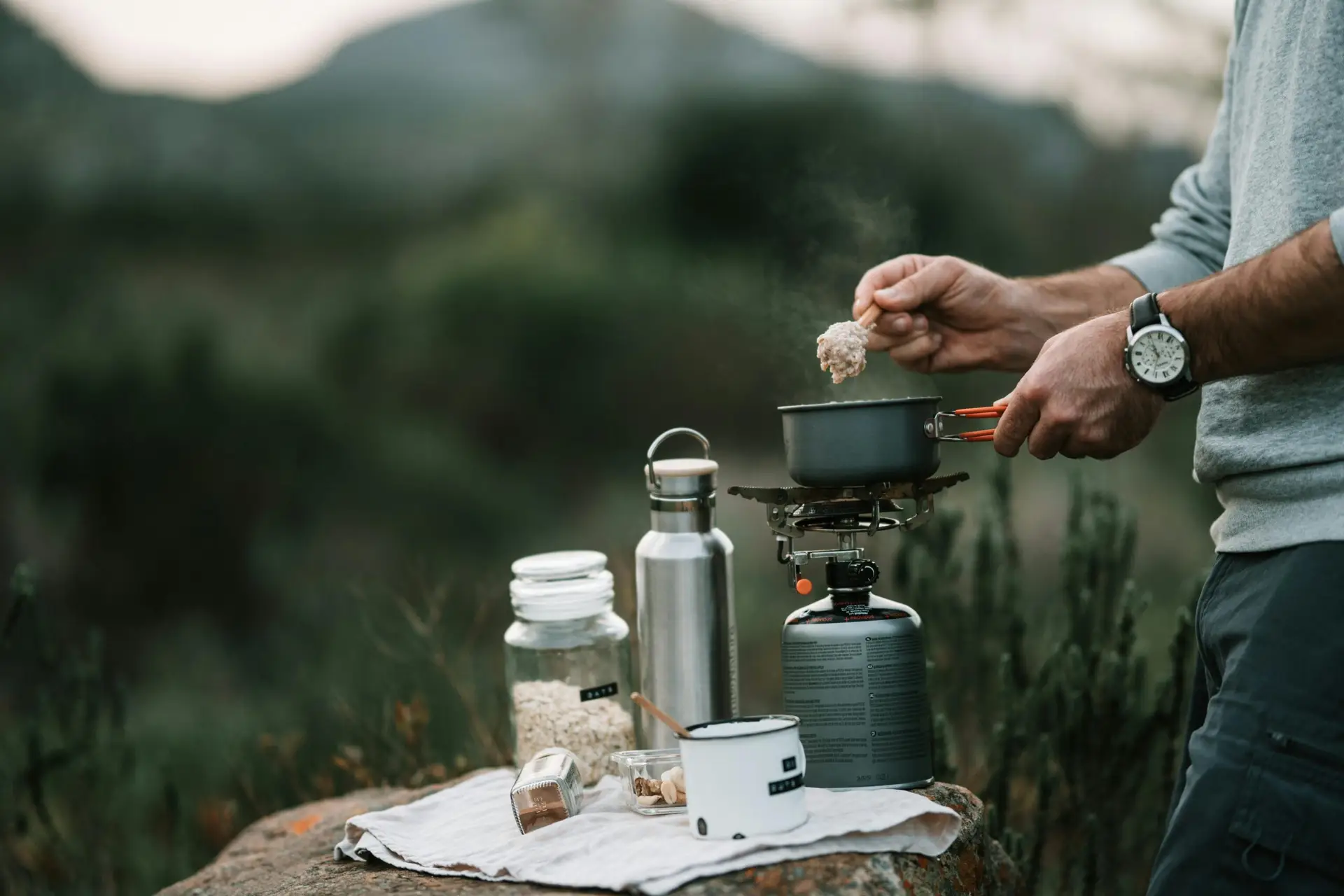
For an even simpler approach, consider preparing dry oatmeal mixes at home by combining rolled oats with your choice of dried cranberries, chopped walnuts, cinnamon, and a touch of brown sugar. Package these custom blends in individual serving containers or larger family-sized portions. At the campsite, simply add hot water or milk heated over your camp stove or campfire.
The pumpkin spice variation proves particularly popular, combining whole wheat flour, pumpkin pie spice, and natural sweeteners. These oatmeal cups can be eaten cold straight from the container or warmed in aluminum foil over the campfire coals. This flexibility makes them perfect for mornings when you want to get moving quickly without sacrificing a nutritious start to your day.
Make hard-boiled eggs in advance for quick protein
Hard-boiled eggs serve as an incredibly versatile protein source that can enhance multiple meals throughout your camping trip while requiring zero cooking time at the campsite.
Preparing a batch of hard-boiled eggs before departure provides your group with ready-to-eat protein that works perfectly for breakfast alongside other camp foods, as additions to trail lunches, or as quick snacks between activities. The eggs store well in your cooler for several days and can be kept refrigerated rather than frozen, which helps maintain their ideal texture.
Consider incorporating these pre-cooked eggs into other make-ahead recipes. For instance, they work excellently in baked egg muffins, which function like handheld omelets and can be customized with various mix-ins. These egg muffins should be kept refrigerated rather than frozen, as eggs can develop an undesirable texture once thawed.
Another innovative approach involves cracking eggs into large-mouth bottles for easy transport and reduced mess at your campsite. This method works particularly well when you plan to use eggs for cooking other dishes, as it eliminates the need to crack and dispose of shells while camping.
The protein boost from hard-boiled eggs helps sustain energy levels during active camping days, making them an essential component of any group camping meal strategy.
Pack pre-made trail mix and granola clusters for snacking
Trail mix and granola clusters provide essential energy for active camping days while offering endless customization possibilities to accommodate different dietary preferences within your group.
Creating homemade trail mix allows you to control ingredients and costs while ensuring everyone in your group enjoys the combination. A particularly popular option is Maple Cinnamon Trail Mix, which combines 1 cup each of pumpkin seeds, chopped walnuts, and raw almonds with 3 tablespoons of maple syrup and 1½ teaspoons of salt. After baking at 350°F for 10 minutes and cooling, add 1 cup of dried cranberries for the perfect balance of protein, healthy fats, and natural sweetness.
This trail mix serves multiple purposes beyond snacking – it can be sprinkled over yogurt for breakfast or mixed with milk for a quick camping cereal. Dividing the finished mix into individual baggies makes distribution easy and helps with portion control during hikes or camp activities.
Pre-made granola clusters offer similar benefits with different textures and flavors. These can be prepared in large batches at home, stored in airtight containers, and portioned out as needed. The combination of nuts, seeds, dried fruits, and natural sweeteners provides sustained energy that’s crucial for outdoor activities.
Having these ready-to-eat snacks available prevents hunger-driven decisions that might derail your meal planning and ensures your group maintains energy levels throughout your camping adventure.
Simple Breakfast Ideas to Start Your Day Right
One-pot breakfast hash with kielbasa and vegetables
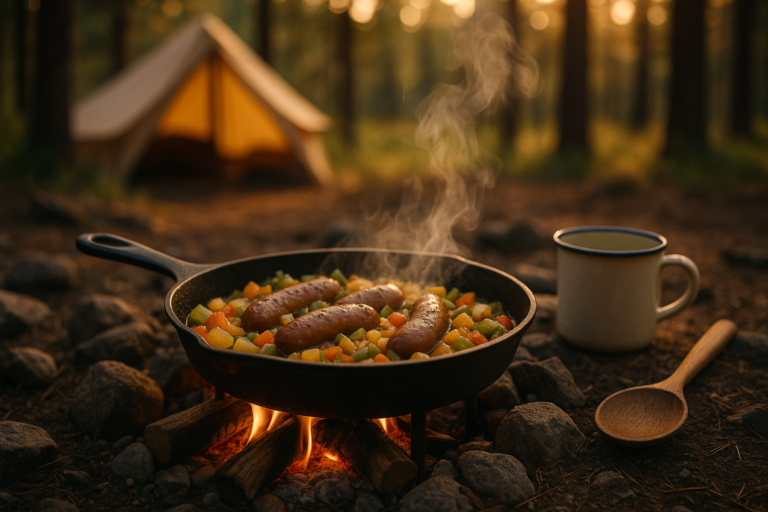
Now that we have covered make-ahead meal strategies, let’s dive into hearty breakfast options that will fuel your group for the day ahead. A one-pot breakfast hash combines the convenience of minimal cleanup with maximum flavor and nutrition. Start by heating oil in a large cast iron skillet or camping pan over your camp stove or fire grate. Add diced kielbasa sausage and cook until slightly browned and heated through. The smoky, savory flavors of kielbasa provide an excellent protein base that pairs beautifully with vegetables.
Next, add diced potatoes to the pan – you can pre-cook these at home to save time, or use canned potatoes for ultra-quick preparation. Include chopped onions, bell peppers, and any other vegetables your group enjoys. Spinach and mushrooms work particularly well in this versatile dish. Season with salt, pepper, and your favorite camping spices. Cook everything together, stirring occasionally, until the vegetables are tender and the potatoes are golden brown. This one-pot wonder feeds a large group easily and requires minimal preparation.
Stuffed French toast for a decadent morning treat
French toast transforms ordinary camping breakfasts into something special, and stuffed versions take this classic to the next level. Begin by whisking together eggs, milk, and cinnamon in a shallow bowl – these are the essential components for perfect French toast batter. The beauty of this camping breakfast lies in its simplicity and the fact that it feels indulgent while remaining achievable with basic camp cooking equipment.
For the stuffing, cream cheese works wonderfully as a rich filling between two slices of bread. You can enhance this with fresh berries if available, or keep it simple with just the creamy cheese center. Dip the assembled sandwiches in the egg mixture, ensuring both sides are well-coated. Cook in a buttered pan over medium heat until golden brown on both sides and heated through. The result is a crispy exterior giving way to a warm, creamy center that will have your entire group asking for seconds. Serve with maple syrup and butter for the complete experience.
Campfire bacon and breakfast sandwiches
Previously, I’ve mentioned the versatility of breakfast sandwiches, and they truly shine in group camping scenarios. The ultimate breakfast sandwich combines fried eggs, melted cheddar cheese, bacon, and green onions – creating a meal that can be made with just one pan. This efficiency is crucial when cooking for multiple people with limited equipment.
Start by cooking bacon in your pan until crispy, then set aside while keeping the rendered fat in the pan for cooking eggs. Crack eggs directly into the bacon fat and cook to your group’s preference. Meanwhile, toast bread slices over the fire or on a grill grate for that authentic camping flavor. Assemble sandwiches with the cooked bacon, eggs, cheese, and fresh green onions. The combination of textures and flavors creates a satisfying meal that provides sustained energy for outdoor activities.
Easy chilaquiles that come together quickly
With this in mind, next we’ll explore a breakfast option that brings exciting flavors to your camping menu. Chilaquiles offer a delicious way to use simple ingredients while creating something that feels special and different from typical camping fare. While not explicitly detailed in traditional camping recipes, this dish adapts beautifully to outdoor cooking with minimal ingredients and preparation.
The base involves scrambled eggs cooked with peppers and onions, similar to breakfast tacos but presented differently. Add cheese generously and incorporate any available vegetables from your cooler. The key is customization – each camper can add their preferred toppings like avocado, hot sauce, or additional cheese. This flexibility makes chilaquiles perfect for groups with varying taste preferences, ensuring everyone starts their camping day satisfied and ready for adventure.
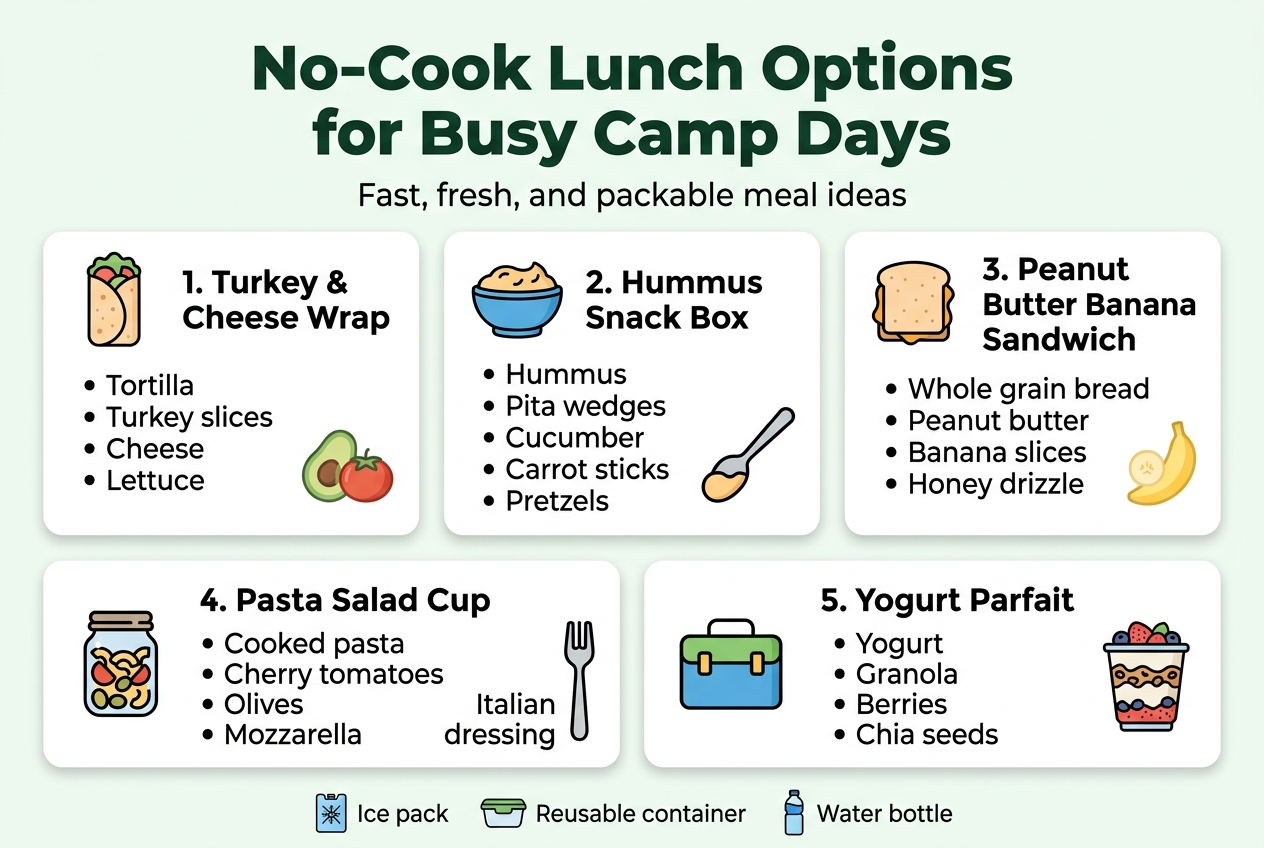
No-Cook Lunch Options for Busy Camp Days
Colorful veggie pinwheels with cream cheese
Pinwheel sandwiches offer a fun twist on traditional lunch options while providing an easy way to pack plenty of vegetables into a single meal. These rolled delights are perfect for sharing among group members and create visually appealing portions that both kids and adults enjoy.
To create these colorful pinwheels, spread cream cheese evenly across a large tortilla, leaving about half an inch border around the edges. Layer your choice of fresh vegetables such as bell peppers, cucumbers, tomatoes, and lettuce across the surface. The key is using vegetables that provide good crunch and vibrant colors while holding their shape when rolled.
Roll the tortilla tightly from one end to the other, ensuring the filling stays secure. Wrap the completed roll in plastic wrap or aluminum foil and refrigerate for at least 30 minutes before slicing. This chilling time helps the pinwheels maintain their shape when cut into bite-sized pieces.
For group camping, consider preparing multiple varieties with different vegetable combinations to accommodate various preferences. Club-style pinwheels can include traditional sandwich ingredients rolled into the same format, providing familiar flavors in a new presentation.
Hearty sandwiches and wraps with deli meats
Cold cut sandwiches remain one of the most reliable no-cook camping meals, offering substantial nutrition and familiar flavors that satisfy hungry campers. Turkey wraps stand out as a particularly popular option, combining deli-sliced turkey with fresh vegetables, cheese, and condiments rolled in a tortilla.
When building turkey wraps, layer mayo, mustard, sliced cheese, and a variety of vegetables alongside the deli meat. Sometimes adding hummus creates additional flavor depth and helps bind the ingredients together. This meal works wonderfully as a gather-around-the-picnic-table activity where everyone can customize their own wrap according to personal preferences.
BLT sandwiches provide another excellent option, though they require advance preparation. Cook the bacon at home and store it in a sealed container in the cooler on top of ice. At camp, simply assemble the sandwich with fresh lettuce, tomatoes, and the pre-cooked bacon for a classic combination that doesn’t require any campsite cooking.
Croissants with turkey and cheese offer a more upscale approach to deli meat sandwiches. Cut buttery, flaky croissants in half and spread them with mayo and whole grain mustard, then layer on deli-sliced turkey or ham with cheese. This combination provides a satisfying alternative to standard sliced bread while maintaining the ease of preparation.
Fresh salads that pack well and won’t spoil
Pre-made salad kits provide the quickest route to fresh vegetables while camping, coming complete with toppings and dressing that eliminate preparation time. These convenient packages store well in coolers and can be easily enhanced with protein additions like flavored tuna packets or canned chicken to create more substantial meals.
Black bean and corn salad offers a plant-based option that travels exceptionally well. Combine drained black beans with fresh corn kernels, diced red bell pepper, quartered cherry tomatoes, and chopped cilantro. Create a simple lime vinaigrette using olive oil, lime juice, and salt to dress this colorful mixture.
Caprese salad brings elegant simplicity to outdoor dining. Layer sliced tomatoes with fresh mozzarella and basil, then drizzle with balsamic vinaigrette. For additional protein, add slices of prosciutto or salami to transform this side dish into a complete meal.
Three bean salad using canned chickpeas, cannellini beans, and kidney beans creates a high-protein option that improves with time. The sweet and tangy dressing mingles with the beans during storage, making this an ideal make-ahead option that only gets better after a day or two in the cooler.
Cheese and crackers with cured meats
Charcuterie boards represent the ultimate in no-cook camping luxury, combining multiple elements into one satisfying meal that encourages social gathering. Using a cutting board or large plate, arrange various meats like salami, prosciutto, and pepperoni alongside a selection of cheeses that pack well.
Hard and semi-firm cheeses such as cheddar, Gouda, Manchego, and Pepper Jack maintain their quality better during camping trips compared to softer varieties. These cheese selections provide different flavor profiles while withstanding cooler storage conditions effectively.
Adult “Lunchables” offer a portable variation perfect for day hikes or lakeside excursions. Pack fancy crackers, sliced cheese, smoked turkey slices, deli ham, assorted nuts, dried apricots, and seedless grapes in individual containers for grab-and-go convenience.
Mezze platters provide a Mediterranean approach to the cheese and crackers concept. Pair chopped vegetables, pita chips, and olives with generous dollops of hummus. Adding feta cheese transforms this light meal into a more substantial option that satisfies bigger appetites while maintaining the no-cook convenience that makes camping meals manageable.
Crowd-Pleasing Dinner Recipes for Large Groups
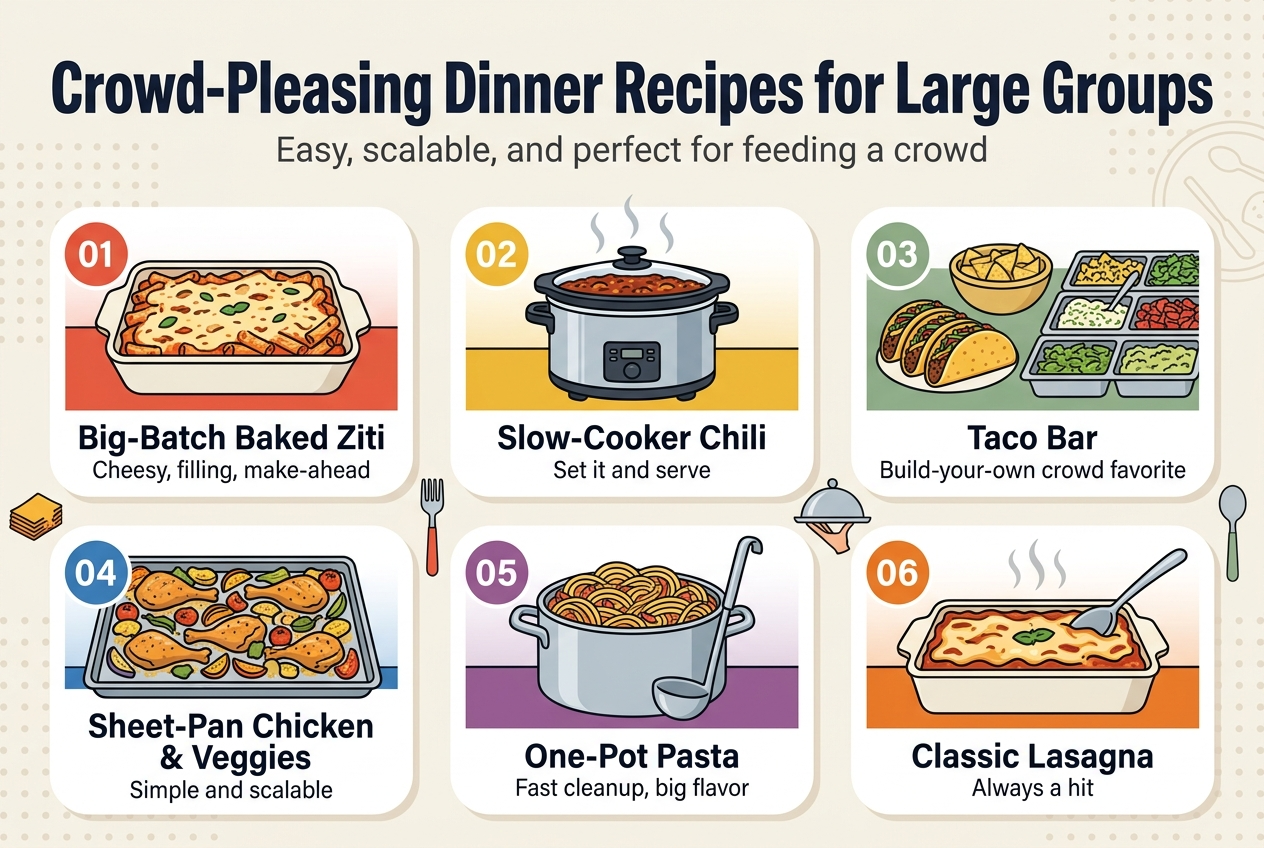
Foil packet meals with shrimp, vegetables, and seasonings
Foil packet meals represent one of the most versatile and foolproof cooking methods for feeding large groups at camp. These self-contained meals cook evenly, require minimal cleanup, and can be customized to accommodate different dietary preferences within your group. The beauty of foil packets lies in their simplicity – each packet becomes its own individual cooking vessel, allowing you to prepare multiple servings simultaneously.
When creating foil packets for large groups, start with heavy-duty aluminum foil to prevent tearing. Layer your ingredients strategically, placing heartier vegetables like potatoes and carrots on the bottom, followed by proteins and quicker-cooking vegetables on top. Add seasonings, herbs, and a small amount of liquid or oil to create steam and prevent sticking. Seal packets tightly by folding the foil edges multiple times to create a secure pouch.
The cooking versatility of foil packets makes them perfect for group camping scenarios. They can be placed directly on hot coals, positioned on grill grates over a campfire, or even cooked on tabletop gas grills for more controlled heat. This flexibility ensures that even with limited cooking space, you can prepare numerous portions simultaneously.
One-pot dishes like jambalaya and chili mac
Now that we’ve covered individual foil packets, one-pot meals offer another excellent solution for feeding large groups efficiently. These hearty dishes maximize flavor while minimizing equipment needs, making them ideal for group camping scenarios where cooking space and cleanup capabilities are limited.
Chili mac stands out as a particularly crowd-pleasing option that combines the comfort of mac and cheese with the heartiness of chili. This dish works exceptionally well for large groups because it’s filling, affordable, and uses ingredients that travel well. The combination of pasta, ground meat, beans, and cheese creates a satisfying meal that appeals to both adults and children.
When preparing one-pot meals for large groups, consider using multiple large pots or Dutch ovens to accommodate everyone. These dishes often improve with time, allowing flavors to meld together, which makes them perfect for camp cooking where timing can be unpredictable. The ability to prepare these meals on tabletop gas grills provides consistent heat control, ensuring even cooking throughout the large portions needed for group dining.
Grilled favorites including fajitas and kabobs
Previously, we’ve discussed contained cooking methods, but grilled favorites like fajitas and kabobs offer interactive dining experiences that work wonderfully for large group camping. These meals allow for customization and can accommodate various dietary restrictions within your group.
Fajitas excel as group meals because they can be prepared as foil packet variations or grilled directly. The combination of seasoned meat, peppers, and onions creates a flavorful base that campers can customize with their preferred toppings. This approach reduces the pressure on the cook while ensuring everyone gets exactly what they want.
Kabobs provide another excellent grilling option for large groups, offering portion control and visual appeal. Sausage and veggie skewers mentioned in the reference content demonstrate how simple ingredients can create satisfying meals. The key to successful kabob cooking for large groups lies in preparation – having all ingredients cut, seasoned, and skewered before cooking begins ensures smooth service when everyone is hungry.
Dutch oven classics like lasagna and shepherd’s pie
With this in mind, Dutch oven cooking represents the pinnacle of group camp cooking, allowing you to prepare restaurant-quality meals in the outdoors. These heavy-duty cast iron pots excel at creating complex, layered dishes that can feed large numbers of people with minimal active cooking time.
Shepherd’s pie adapted for camping using instant potatoes showcases how traditional recipes can be simplified for outdoor cooking. The combination of seasoned meat, vegetables, and creamy potato topping creates a complete meal in a single vessel. Dutch ovens distribute heat evenly, creating the perfect environment for dishes that require both bottom heat for browning and top heat for finishing.
The versatility of Dutch oven cooking extends beyond main dishes to include bread and desserts, making them invaluable for group camping trips. Items like chili with cornbread baked on top demonstrate how you can create complete meals with complementary elements all in one cooking vessel. When cooking for large groups, having multiple Dutch ovens allows you to prepare different components simultaneously or accommodate larger quantities than a single pot could handle.
Fire-Friendly Cooking Methods That Work Every Time
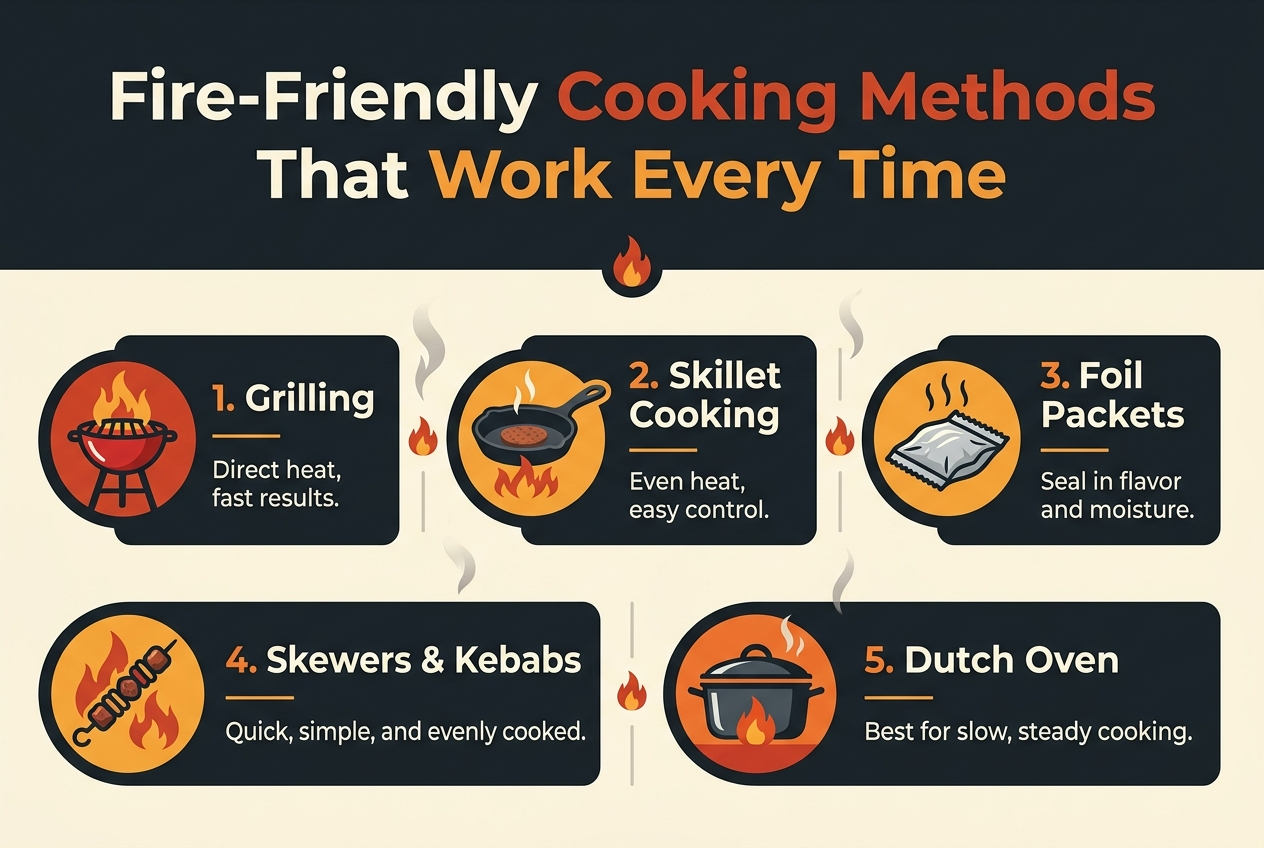
Cast Iron Skillet Recipes for Burgers and Hash
Cast iron skillets excel in campfire cooking due to their ability to distribute heat evenly and withstand high temperatures. For group camping, a large cast iron skillet becomes your most versatile tool, perfect for cooking burgers and hearty hash dishes that can feed multiple people at once.
When preparing burgers over the campfire, wait for the flames to die down until you have glowing orange coals covered with gray ash. Place your cast iron skillet on the grill grate and let it heat for at least 10 minutes – the hot metal will help cook the food as effectively as the fire itself. The intense heat from properly prepared coals will produce that perfect chargrilled effect, searing burgers to perfection while locking in juices.
For hash recipes, cast iron skillets are ideal because they maintain consistent temperature throughout the cooking process. Whether you’re making breakfast hash with potatoes and vegetables or a hearty dinner hash with meat and seasonings, the skillet’s heat retention ensures even cooking for large portions. Split larger logs into smaller pieces to maintain steady heat, and keep additional fuel around the fire’s perimeter to feed in gradually during longer cooking sessions.
Foil Packet Techniques for Easy Cleanup
Now that we’ve covered skillet cooking, foil packets offer another excellent method for group camping with virtually no cleanup required. These aluminum foil envelopes function as single-serve steamers, making them perfect for cooking individual portions or small group servings simultaneously.
The key to successful foil packet cooking lies in streamlining your ingredients. Use already cooked proteins like canned beans, rotisserie chicken, kielbasa, or other smoked sausages paired with quick-cooking vegetables such as frozen peas, cherry tomatoes, baby spinach, or corn kernels. This approach eliminates the unpredictability of trying to cook raw proteins and hard vegetables simultaneously over a campfire.
Always add oil or butter inside each packet to prevent sticking, and use heavy-duty foil or double-wrap with regular foil to avoid leaking. Since ingredients won’t develop any color through this steaming method, plan to boost flavors at the end with pesto, fresh herbs, cheese, or citrus juice.
Some proven combinations include white beans with cherry tomatoes and pesto topped with ricotta, kielbasa with bell peppers and sauerkraut finished with scallions, or corn kernels with shredded chicken and green chiles served with tortillas and lime.
Campfire Grilling for Meats and Vegetables
Previously, I’ve discussed skillet and foil packet methods, but direct grilling over campfire grates offers another fantastic approach for group cooking. Campfire grilling works similarly to backyard barbecuing but requires more attention to fire preparation and heat management.
Start your fire well in advance, as an established fire provides more consistent heat than a young, smoky flame. The fire is ready for grilling when logs have broken down into glowing orange coals covered with gray ash. Use either a grill that hooks onto a tripod for adjustable height or a chapa-style grill with feet that sits directly above the fire.
For successful grilling, split large logs into smaller pieces to help them burn quicker and provide more surface heat. Allow at least 10 minutes for your grill to warm up beforehand, as the hot metal surface contributes significantly to the cooking process. When grilling for extended periods, place additional fuel around the fire’s outskirts and gradually feed it in as needed.
Grilling brings out exceptional flavors in both meats and vegetables. The intense heat produces perfect searing for steaks and venison, while vegetables like halved cos lettuce and courgettes develop beautiful char marks that enhance their natural flavors. Ground meats work excellently on grills, making items like lamb kebabs particularly successful for group cooking.
Dutch Oven Baking for Bread and Desserts
With this in mind, next, we’ll explore Dutch oven cooking, which represents the epitome of campfire cooking, especially for baking applications that can serve large groups. Dutch ovens work best when suspended from a tripod above an open fire, allowing for consistent heat distribution that mimics home oven conditions.
The beauty of Dutch oven cooking lies in its versatility and capacity for feeding many people. Since food cooks inside the covered pot, you can begin cooking once the fire starts establishing, without waiting for perfect coal conditions. For longer-cooking items like bread or slow-baked desserts, simply add logs as needed to maintain the fire throughout the cooking process.
Think of your campfire as the stovetop and the tripod as your temperature control system. You may need to raise or lower the pot depending on the fire’s intensity and ambient conditions, much like adjusting burner settings at home. This method requires adding wood periodically to maintain heat, but the process becomes part of the enjoyable outdoor cooking experience.
Dutch ovens excel at baking applications that would be impossible with other campfire methods. The enclosed environment creates the even heat circulation necessary for proper bread rising and dessert baking, while the heavy lid traps moisture and heat effectively. For group camping, large Dutch ovens can accommodate substantial portions of baked goods, making them ideal for feeding multiple people with minimal individual preparation required.
Sweet Treats and Desserts Around the Campfire
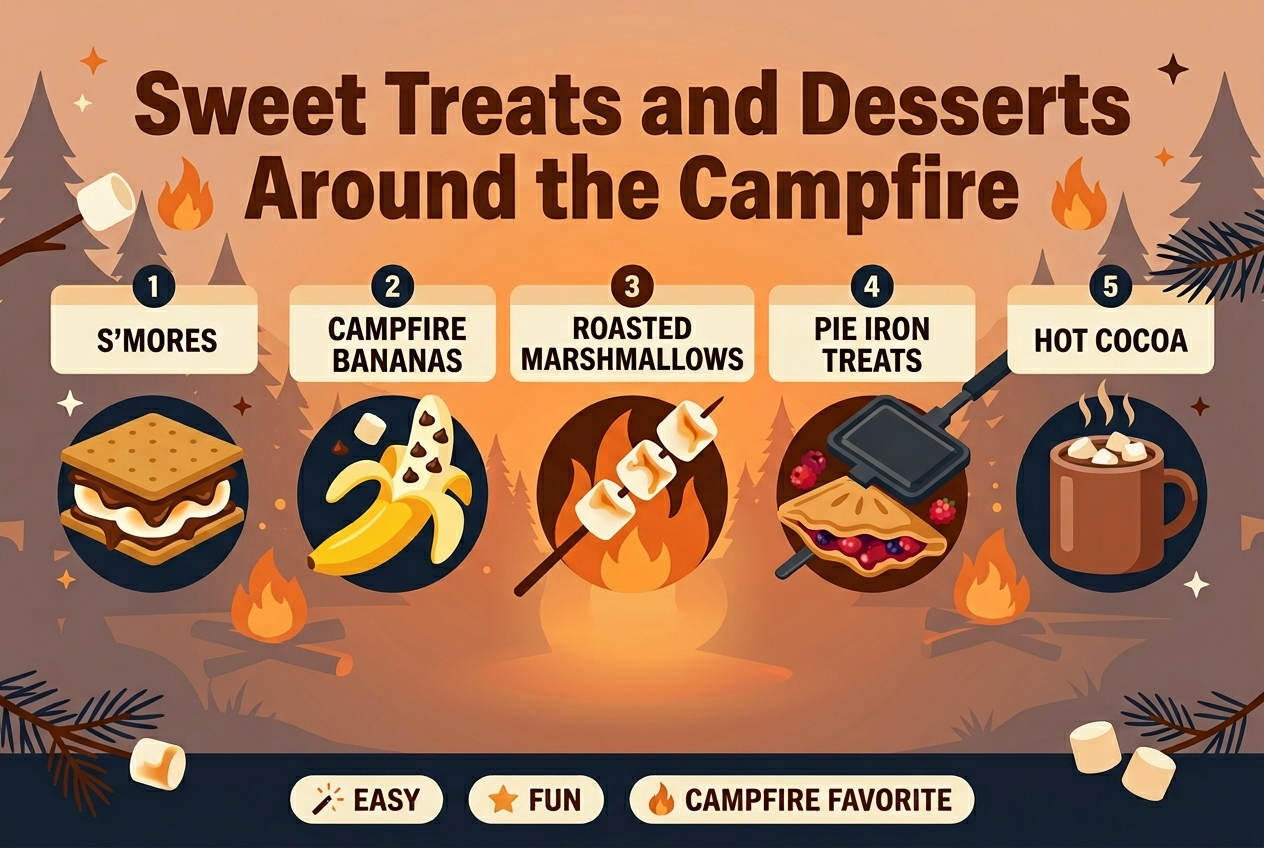
Creative S’mores Variations with Cookies and Different Chocolates
Now that we’ve covered the main meals for your group camping trip, let’s explore some exciting dessert options that go beyond traditional s’mores. While classic s’mores will always have their place around the campfire, there are countless creative variations that can elevate this beloved treat. Instead of using standard graham crackers, try substituting different types of cookies like chocolate chip cookies, oatmeal cookies, or even snickerdoodles for unique flavor combinations.
For the chocolate component, experiment with different varieties such as dark chocolate bars, milk chocolate with nuts, peanut butter cups, or caramel-filled chocolates. These variations create exciting flavor profiles that will surprise and delight your camping group while maintaining the nostalgic appeal of roasted marshmallows over an open fire.
Fruit-Based Desserts Like Apple Crisp Packets
Moving beyond s’mores variations, fruit-based desserts offer a refreshing and naturally sweet option for group camping. Baked apples are particularly popular and incredibly easy to prepare. Simply core fresh apples and stuff them with a mixture of cinnamon, sugar, and butter, then wrap in heavy-duty aluminum foil. These campfire baked apples cook perfectly in the coals and provide a homemade taste that rivals any restaurant dessert.
Grilled peaches offer another simple fruit-based option that requires minimal preparation. Cut peaches in half, place them directly on a grill grate over the campfire, and cook until warm and slightly caramelized. Top with a scoop of vanilla ice cream for the perfect finishing touch. These fruit desserts are not only delicious but also provide a lighter alternative to heavier campfire treats.
No-Bake Options Including Muddy Buddies and Ice cream
For busy camp days when you want to minimize cooking time, no-bake desserts are your best friend. While the reference content doesn’t specifically mention muddy buddies, it does highlight the convenience of no-bake options that can be prepared without campfire cooking. Ice cream serves as an excellent base for various campfire dessert combinations, particularly when paired with grilled fruits or used as a topping for other warm desserts.
Roasted marshmallow strawberries offer another creative no-bake variation. Simply dip fresh strawberries in marshmallow fluff and roast them over the campfire for an instant sweet treat. This technique can also be applied to other foods like Oreos, Rice Krispie treats, and candy bars – just ensure everything is completely covered with marshmallow to prevent melting mishaps.
Campfire Cinnamon Rolls and Banana Boats
Previously, I’ve mentioned various cooking methods, and now we’ll explore two crowd-pleasing favorites that work exceptionally well for groups. Campfire cinnamon rolls can be cooked directly on a stick, but following specific techniques ensures they cook thoroughly without burning. This method creates an interactive dessert experience that groups particularly enjoy.
Banana boats represent one of the most foolproof campfire desserts for large groups. Cut a slit lengthwise in bananas, stuff them with chocolate chips and marshmallows, wrap in foil, and cook in the coals. What makes banana boats perfect for groups is their versatility – set up a charcuterie-style topping station with various chocolate chips, nuts, and other sweet additions, allowing everyone to customize their own creation. These desserts are nearly impossible to burn, making them ideal for novice campfire cooks and ensuring everyone gets a perfectly cooked treat.
Essential Meal Planning Strategies for Group Camping
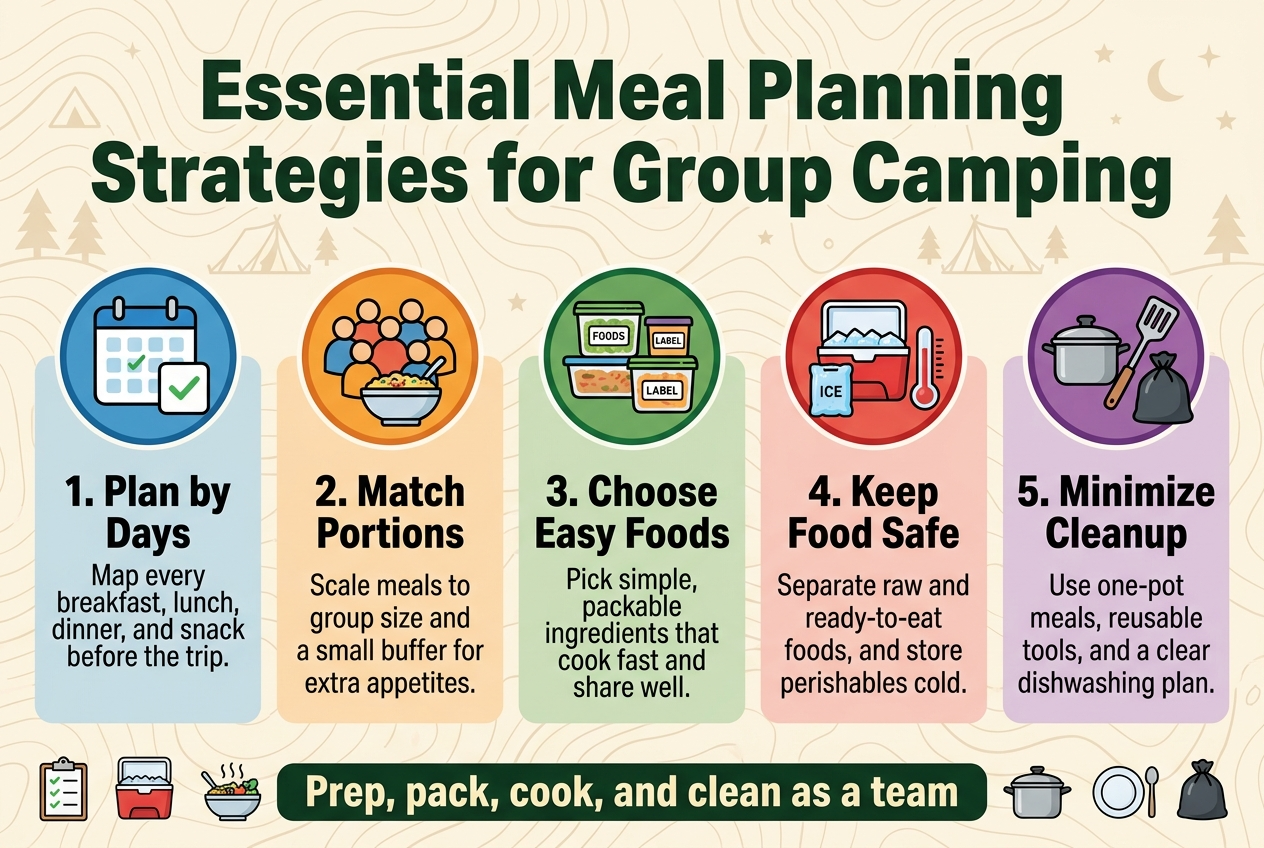
Choose 2-3 options for each meal to avoid decision fatigue
When planning meals for large groups, limiting your options to 2-3 choices per meal prevents overwhelming decision-making at camp. This strategy works particularly well when each family takes responsibility for either a breakfast or dinner during the trip, as seen in successful group camping experiences with 25+ people. By having families sign up for specific meals via email coordination, you eliminate the chaos of last-minute meal decisions and ensure everyone knows their responsibilities ahead of time.
For breakfast options, consider simple choices like breakfast burritos, continental breakfast with mini-muffins and yogurt, or hearty breakfast skillets. Dinner selections might include walking tacos, BBQ dinner with multiple meat options, or classic American fare like hamburgers and brats. This approach allows campers to choose meals that match their cooking comfort level while maintaining variety throughout the trip.
Plan meals that reuse ingredients to reduce waste
Strategic ingredient planning significantly reduces food waste and cooler space requirements. Focus on versatile ingredients that appear in multiple meals – eggs work for breakfast burritos, breakfast skillets, and breakfast casseroles; ground meat serves in chili, walking tacos, and breakfast bakes; and basic vegetables like potatoes appear in hash browns, breakfast bakes, and as grilled sides.
Baby carrots and apples consistently appear as lunch sides because they require no preparation and pack efficiently. These shelf-stable items reduce the need for multiple types of fresh produce while providing consistent nutrition across meals. Planning this ingredient overlap also simplifies shopping and reduces the number of coolers needed for food storage.
Balance easy and elaborate meals throughout your trip
Successful group camping requires mixing simple, low-maintenance meals with more elaborate cooking projects. Start your trip with easy options like pre-made sandwiches and backpacker meals when you’re setting up camp and getting organized. As the group settles into camping rhythm, introduce more involved meals like Dutch oven breakfast casseroles or grilled pizza.
Reserve the most elaborate meals, such as breakfast sausage bakes with monkey bread, for mid-trip when everyone is comfortable with the camping setup and cooking equipment. This progression prevents cooking fatigue while ensuring the group enjoys both convenient quick meals and memorable camping cuisine experiences.
Create shopping lists organized by meal and food storage needs
Organize your shopping approach by separating ingredients into distinct storage categories: perishables requiring cooler storage, frozen items, and non-perishable goods that can be stored separately in vehicles. This organization method proves essential when using individual soft-sided coolers for each meal, packed with ice packs and stored within larger bear-proof coolers.
Pack meat items frozen several days before departure to maintain cold temperatures longer – pre-cooked BBQ meat frozen on Tuesday remained frozen until Saturday afternoon when properly stored. Keep non-perishables like bread, chips, and snacks in separate vehicle storage to maximize cooler space for temperature-sensitive items. This systematic approach ensures food safety throughout extended camping trips while simplifying meal preparation at camp.

Feeding a group while camping doesn’t have to mean sacrificing flavor or convenience. With the right combination of make-ahead meals, simple cooking methods, and smart planning strategies, you can create memorable dining experiences that bring everyone together around the campfire. From hearty breakfast burritos that fuel your adventures to crowd-pleasing foil packet dinners and indulgent s’mores variations, these easy group camping meals prove that outdoor cooking can be both effortless and delicious.
The magic of camping food lies not just in the recipes themselves, but in the shared experience of preparing and enjoying meals under the open sky. Start planning your next group camping menu using these tried-and-true ideas, and remember that the best camping meals are the ones that leave you with full bellies, happy campers, and stories to tell long after the fire dies down.