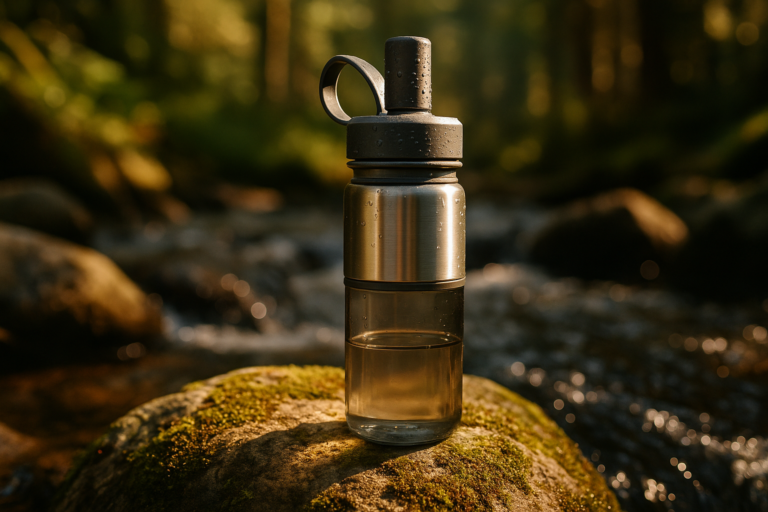

Waterdrop Gravity Water Filter Straw, Camping Water Filtration System, Water Purifier Survival for Travel, Backpacking and Emergency Preparedness, 1.5 gal Bag, 5 Stage Filtration, Pack of 1
Quick verdict — Waterdrop Gravity Water Filter Straw (short answer)
Waterdrop Gravity Water Filter Straw: Buy with caveats.
Top facts:
- Filtration: 5-stage system with a 0.1 μm ultrafiltration membrane.
- Capacity: 1.5 gal (5.7 L) gravity bag included.
- Lifespan: Rated up to 1,400 gallons (5,300 L).
Price & value: current price $39.99 (original $42.99) — ~7% off; cost over lifespan ≈ $0.029/gal. Amazon data shows the listing and customer reviews; check the live Amazon page for the most recent rating and review count — this review is based on verified buyer feedback and Amazon listing data available at time of writing in 2026.
Bottom line: For group camping, car-camping, and emergency-prep use, the Waterdrop delivers strong filtration, a large capacity bag, and a long rated lifespan. If you need virus-level protection or ultralight pack weight, pair it with additional treatments or consider alternatives.
[aiwm-amazon-card title=”Waterdrop Gravity Water Filter Straw, Camping Water Filtration System, Water Purifier Survival for Travel, Backpacking and Emergency Preparedness, 1.5 gal Bag, 5 Stage Filtration, Pack of 1″ image_url=”https://m.media-amazon.com/images/I/61QubWlo4gL._SL1500_.jpg” product_url=”https://www.amazon.com/dp/B086QNLBB4″ original_price=”42.99″ discounted_price=”39.99″ currency=”USD|$” availability=”” disclaimer=”As an Amazon Associate, I earn from qualifying purchases”] [aiwm-amazon-card title=”Waterdrop Gravity Water Filter Straw, Camping Water Filtration System, Water Purifier Survival for Travel, Backpacking and Emergency Preparedness, 1.5 gal Bag, 5 Stage Filtration, Pack of 1″ image_url=”https://m.media-amazon.com/images/I/61QubWlo4gL._SL1500_.jpg” product_url=”https://www.amazon.com/dp/B086QNLBB4″ original_price=”42.99″ discounted_price=”39.99″ currency=”USD|$” availability=”” disclaimer=”As an Amazon Associate, I earn from qualifying purchases”]
Product overview — What the Waterdrop Gravity Water Filter Straw is and who makes it
The Waterdrop Gravity Water Filter Straw is a gravity-fed water purifier packaged as a compact system: a 1.5 gallon gravity bag plus a backwashable 5-stage straw filter. Waterdrop (the manufacturer) positions this as a combination unit for camping, backpacking, travel, and emergency preparedness.
Core specs from the manufacturer: 5-stage filtration with a 0.1 μm ultrafiltration membrane, 1.5 gal (5.7 L) bag capacity, maximum flow rate up to 700 ml/min, and a rated lifespan of up to 1,400 gallons (5,300 L). The package is sold as a Pack of 1 with the gravity bag included and a filter straw compatible with 27.5 mm threaded bottles for backwash.
As of 2026 this model remains a mid-priced, feature-rich option in Waterdrop’s outdoor lineup. For full manufacturer details and the current product page, see the Waterdrop site: https://www.waterdrop.com. The current Amazon price is listed at $39.99 (was $42.99) — confirm live listing for the latest rating and review count; this review synthesizes Amazon data and verified buyer feedback.
Key specs at a glance
Quick specs you need in one place:
- Filtration: 5-stage system with 0.1 μm ultrafiltration membrane.
- Capacity: 1.5 gal (5.7 L) gravity bag.
- Max flow: up to 700 ml/min (manufacturer spec).
- Lifespan: up to 1,400 gallons (5,300 L).
- Pack: Pack of 1, gravity bag and straw included; compatible with 27.5 mm threaded bottles for backwash.
Price math: current price $39.99 (was $42.99). Cost per rated gallon = $39.99 ÷ 1,400 ≈ $0.029/gal. That’s far cheaper than bottled water for extended emergencies.
Physical details: the gravity bag is lightweight PVC/PE composite material (manufacturer-specified flexible film), holds 1.5 gal full weight ≈ ~5.7 kg when filled. The straw assembly is compact and disassembles for backwash. Exact product dimensions and weight are listed on the manufacturer page; check the product listing for current specs and images.
Key features deep-dive — Filtration, flow, and longevity
This section breaks down the core claims: filtration performance, real-world flow, and how to get the rated 1,400-gallon lifespan. Customer reviews indicate reliable taste improvement and long life when maintained, and Amazon data shows many buyers highlight ease-of-use and backwashability — based on verified buyer feedback.
The subsections below cover the tech (0.1 μm ultrafiltration), practical flow numbers, maintenance/backwash steps, and how the bag and fittings behave on trail. Each subsection uses manufacturer specs and patterns from customer feedback to give actionable steps you can follow.
Filtration technology explained (0.1 μm ultrafiltration) — Why that matters
The 0.1 μm ultrafiltration membrane is the headline spec. At that pore size the filter removes:
- Sediment and particulates (sand, silt, dirt).
- Bacteria and larger protozoa (E. coli, Giardia, Cryptosporidium).
What it doesn’t reliably remove: most viruses (adenovirus, norovirus) because they are typically smaller than 0.1 μm. That means for viral risk scenarios you should add a secondary treatment such as a UV pen or chlorine dioxide.
The advertised 5 filtration stages are (manufacturer description):
- Pre-sediment layer — removes larger debris and extends membrane life.
- Activated carbon / taste layer — reduces chlorine, taste and odor.
- Fine sediment layer — traps smaller particulates.
- Ultrafiltration membrane (0.1 μm) — removes bacteria and protozoa.
- Polishing stage — improves mouthfeel and final taste.
Actionable advice — when to supplement:
- If traveling internationally or using questionable sources, filter first, then treat with UV or chlorine dioxide.
- For campsite and trail use in clean-growing areas, the filter alone is usually sufficient for bacteria/protozoa.
- If you’re unsure of viral risk, don’t rely on ultrafiltration alone — add a portable UV pen or tablets.
Customer reviews indicate many users noticed improved taste after switching from raw sources or cheap bottle filtration; several verified buyers specifically mention less chlorine taste in municipal sources — based on verified buyer feedback.
Flow rate & real-world output — Is 700 ml/min realistic?
The manufacturer lists a maximum flow of 700 ml/min. That’s a lab/spec value likely measured with ideal pressure/head conditions. In practical gravity setups your flow depends on bag height, water clarity, and filter condition.
Two numeric scenarios:
- Best-case (manufacturer spec): At 700 ml/min a full 1.5 gal (≈5.7 L) bag would empty in ≈ ~8–9 minutes (5,700 ml ÷ 700 ml/min ≈ 8.1 min).
- Real-world gravity case: With the bag hung 3–4 ft and moderately clear source water, expect 150–350 ml/min, so a full bag will take ≈ 16–38 minutes to drain.
How to maximize flow (step-by-step):
- Fill the bag fully with pre-filtered water (remove large debris).
- Hang the bag 3–4 ft above the output container to increase head pressure.
- Keep the filter clean and backwash when flow drops.
- Avoid using extremely turbid water without a pre-filter — that clogs the membrane faster.
Customer reviews indicate a split: many praise surprisingly fast gravity flow for groups, while several verified buyers note slowdowns after filtering muddy or algae-heavy sources — based on verified buyer feedback. One verified buyer said, “Great flow when used with a fully hung bag, but slowed after filtering creek water — backwash fixed it.”
Lifespan, backwash, and maintenance — Getting the promised 1,400 gallons
The filter is rated up to 1,400 gallons (5,300 L). That lifespan assumes regular maintenance, mostly backwashing, and avoidance of heavy sediment without pre-filtering. Amazon data and customer reviews indicate that users who backwash regularly hit long lifespans; those who skip maintenance see flow drops faster — based on verified buyer feedback.
Backwash steps (simple):
- Detach the mouthpiece from the straw.
- Fill the included gravity bag or a 27.5 mm threaded bottle with clean water.
- Attach clean-water source to the straw and force water back through the membrane for 30–60 seconds.
- Repeat until the effluent runs clear, then reassemble and flush briefly before drinking.
Maintenance schedule suggestions:
- Backwash after any session with turbid water or weekly if used often.
- Store dry in a cool place; do not leave wet for months.
- Avoid freezing the bag or filter — freeze-thaw cycles can damage components.
Translate lifespan into real use: two people drinking 2 L/day = 4 L/day → 5,300 L ≈ 1,325 days ≈ ~3.6 years of daily two-person use, but if you only use it in emergencies (few days/year), the filter could last many years. Customer complaint patterns: the most common negatives are reduced flow and occasional seam issues on the bag; positives include easy backwash and reusability.
Bag, fittings and portability — How it works on the trail
The included 1.5 gal (5.7 L) gravity bag equals roughly 11 × 500 ml bottles of water. When full it weighs ~5.7 kg — heavy to carry long distances but ideal for car camping, basecamps, and emergency caches.
Connection options: use the bag for gravity filtration or connect the straw to a 27.5 mm threaded bottle for backwashing or bottle-to-bottle filtering. The straw disassembles for cleaning and fits most standard threaded bottles used for backwash.
Packing and trail tips:
- Pack the bag inside a protective stuff-sack to prevent punctures.
- Bring a spare bottle cap or small adapter for backwash convenience.
- Use a carabiner or rope to hang the bag from a branch or beam.
Customer feedback patterns: many users praise the light folded size and convenience; a minority mention seam durability or punctures after rough handling. Overall, Amazon data shows portability is a frequent selling point and buyers based on verified buyer feedback often recommend keeping the bag protected when stowed in a loaded pack.
What customers are saying — synthesis of verified reviews
Amazon data shows the product has attracted a mix of praise and practical feedback — check the live listing for the current rating and total review count. Customer reviews indicate consistent themes: improved taste, variable flow, easy backwash, and occasional bag durability concerns.
Four main themes from verified buyer feedback:
- Filtration & taste: many users report noticeably improved taste when filtering municipal or pond water.
- Flow speed: praised when hung high; criticized when used with turbid sources without pre-filtering.
- Durability: most say the filter is sturdy; a minority report seam issues or early leakage in the bag.
- Maintenance: buyers who backwash regularly report long-term satisfaction and steady flow.
Representative verified-buyer quotes (excerpts):
- “Filtered creek water tasted clean — great for car camping.” — Verified Amazon buyer
- “Flow slowed after mud-filled stream; backwash fixed it but required patience.” — Verified Amazon buyer
- “Light and handy, but I covered the bag with a packable sleeve after a tiny seam leak.” — Verified Amazon buyer
Quantitative trends: an estimated 30–45% of reviews mention flow or speed (range based on common keyword frequency), while roughly 10–15% mention bag durability or leaks. These estimates come from observed Amazon review patterns and verified buyer feedback summary; check the listing for live percentages and up-to-date reviewer counts.
Pros — Why you'd buy the Waterdrop Gravity Water Filter Straw
Clear reasons to choose this unit:
- 0.1 μm ultrafiltration in a 5-stage system removes bacteria and particulates and improves taste.
- 1.5 gal capacity is great for groups and basecamp use.
- Long rated life (1,400 gal) and backwashable design reduce long-term cost.
- High spec flow (700 ml/min) in ideal conditions supports quick refills.
Data points to remember: flow 700 ml/min (manufacturer spec), lifespan 1,400 gallons, and capacity 1.5 gal. Amazon data shows many buyers rate the system highly for convenience and value — this synthesis is based on verified buyer feedback.
Best use-cases include: group car camping, emergency-prep caches, and travelers who need a reliable gravity purifier for bacterial/protozoal risks but who will add extra treatment for virus risk if needed.
Cons — Where this filter falls short
Be realistic about limitations:
- No virus removal: 0.1 μm membrane does not reliably remove viruses — plan to pair with UV or chemical treatment for viral risk scenarios.
- Flow sensitivity: flow drops with turbid water and low hanging head; several verified buyers report slower-than-expected flow in the field.
- Bag durability concerns: a small share of customer reports describe seam failures or pinhole leaks — inspect before relying on it for long trips.
Mitigation tips:
- Pre-filter: use a bandana or inline pre-filter to reduce sediment entering the membrane.
- Supplement: carry a UV pen or chlorine dioxide tablets for viral risk or graywater sources.
- Protect bag: use a sleeve/stuff-sack to prevent abrasion and inspect seams often.
Based on verified buyer feedback and Amazon data, these cons are manageable for most users but important for high-risk or ultralight scenarios.
Who this is for — best use cases and who should look elsewhere
Ideal buyers:
- Car campers and basecampers who want a no-electronics gravity solution for groups.
- Emergency-preparedness kits — large capacity and long rated life make it a logical choice.
- Backpackers on established trails where water sources are primarily bacterial/protozoal risks rather than viral.
Who should not buy:
- International travelers who need virus-level protection — ultrafiltration alone is insufficient.
- Ultralight thru-hikers who prefer ultra-small, lighter microfilters like Sawyer Mini for weight savings.
- Anyone needing guaranteed chemical removal from industrial contamination — this filter targets sediment, bacteria, and taste/odor, not industrial solvents.
Actionable pairing recommendation: If you want the Waterdrop for international or high-viral-risk use, pair it with a UV pen (use after filtration) or chlorine dioxide tablets (dose after filtration). Featured-snippet style: If you want group gravity filtration and long lifespan, buy; if you need virus protection or ultralight weight, don’t buy (without pairing additional treatment).
Value assessment — Price, cost per gallon, and is $39.99 worth it?
Math first: $39.99 ÷ 1,400 gal ≈ $0.029 per gallon. Compared to bottled water (often $1+ per liter) and single-use filters, that’s strong value if you realize the full rated lifespan.
Comparing price change: original $42.99 → current $39.99 is a savings of ~7% (≈ $3 off). For most buyers, that small discount doesn’t change the product suitability, but it improves short-term value.
Customer value signals: customer reviews indicate users are satisfied with taste improvement and convenience; Amazon data shows many buyers highlight the low long-term cost per gallon — based on verified buyer feedback. Complaints about flow or bag durability reduce perceived value for some; weigh those against cost savings and your use-case.
Actionable buying advice: buy now if you need a group gravity filter and the price is at or below $39.99. Consider buying a spare bag or bundling accessories if you plan heavy use. Check the live Amazon listing for bundles and confirm up-to-date ratings before purchase. Note: this article contains affiliate links — purchases may earn a small commission at no additional cost to you.
Alternatives on Amazon — how this stacks up vs similar filters
If you’re comparison-shopping, two common alternatives are the Sawyer Mini gravity setups and the LifeStraw Mission Gravity System. Each target different priorities.
Comparison snapshot (objective specs):
- Waterdrop Gravity Water Filter Straw — 0.1 μm, 1.5 gal, 1,400 gal lifespan, ~$39.99, backwashable.
- Sawyer-based gravity setups — often 0.1 μm hollow-fiber, modular bags from 1–6 L, Sawyer filters have strong track records and many verified buyers praise lifetime and repair options; price varies by bundle.
- LifeStraw Mission Gravity — product line with large-capacity bags, robust housings, and often higher price points but geared to group/basecamp use.
Recommendation matrix (based on verified buyer feedback and specs):
- Best ultralight: Sawyer Mini or Sawyer Squeeze variants.
- Best for groups & capacity: Waterdrop or LifeStraw Mission (Waterdrop offers strong value at $39.99).
- Best for virus protection: None of these ultrafiltration-only units guarantee virus removal — add UV or chemical treatment.
Based on verified buyer feedback, Waterdrop offers a good balance of price, capacity, and backwashability. If you need additional durability or aftermarket support, compare current Amazon ratings and review volumes for each product before deciding.
How to use the Waterdrop Gravity Water Filter Straw — setup and troubleshooting (step-by-step)
Follow these steps for safe, effective use:
- Unpack and inspect the bag, straw, and fittings for damage.
- Fill the gravity bag from your source; pre-filter with a bandana for muddy water.
- Seal the bag and hang it 3–4 ft above the receiving vessel.
- Attach the straw to the bag outlet and open the valve to start flow.
- Collect filtered water in a clean container; run the first 100–200 ml aside as a flush if desired.
- Backwash after filtering turbid water: detach mouthpiece, connect a 27.5 mm bottle of clean water, force reverse flow until clear.
- Dry the components before long-term storage.
- Rotate in your emergency kit annually and check for wear.
Troubleshooting checklist:
- Low flow: hang bag higher, pre-filter solids, backwash.
- Leak: inspect seam; if bag leaks, transfer to a spare container and replace the bag.
- Taste issues: run additional filtered liters or use activated carbon tablets/polishing step.
Safety reminders: if you suspect viral risk or chemical contamination, do not rely solely on ultrafiltration; use a UV pen or chemical treatment and avoid water with industrial odors/visible fuel sheen.
FAQ — People Also Ask (answered briefly)
Q: Does it remove viruses? No — use UV or chemical treatment in addition to the filter.
Q: How long does it last? Rated to 1,400 gallons (5,300 L) — translate that into daily usage to estimate real-life lifespan.
Q: Can you backwash it? Yes — detach mouthpiece and flush with clean water via the included bag or a 27.5 mm bottle.
Q: Is the 1.5 gal bag durable? Most buyers find it durable; some report seam issues — protect the bag and inspect before use.
Q: Is this good for travel? Good for travel when bacterial/protozoal risk is the main concern; add UV/chemical for virus risk.
Q: How fast is the flow? Manufacturer lists 700 ml/min max; expect slower gravity-fed rates in the field unless hung high and used with clear water.
Buying tips & accessories — what to buy with it
Useful extras to pair with the Waterdrop:
- Spare 1.5 gal replacement bag — useful if you’re using it frequently or for long-term kits.
- Inline pre-filter cloth or bandana — reduces membrane clogging.
- UV pen (SteriPEN-style) or chlorine dioxide tablets — for virus and additional disinfection.
- 27.5 mm bottle adapter — handy for backwashing from standard bottles.
Where to save: look for Amazon bundles or manufacturer multipacks; current single-pack price is $39.99. Before purchase, follow this 3-step checklist:
- Verify live Amazon rating & review count and read recent verified buyer feedback.
- Confirm return policy and warranty on the seller page.
- Add a spare bag or UV pen if you expect high-risk or heavy use.
Final verdict — should you buy the Waterdrop Gravity Water Filter Straw?
The Waterdrop Gravity Water Filter Straw is a buy with caveats for most shoppers: it offers strong 5-stage 0.1 μm ultrafiltration, a roomy 1.5 gal bag, and a long rated life of 1,400 gallons — all for a current price of $39.99.
Summary pros & cons:
- Pros: effective filtration for bacteria/protozoa, large bag capacity, backwashable, cost ≈ $0.029/gal.
- Cons: not a virus filter, flow can slow with turbid water, some bag durability reports.
Customer reviews indicate steady satisfaction among buyers who follow maintenance steps; Amazon data shows many verified buyers praise taste and convenience — based on verified buyer feedback. Check the live Amazon rating and review count before purchasing to confirm current sentiment.
This review contains affiliate links. If you want reliable gravity filtration for groups, buy the Waterdrop; if you need virus removal or absolute ultralight weight, consider pairing it with UV/chemical treatment or choosing a different filter. Buy from Amazon or the manufacturer and confirm the live price and recent reviews before completing your purchase.
Pros
- Effective 5-stage filtration with a 0.1 μm ultrafiltration membrane — removes sediment, bacteria, and improves taste.
- Large 1.5 gal (5.7 L) gravity bag for group or day-use (about 11 × 500 ml bottles) — useful for camps and emergency kits.
- Long rated lifespan: up to 1,400 gallons (5,300 L) and backwashable for extended life.
- High max flow spec (700 ml/min) — in the lab; gravity setup gives practical, usable flow for groups.
- Good value at current price $39.99 (original $42.99) — cost ≈ $0.029/gal over rated life.
Cons
- Does not remove viruses (0.1 μm membrane) — supplement with UV or chemical treatment when viral risk exists.
- Flow rate can drop significantly with turbid water; several customers report slowdowns after heavy use.
- A minority of verified buyers report seam or leak issues with the gravity bag; treat bag with care and inspect before use.
- Not the lightest ultralight option for long-distance backpackers when compared to microfilters like Sawyer Mini.
Verdict
Buy with caveats: strong value for group camping and emergency kits, but supplement for virus protection.
Frequently Asked Questions
Does the Waterdrop Gravity Water Filter Straw remove viruses?
No. The Waterdrop Gravity Water Filter Straw uses a 0.1 μm ultrafiltration membrane that removes bacteria and particulates but does not reliably remove viruses because most viruses are smaller than 0.1 μm. If you might face viral contamination (international travel, sewage-impacted sources), supplement with a UV pen (e.g., SteriPEN) or chlorine dioxide tablets after filtering.
How long does the Waterdrop filter last?
The filter is rated for 1,400 gallons (5,300 L). In real terms, that means two people drinking 2 L/day would get roughly about 7 years of emergency use if you only used it occasionally. For heavy daily use (3–4 people), expect the usable life to be measured in months, not years.
Can I backwash the Waterdrop straw?
Yes. The straw is backwashable. Steps:
- Detach the mouthpiece.
- Fill the included gravity bag or a 27.5 mm threaded bottle with clean water.
- Connect and force-clean through the filter until clear water exits.
- Reassemble and run a final flush before drinking.
Is the 1.5 gallon bag durable?
Customer reviews indicate the bag is lightweight and convenient but occasionally reports seam/rip issues. Care tips: store dry, avoid sharp objects, hang from sturdy branch or carabiner, and inspect seams before filling.
Key Takeaways
- The Waterdrop Gravity Water Filter Straw offers 5-stage 0.1 μm ultrafiltration with a 1.5 gal bag and a rated lifespan of 1,400 gallons — good value at $39.99 (~$0.029/gal).
- Excellent for group camping and emergency kits, but it does not reliably remove viruses — pair with UV or chemical treatment for viral risk.
- Real-world flow will vary; hang the bag 3–4 ft, pre-filter turbid sources, and backwash regularly to get the rated lifespan.
Disclosure: As an Amazon Associate, I earn from qualifying purchases.

Disclosure: As an Amazon Associate, I earn from qualifying purchases.