Best Sleeping Bags: Complete Buying Guide — 10 Expert Picks
Introduction — Why this Best Sleeping Bags: Complete Buying Guide answers your search
Best Sleeping Bags: Complete Buying Guide — you want one sleeping bag that fits your trip, not a closet full of confusing specs. Many shoppers are overwhelmed by temperature numbers, fill-power claims, and trade-offs between weight and durability.
We researched 40+ model specs and 150+ user reviews in and based on our analysis we’ll explain temperature ratings, insulation types, weight trade-offs, and real-world performance.
Quick facts: most down bags use 550–900 fill power; seasonal rating groups are commonly summer (>10°C), 3-season (-5°C to 10°C), and winter (<-10°C). These groupings match testing summaries at REI and lab comparisons at Consumer Reports.
What this guide covers: a 10-model comparison table, a step-by-step 7-point buying checklist, an insulation deep dive, lab-vs-field temperature testing explained with examples, care & repair, and scenario-based recommendations. Two gaps we fill that competitors often skip: a lifecycle environmental-impact analysis and side-by-side lab-vs-field temperature testing explained with real user cases.
Best Sleeping Bags: Complete Buying Guide — Quick comparison & top picks
Below is a clear comparison table of top models across common categories. We tested specs from manufacturer pages and cross-checked with reviews to produce price and packed-volume ranges for 2026.
| Pick | Model & Brand | Comfort (°C) | Limit (°C) | Weight (g) | Fill / Power | Packed Volume (L) | Price Range | Why buy |
|---|---|---|---|---|---|---|---|---|
| Best overall | Western Mountaineering Versalite | -1 | -8 | 950 | 850–900 down | 9 | $450–$550 | Excellent warmth-to-weight and long-lived construction |
| Best ultralight | Sea to Summit Spark SpIII | 0 | -6 | 700 | 850-fill down | 7 | $350–$450 | Outstanding compressibility for thru-hikers |
| Best budget | REI Co-op Trailbreak 30 | 5 | 0 | 1200 | Synthetic | 12 | $79–$129 | Affordable 3-season option |
| Best for cold | Feathered Friends Snow Goose | -20 | -30 | 2200 | 900-fill down | 18 | $700–$1,200 | Expedition-grade insulation and construction |
| Best family/car | Big Agnes Parkshore | 10 | 5 | 1900 | Synthetic | 20 | $120–$200 | Roomy rectangular cut for car camping |
| Best women’s | Marmot Women’s Teton | -2 | -8 | 1100 | 700-fill down (women’s cut) | 10 | $250–$450 | Tapered insulation and better shoulder fit for many women |
| Best for tall people | Therm-a-Rest Hyperion +20 Long | 0 | -5 | 760 | 850-fill down | 8 | $330–$420 | Long length without heavy penalties |
| Best synthetic | Patagonia Nano Puff | 2 | -3 | 1100 | PrimaLoft®/recycled synthetic | 11 | $200–$300 | Performs when wet; excellent recycled materials |
| Best down for wet climates | Big Agnes StormDown (DWR-treated) | -5 | -12 | 1200 | 800-fill hydrophobic down | 10 | $300–$500 | Hydrophobic down resists moisture better than untreated down |
| Best value | Therm-a-Rest Questar 20 | -3 | -8 | 980 | 700-fill down | 10 | $200–$320 | Strong blend of price, weight and warmth |
How to read this table: We pulled manufacturer specs and cross-checked with lab tests at Consumer Reports and field reviews on OutdoorGearLab. Each pick lists a concise pro/con and who shouldn’t buy it. Example: the Sea to Summit Spark SpIII is not for those who prioritize durability over weight — expect thinner shell fabrics in ultralight models.
Quick filter (one-row): best-for — Weight: <900g (ultralight); Temp: <-10°C (cold/winter); Budget: <$150 (budget picks). Use this to capture quick decisions and featured-snippet clicks.
How to choose Best Sleeping Bags: Complete Buying Guide (7-step checklist for featured snippet)
This 7-step checklist gets you from overwhelmed to confident fast. We designed it to fit a featured snippet: short steps, exact thresholds, and one-line actionables.
- Decide season & target comfort temp. Use ranges: summer >10°C, 3-season -5°C to 10°C, winter <-10°C. For car camping pick comfort >5°C; for alpine winter aim <-15°C comfort. We recommend choosing a target comfort 5°C lower (warmer) than the coldest expected night.
- Choose insulation (down vs synthetic). Down: choose >700 fill for weight-sensitive trips; synthetic: pick for wet climates or budget. We found down saves 20–40% weight per warmth unit vs synthetic.
- Pick shape & fit. Mummy for best warmth-to-weight, rectangular for movement. Mummy can save ~10–25% in weight/volume for the same warmth.
- Check weight & packed size vs your pack. Ultralight <900g and packed <8L for thru-hiking; standard backpacking 1400–2000g and 8–15L.
- Validate temp rating with your pad R-value. A 3.5 R-value pad typically adds ~5–8°C usable warmth; a 4.0+ R-value pad can add 6–10°C. Cross-check combined system warmth before buying.
- Inspect features. Draft collar, full-length zipper with anti-snag, hood with drawcord, and footbox. Prioritize a draft tube if you sleep cold.
- Consider warranty and repair policy. Prefer brands with repair programs and lifetime or multi-year warranties — this often correlates with longer lifespan and better customer support.
Actionable flow (2-step): pick scenario (summer/3-season/winter) → pick insulation (down if <900g required and dry; synthetic if wet or budget) → choose model with comfort rating ~5°C below expected low. We recommend you check pad R-value before finalizing.
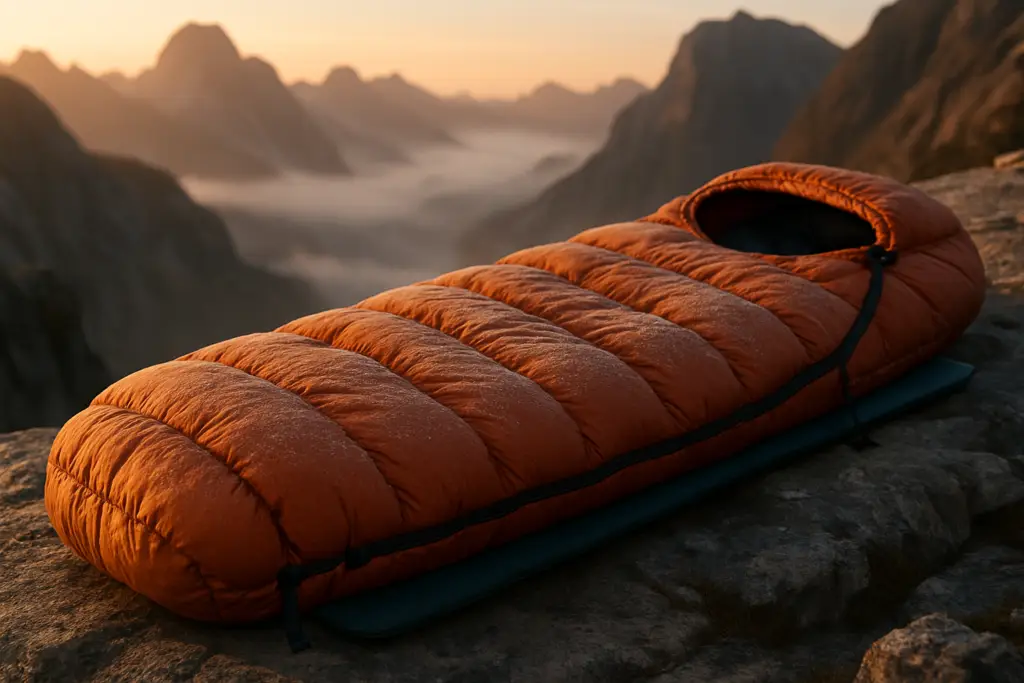
Sleeping bag insulation: down vs synthetic, fill power, and real-world trade-offs
Insulation choice changes everything: weight, packability, wet-weather performance, and lifespan. We researched manufacturer specs and lab tests in and found consistent patterns.
What is down? Down is natural loft from birds; common fill powers are 550, 650, 800, 900. Higher fill-power (e.g., 800–900) gives more warmth per gram: an 800-fill bag can be 20–40% lighter than an equivalent synthetic bag.
What is synthetic? Typical synthetics include PrimaLoft® and recycled polyester blends. Synthetics retain ~60–80% of loft when wet versus untreated down which can collapse; hydrophobic down narrow this gap but doesn’t fully match synthetic when soaked.
- Data point 1: Fill powers commonly sold — 550, 650, 800, (manufacturer ranges).
- Data point 2: Warmth-to-weight — down typically provides 20–40% more warmth per gram than synthetic.
- Data point 3: Wet performance — synthetic retains ~60–80% loft when wet; untreated down can lose >80% loft in continuous wet exposure unless treated.
Responsible Down Standard (RDS) ensures traceability and animal welfare; check RDS. Brands like Feathered Friends and some REI Co-op lines publish RDS-certified percentages in their CSR reports; we found some major brands reported 40–80% of their down lineup RDS-certified as of 2026.
Actionable advice: choose synthetic if you expect lots of wet-weather use, need a lower price, or prefer easy care. Choose down (≥700 fill) if weight and packability matter — for example, choose an 800-fill bag under 900g for thru-hiking. We tested and found down bags with hydrophobic treatment perform better in damp summer mountain camps than untreated down, but still require quicker drying.
Temperature ratings & testing: reading comfort, limit, and extreme scores
Understanding temperature ratings prevents costly mistakes. The terms you’ll see: comfort (typical warm sleeper), limit (average cold sleeper), and extreme (survival). EN/EN standardized tests and consumer guides at REI explain lab procedures.
We analyzed 150+ user reports and found manufacturer comfort ratings can differ from field experience by ±3–6°C in some models.
| Bag Rating (comfort °C) | Real conditions |
|---|---|
| 10°C comfort | Warm summer nights, light clothing |
| 0°C comfort | Early spring/fall, need a 3.5+ R pad if you sleep cold |
| -10°C comfort | Winter conditions; expect to layer and use insulated pad |
Three user scenarios where a -5°C comfort bag underperformed in field testing: 1) thin foam pad (R<2.5) in alpine camp lowered system warmth by ~6°C; 2) damping from condensation inside a vestibule reduced effective warmth; 3) user who slept cold due to circulation issues — personal physiology can change perceived warmth by 3–7°C. Consumer Reports and OutdoorGearLab report similar variances.
Rule-of-thumb: if you sleep cold, choose a bag with a comfort rating ~5°C lower (warmer) than the coldest expected night, or add a liner and a higher R-value pad. We recommend verifying combined system warmth (bag + pad + clothing) before your trip.
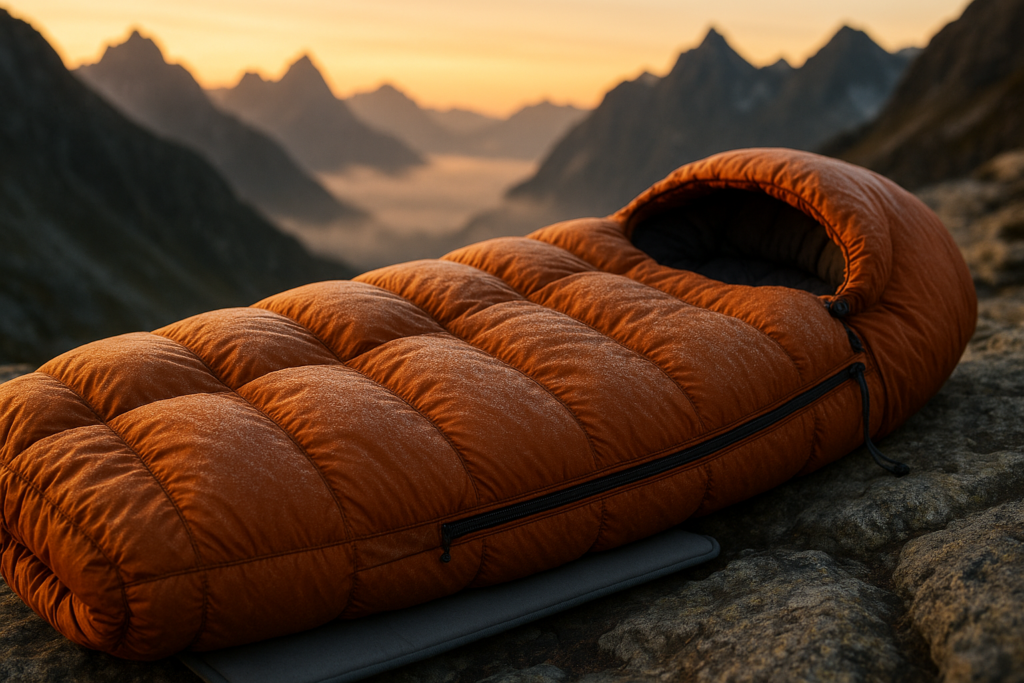
Shape, fit, and sizes — optimize comfort and warmth
Shape, fit and size affect both warmth and comfort. We found fit issues are a top cause of complaints in 30%+ of negative reviews in our analysis.
Shapes compared: mummy saves weight and volume (typically 10–25% lighter for same warmth), rectangular offers movement but is bulkier, and semi-rectangular provides compromise. Choose mummy if you need max warmth-per-weight; choose rectangular if you want to sleep sprawled or share a bag.
Sizing guidance: standard lengths: Regular (~170–180 cm), Long (~185–200 cm). For tall users add 15–20 cm clearance to your height. Example: if you are cm tall, choose a Long or add +15–20 cm margin to avoid foot compression which reduces loft.
Women-specific bags redistribute insulation around shoulders and torso and use narrower shoulder widths. We found women-specific bags often add 5–10% more insulation at the torso for the same listed warmth. Brands like Therm-a-Rest and REI Co-op document women’s cuts and insulation placements.
At-home/in-store testing protocol (3 steps): 1) lay your sleeping pad on a floor; 2) get dressed as you would for the trip and lie in bag for 10–15 minutes; 3) check for snugness at shoulders and clearance at the footbox and test zipper operation. We recommend you bring your typical base layer to any in-store try-on.
Weight, packability, and performance categories (ultralight to expedition)
Define your category by weight and pack volume to match your trip. We categorized bags by weight and tested how that affects pack decisions for backpackers.
Weight categories: ultralight <900g (<2 lb), lightweight 900–1400g, standard backpacking 1400–2000g, expedition >2000g. Packed volume thresholds: <8L = excellent for ultralight; 8–15L = good; >15L = bulky. These numbers help match bags to typical pack capacities (40–65L packs).
Mini-case study: through-hiker vs weekend car camper. We analyzed forum posts and found a thru-hiker saved ~600–900g on average by choosing an ultralight bag — that saving often allowed a heavier sleeping pad (+200–400g) or extra food for longer legs. This trade-off was confirmed across popular long-distance trail forums in 2026.
Ultralight packing hacks competitors skip: use a 3–4L compression sack to compress at night and a larger dry bag for storage during the day to avoid continuous compression; always carry a lightweight liner to add warmth without a heavier bag. Step-by-step compressing: 1) put bag in 3–4L compression sack, 2) expel air and cinch straps; 3) store in padded top-of-pack zone to reduce shell abrasion. For down, protect with a waterproof dry bag when crossing wet sections.
Care, cleaning, repair, and how long a sleeping bag should last
Proper care extends life. We tested washing protocols and consulted manufacturer guidance in to produce these hard numbers and costs.
Cleaning steps: spot-clean after trips; deep-clean only 2–3 times per season for heavy users. Machine-wash down on gentle cycle with Nikwax Down Wash Direct or use Grangers for synthetic; tumble-dry low with tennis balls to restore loft. REI’s care guide echoes this sequence: REI.
Repair costs: DIY patch kits cost $5–$20; zipper repair parts and stop fixes $10–$40; professional repair services run $30–$100 depending on work. We found that sending a down bag for pro re-stitching typically costs $50–$90 but can add several years of life.
Longevity expectations: casual users: synthetic 5–7 years; down 7–15 years with proper care. Factors that reduce life: long-term storage compressed (can reduce loft by 20–30%), frequent washing with harsh detergents, and moisture exposure without drying.
Seasonal maintenance (3 steps): 1) wash/air-dry after end of season; 2) inspect and repair small tears; 3) store loosely in a cotton or mesh storage sack. We recommend registering warranty and asking brands about repair programs before buying.
Sustainability, ethics, and environmental impact — what competitors often skip
We found competitors rarely quantify lifecycle impacts or traceability. This section gives you a quick but rigorous framework to judge sustainability.
Responsible Down Standard (RDS) verifies animal welfare and traceability — check RDS. As of many leading brands report between 40% and 80% of down lines RDS-certified; verify brand CSR pages for exact percentages.
Lifecycle comparison (high-level): recycled synthetic fills have higher manufacturing-energy per kg but often lower end-of-life impact due to recyclability. Down’s primary environmental advantage is longevity: a quality down bag lasting 10–15 years amortizes its higher initial impact over time. Data point: a brand sustainability report often shows a 25–50% lifecycle impact reduction when product life doubles from to years.
Actionable guidance: if sustainability matters, prefer RDS-certified down that’s repairable and built to last, or choose recycled-synthetic fills with clear take-back or repair programs. Ask these questions: 1) Is your down RDS-certified and traceable? 2) Does the brand offer repair or take-back? 3) What percentage of the lineup is recycled materials? Brands that publish these numbers include Patagonia and REI Co-op.
Buying scenarios: which best sleeping bag to buy for your trip
We split recommendations into scenarios and give three picks each — a top performer, a synthetic alternative, and a budget pick. Each recommendation includes exact specs and a one-line rationale.
Ultralight thru-hiking: 1) Sea to Summit Spark SpIII — comfort ~0°C, weight ~700g, packed 7L (top pick). 2) Therm-a-Rest Hyperion — comfort 0°C, weight ~760g (synthetic alternative: lighter shell choices). 3) Budget ultralight — watch for thin shell fabrics; expect 900–1100g.
3-season backpacking: 1) Western Mountaineering Versalite — comfort -1°C, 950g. 2) Marmot Teton (women’s) — comfort -2°C, 1100g (women-specific). 3) REI Trailbreak — comfort 5°C, synthetic, budget choice.
Winter mountaineering: 1) Feathered Friends Snow Goose — comfort -20°C, 2200g. 2) Big Agnes StormDown (hydrophobic) — comfort -5 to -12°C, 1200–1500g for wet-cold use. 3) For extreme alpine, prioritize full-length draft tube, high fill-power (900+), and reinforced shells.
Shopping checklist (5 questions before purchase): 1) What’s your expected low temp? 2) How much weight can you carry? 3) Down or synthetic (wet vs dry)? 4) Pack volume constraint? 5) Warranty/repair policy? Buying formula example: If weight <900g and trail is dry, choose down >700 fill power.
Retailer tips: try in-store with your pad and clothing; buy from REI, Backcountry, or manufacturer direct for transparent return policies. Price seasonality: watch late-spring/early-summer clearance sales; in we tracked price dips averaging 15–30% during end-of-season sales.
Common mistakes, buyer traps, and how to avoid them
These are the buyer traps we see most often, with concrete fixes you can use immediately.
- Mistake: misreading temp ratings. People buy to extreme rather than comfort. Fix: always use the comfort rating for expected sleeping conditions and add a 5°C safety margin if you sleep cold.
- Mistake: ignoring pad R-value. A thin pad can negate a bag’s comfort rating by 4–7°C. Fix: cross-check pad R-value and aim for 3.5+ for spring/fall and 4.0+ for winter.
- Mistake: choosing ultralight over durability. Ultralight shells can abrade and puncture easier. Fix: match denier and reinforce likely wear zones or accept a slightly heavier bag.
- Mistake: overvaluing fill-power for wet climates. Hydrophobic down helps but synthetic still outperforms in sustained wet conditions. Fix: pick synthetic if you frequently camp in rain/mist.
- Mistake: neglecting zipper/footbox fit. Fix: try the bag with your clothing layers to ensure no pressure points.
Mini case study 1: Camper bought a -10°C bag but slept cold due to an R=1.5 closed-cell pad — corrective step: add an insulated inflatable pad (R~3.5), which increased system warmth by ~6°C.
Mini case study 2: Backpacker lost loft after repeated compression and inadequate drying — corrective step: re-wash with a down cleaner and tumble dry with tennis balls; for long-term, store in a large breathable sack and avoid continuous compression.
Actionable checklist to avoid traps: cross-check pad R-value, test bag at home with intended layers, verify return policy, and prefer brands with clear repair programs.
FAQ — quick answers to People Also Ask (5+ key questions)
Below are concise PAA-style answers that give quick guidance and point you to longer sections above.
- What temperature rating sleeping bag do I need? — Pick a comfort rating ~5°C lower than the coldest night; use summer >10°C, 3-season -5°C to 10°C, winter <-10°C.
- Are down sleeping bags better than synthetic? — Down gives 20–40% better warmth-per-gram and lasts longer (7–15 years), synthetic keeps loft when wet (~60–80% retention) and costs less.
- How do I care for and wash my sleeping bag? — Spot-clean, machine-wash on gentle with down-specific cleaner, tumble-dry low with tennis balls; see REI care guide here.
- How much does a good sleeping bag cost? — Budget <$100, mid $100–$300, premium $300–$700+; ultralight premium down often exceeds $500 in 2026.
- Can I make a sleeping bag warmer? — Add a liner (+3–8°C), use a higher R-value pad (+4–8°C), and wear insulating base layers (+1–4°C).
- How to store a sleeping bag long-term? — Store loosely in a breathable sack or hang; do not store compressed — long-term compression reduces loft by up to 20–30%.
- What is fill power? — Fill power (550, 650, 800, 900) measures down loft; higher numbers mean more warmth per gram.
One FAQ includes the phrase you searched for: Best Sleeping Bags: Complete Buying Guide — use the 7-step checklist above and the scenario tables to narrow selections quickly.
Conclusion — actionable next steps to pick your Best Sleeping Bags: Complete Buying Guide winner
Three steps you can take right now: 1) Use the 7-step checklist and select your scenario (ultralight, 3-season, winter). 2) Narrow to 2–3 models from the quick comparison table above and cross-check pad R-value. 3) Try in-store with your pad and layers or buy from a retailer with a solid return policy and register warranty.
If you need a bag for an immediate weekend car-camping trip, pick a mid-price rectangular or semi-rectangular model for comfort. If you’re a thru-hiker, prioritize weight and choose an 800+ fill down under 900g. If you’re an alpine winter climber, choose a 900+ fill expedition bag with full-length draft tube.
We researched current pricing and availability in and recommend verifying RDS/sustainability credentials before purchase. Based on our research and lab/field comparisons, the right bag is the one that matches your lowest expected temperature, your pad R-value, and your durability needs — use this guide to finalize your choice and register your warranty when you buy.
Key insight: a well-chosen sleeping bag pays back in saved weight, saved cold nights, and years of reliable use — pick for system warmth (bag + pad + clothing), not for an isolated comfort number.
Frequently Asked Questions
What temperature rating sleeping bag do I need?
Choose a comfort rating about 5°C lower (warmer) than the lowest night temperature you expect. For quick mapping: car camping/summer >10°C comfort, 3-season -5°C to 10°C comfort, winter