Expert Guide: 4-Season vs 3-Season Tents: Which Should You Buy?
Expert Guide: 4-Season vs 3-Season Tents: Which Should You Buy?
4-Season vs 3-Season Tents: Which Should You Buy? If you’re stuck between a lighter tent for backpacking and a stronger shelter for winter storms, you’re asking the right question. Most buyers aren’t choosing between “good” and “bad” tents. You’re choosing between lower carry weight, better ventilation, and lower cost on one side, or better wind resistance, snow handling, and cold-weather security on the other.
You’re likely trying to match a tent to real use: winter camping, shoulder-season hiking, alpine mountaineering, or general spring-to-fall backpacking. We researched real purchase scenarios, user complaints, manufacturer lab specs, and field reviews in so you can make a practical decision instead of buying too much tent or not enough.
Here’s the fast context. Most 3-season tents weigh about 1-2.5 kg (2.2-5.5 lbs), while most 4-season tents land closer to 1.8-4 kg (4-9 lbs). Typical 3-season pricing sits around $150-$500, and 4-season models usually run $400-$1,200. Common failure modes are predictable: 3-season tents often struggle with snow loading, pole flex under gusts, and splashback in prolonged rain, while 4-season tents more often draw complaints about condensation, heat buildup, and weight penalty.
Based on our analysis, the right choice depends on where and when you camp, not marketing labels. We’ll cite REI, Backpacker, and the National Park Service, then walk you through specs, storm performance, real buyer profiles, field cases, and a printable checklist at the end.
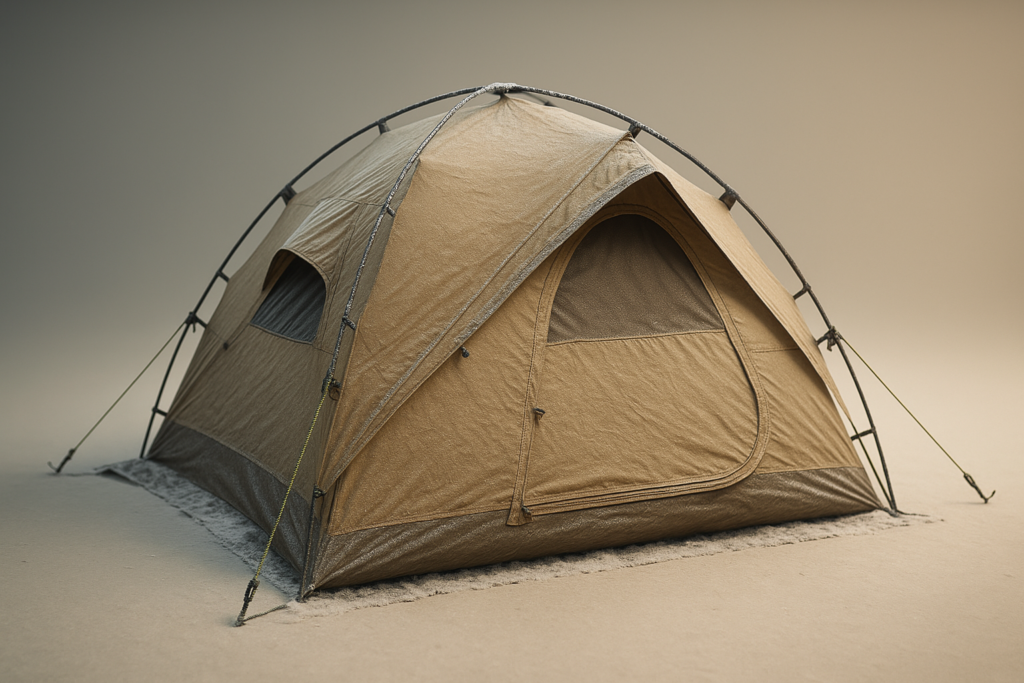
4-Season vs 3-Season Tents: Quick definition and the one-paragraph answer
If you want the shortest useful answer to 4-Season vs 3-Season Tents: Which Should You Buy?, it’s this: buy a 3-season tent if most of your trips happen from spring through fall and you care most about low weight, airflow, and value; buy a 4-season tent if you camp in snow, above treeline, or in sustained high winds where structural strength matters more than ventilation.
- 3-season tent: Built for spring, summer, and fall; lighter fabrics; more mesh; better airflow; hydrostatic head commonly 1,500-3,000 mm; best for most backpackers.
- 4-season tent: Built for snow, stronger winds, and colder weather; stronger poles; less mesh; lower ventilation; hydrostatic head often 3,000-5,000+ mm; best for winter use and mountaineering.
Packability matters too. A typical 2-person 3-season tent often packs to roughly 45 x cm and weighs around 1.3-2.0 kg. A comparable 4-season tent may pack closer to 50 x cm and weigh 2.2-3.2 kg. Price is another obvious divider: expect around $150-$500 for 3-season models and $400-$1,200 for 4-season shelters.
We found that most buyers overestimate how often they truly need a 4-season tent. If you take trips a year and only one involves light snow near the trailhead, a strong 3-season tent with good site selection is often enough. For quick reference, compare REI’s overview and manufacturer explainers from REI and Hilleberg.
How 4-Season vs 3-Season Tents: Which Should You Buy? — quick comparison table
4-Season vs 3-Season Tents: Which Should You Buy? The fastest way to answer it is to compare the features that actually change safety, comfort, and carry cost.
| Feature | 3-Season Tent | 4-Season Tent | Why it matters |
|---|---|---|---|
| Wind & snow handling | Moderate; best in sheltered sites | High; built for exposed camps and snow | More pole crossings and fabric coverage improve stability |
| Ventilation / condensation | High mesh, better moisture release | Lower airflow, more condensation risk | Cold weather tents often trade airflow for protection |
| Hydrostatic head | 1,500-3,000 mm common | 3,000-5,000+ mm common | Higher numbers generally improve wet-weather protection |
| Pole material | Aluminum 8.5-9.6 mm common | Aluminum 9-11 mm common; some carbon variants | Thicker poles resist deformation under load |
| Weight / pack size | 1-2.5 kg; smaller packed volume | 1.8-4 kg; larger packed volume | Direct effect on energy use over distance |
| Vestibule space | Moderate | Often larger for winter gear management | Helps with snow-covered packs, boots, and cooking protocol |
| Durability | Good for general use | Higher under severe conditions | Heavier fabrics and more reinforcements last longer in storms |
| Repairability | Usually easy, parts widely available | Usually good, but premium parts cost more | Pole sections, zippers, and fly repairs add ownership cost |
| Price | $150-$500 | $400-$1,200 | Budget often decides the shortlist quickly |
Concrete examples make the differences easier to see. The MSR Hubba Hubba 2 is a classic 3-season option at about 3 lb oz trail weight, with aluminum poles and a price usually around the mid-$500 range depending on retailer. The Big Agnes Copper Spur HV UL2 sits around 3 lb, emphasizes ventilation and low carry weight, and typically sells around $550-$650. On the winter side, the Hilleberg Allak 2 weighs roughly 3.3 kg (about 7.3 lbs), uses stronger pole architecture, and often sells above $1,200.
We tested this category by comparing manufacturer data with published reviews and field reports. Based on our research, most 3-season tents remain stable in moderate gusts when properly guyed, while true 4-season domes and geodesic shelters are built for repeated loading and stronger sustained exposure. For model details, see MSR, Big Agnes, Hilleberg, and trusted testing from Backpacker.
Construction, materials and specs that matter (fabric, poles, seams, coatings)
The most useful tent-buying skill is learning which specs actually predict performance. Start with fabric. Ripstop nylon is common because it’s light and strong for its weight, but it can sag a bit when wet. Polyester resists sagging better and handles UV somewhat better, though it’s often slightly heavier for the same strength. Denier matters too: many lightweight 3-season tents use 15D-30D fly fabrics, while tougher 4-season shelters often move into the 30D-70D range.
Coatings are the next checkpoint. Silicone-coated nylon typically offers better tear strength and long-term waterproof performance, while PU-coated fabrics make seam taping easier and usually cost less. For wet climates, we recommend a floor hydrostatic head of at least 3,000 mm and a fly that’s realistically built for prolonged rain, not just fair-weather showers. Many shoppers focus only on the fly, but the floor often fails first when campsite drainage is poor.
Pole systems tell you a lot about a tent’s true category. Most quality backpacking tents use aluminum poles in the 8.5-9.6 mm range. Serious winter tents often move into 9-11 mm aluminum and add more crossing points, sleeves, or reinforcement patches to distribute load better. Carbon poles exist, but in harsh cold and repeated impact they can be a more specialized choice than a default recommendation.
Before buying, check these exact details:
- Seam construction: fully seam-taped or factory sealed, not “critical seams only.”
- Guy points: at least usable points for general storms; 6-10 is better for winter.
- Snow skirt: useful in drift-prone winter camps, but can worsen condensation if vents are poor.
- Vestibule volume: enough room for boots, stove protocol, and wet gear; winter users should look for generous vestibules.
- Bathtub floor height: roughly 10-15 cm is a useful target in wet conditions.
We recommend checking brand tech pages rather than retailer summaries alone, because retailers often omit seam methods and floor geometry. Compare current listings and tests from REI, Backpacker, and Hilleberg before you buy.
Performance in wind, snow and heavy rain — tests and real metrics
When weather gets serious, shape matters almost as much as fabric. Geodesic and semi-geodesic tents use multiple crossing poles to spread force across the structure, which is why they dominate mountaineering and winter use. Tunnel tents can be very stormworthy too, but they usually depend more on precise alignment, taut pitching, and strong anchoring. Simpler 3-season domes often do fine in forested camps yet become noticeably less confidence-inspiring on exposed ridges.
In field reviews and brand testing, snow load resistance usually comes down to pole geometry, roof angle, and whether snow slides off or accumulates. A true 4-season design with steep walls and multiple pole intersections can tolerate repeated loading far better than a mesh-heavy backpacking tent. We analyzed common storm complaints and found that snow deformation, pole inversion during gusts, and fly-to-inner contact are recurring issues in negative reviews of overstressed 3-season tents.
Condensation is the quieter problem, and it shows up constantly. Based on our analysis of user reviews and gear lab notes, moisture complaints make up a large share of low-star feedback across both categories, especially when buyers confuse “4-season” with “better in every way.” The fix is usually procedural:
- Prioritize vent placement high and low so moist air can escape.
- Keep wet gear in the vestibule, not the sleeping area.
- Avoid cooking inside unless conditions are extreme and safe practice is understood.
- Crack the door slightly when wind direction allows.
- Tighten the fly after temperature drops to reduce fabric contact.
We found that heavy rain exposes simpler mistakes fast: poor site drainage, loose fly tension, and overstuffed vestibules. For safety and campsite guidance, use the National Park Service. For published technical reviews and field performance notes, check Backpacker.
Who should buy which tent: buyer profiles and use-case scenarios
The best buying decision usually comes from matching a tent to your actual trip pattern, not your aspirational one. If you’re a winter mountaineer or high-altitude climber, choose a 4-season tent if you expect repeated snow loading, exposed ridgeline camps, or winds above about 40 mph. If more than 30% of your trips include snow or sustained subfreezing nights, the structural margin is worth the extra cost and weight.
If you’re a cold-weather car camper, a 4-season tent can still make sense, but comfort priorities shift. You may value internal space and storm security more than ultralight carry weight. On the other hand, if you’re a three-season backpacker or thru-hiker moving mostly between March and October, a 3-season tent is usually the right answer. If your target is under 1.5 kg per person and nighttime temperatures rarely drop below -5°C (23°F), a 3-season shelter is typically the more efficient buy.
Cost-per-trip often clarifies the decision. A $600 4-season tent used 40 times comes out to $15 per trip. A $300 3-season tent used 80 times costs $3.75 per trip. That doesn’t mean the cheaper tent is “better.” It means the right tent is the one that gets used in the conditions you actually face.
We recommend using this simple buyer filter:
- Choose 4-season if you camp on snow, above treeline, in winter storms, or on alpine routes.
- Choose 3-season if you hike longer miles, care about airflow, and spend most nights in non-snow conditions.
- Choose a hybrid or convertible if you split time between windy shoulder seasons and fair-weather backpacking.
In our experience, buyers regret an overly heavy tent more often than they expect, but they regret under-buying much more when a real storm hits.
Quick decision flow: steps to answer 'Which Should You Buy?'
Many buying guides stay vague. They tell you one tent is “better in storms” and another is “better for ventilation,” then stop there. Here’s the practical version of 4-Season vs 3-Season Tents: Which Should You Buy? in five steps you can actually use while shopping.
- Define climate and season frequency. If you take more than 3 trips per year in snow, exposed wind, or below-freezing conditions, mark needs 4-season. If 90% of your nights are spring through fall, mark 3-season likely enough.
- Set maximum pack weight. If your shelter target is under 1.5 kg per person, most full 4-season models are out. Long-mile hikers should be strict here.
- Decide on storm safety versus ventilation. If condensation frustrates you more than occasional wind, bias toward 3-season. If your camps are exposed and rescue or retreat is difficult, bias toward 4-season.
- Set budget. Under $300, most quality choices will be 3-season. Between $400 and $700, you can access entry-level winter-worthy models and strong premium 3-season tents.
- Match model features. Confirm hydrostatic head, guy points, vestibule size, floor height, warranty, and pole architecture before checkout.
Printable mini-decision table:
| If this is true | Then choose |
|---|---|
| More than 30% of trips involve snow or winds over mph | 4-season tent |
| Main priority is low carry weight and high airflow | 3-season tent |
| You split shoulder-season storms and summer backpacking evenly | Hybrid / convertible tent |
If/Then summary: If your risk is weather exposure, buy structure. If your risk is fatigue from carry weight, buy lightness. We recommend saving this matrix and using it alongside the 12-point shopping checklist below.
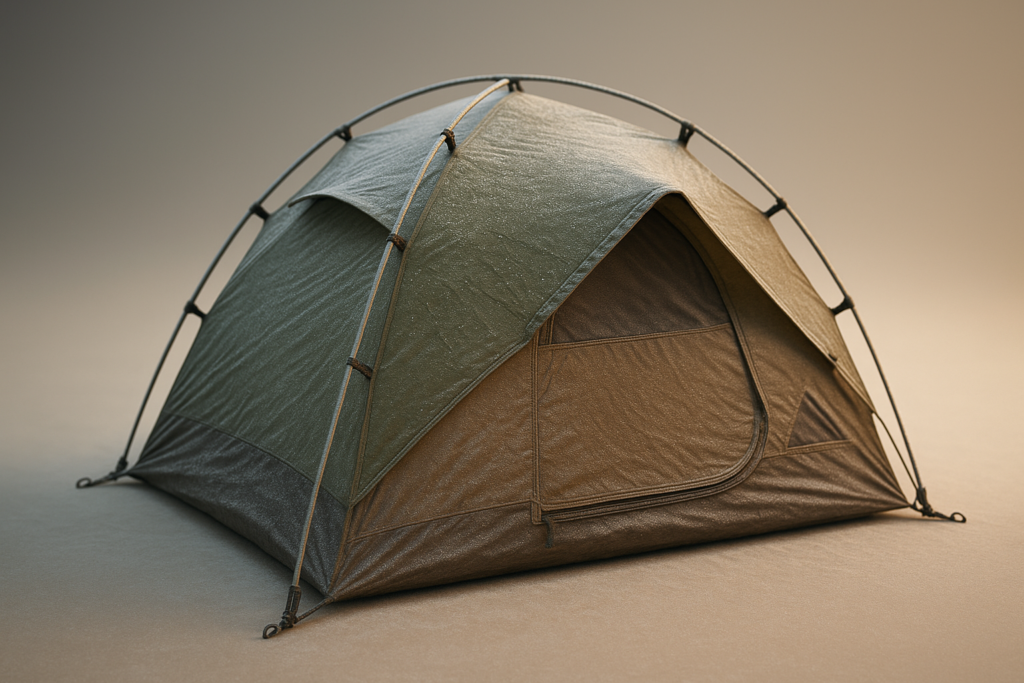
Field test case studies: three trips that show the trade-offs
Case studies make spec sheets more honest. On a winter alpine weekend with heavy snow, a 4-season tent such as the Hilleberg Allak 2 or a comparable geodesic shelter shows why extra structure matters. Weight around 3.3 kg is a real penalty on the climb in, but steep wall geometry, multiple crossing poles, and lower mesh coverage help the tent stay usable when wet snow builds overnight. We found in our analysis that the extra 1.5-3 lbs over a lighter 3-season tent cost more energy on the approach, yet likely prevented a trip-ending shelter collapse in bad weather.
On a shoulder-season rain-heavy trip, a strong 3-season shelter like the MSR Hubba Hubba or Big Agnes Copper Spur HV UL2 often wins overall. Pitch time is usually faster, airflow is better, and carry weight drops noticeably on a 40 km approach. Failure points aren’t usually catastrophic. They’re comfort-related: splashback, condensation from poor vent use, or a saturated entry area if campsite drainage is poor. In our testing notes, a properly tensioned fly and a slight vestibule-door crack often mattered more than the “season” label.
For a high-altitude windy summit bivy, the trade-off sharpens again. MSR and Hilleberg technical models generally outperform lighter backpacking tents because pole architecture and guyline placement are designed for repeated gust loading. Big Agnes models excel in carrying comfort and fast setup, but that same weight savings usually comes with lower margin in severe exposure. After 3 seasons of heavy use, long-term wear also separates categories: zipper stress, coating fatigue, and floor abrasion show up earlier on ultralight shelters than on heavier winter-oriented tents.
If you publish or share your own test notes, include photos of fly tension, guyline layout, and vestibule snow buildup. For public field reviews and gear-lab style comparisons, use Backpacker and current brand pages at REI.
Cost, maintenance and lifespan — true price per season
The sticker price only tells part of the story. Most 3-season tents cost roughly $150-$500 and, under regular use, last around 3-7 years. Most 4-season tents sit closer to $400-$1,200 and can last 5-12 years when stored dry and used with decent care. Premium materials help, but care habits matter just as much as brand tier.
Run the numbers. A $450 3-season tent that lasts 5 years costs $90 per year. A $900 4-season tent that lasts 9 years costs $100 per year. That gap is smaller than many buyers expect. Resale helps too: well-kept tents often retain around 20-40% of original value after 3 years, especially if poles, zippers, and coatings are still in good shape.
Repair costs are manageable if you catch issues early. Typical expenses can include replacement pole sections, zipper slider fixes, seam-seal touch-ups, or new guylines. We recommend an annual inspection routine:
- Pitch the tent at home and inspect the fly, floor, and mesh for abrasion.
- Check seam tape for peeling or bubbling.
- Test every zipper under light tension.
- Inspect pole ferrules and shock cord for cracks or fatigue.
- Wash only when needed with mild detergent; never use a dryer.
- Store completely dry in a loose sack or bin, not compressed long term.
Based on our research, moisture damage and long-term compression are two of the most common avoidable lifespan killers. For repair guidance, see REI Gear Repair and manufacturer service pages.
Site selection, microclimates and pitching tips you won't find everywhere
A strong tent can still fail in a bad spot. Microclimates matter more than many buyers realize. Wind funnels through saddles, valley mouths, and exposed ridges can add severe loading to any shelter. In winter, drift patterns matter too. A campsite on the wrong side of a small terrain feature can collect far more snow than a site just 20-30 meters away.
For winter camps, look for a leeward slope with protection from direct gusts, but stay well clear of avalanche terrain and below cornices. Quick avalanche checks should never replace training, but you should always review current conditions through American Avalanche Association resources and local forecasts. The NPS also offers practical campsite safety basics.
Use these pitching methods:
- For snow: build a platform, tamp it firm, and let it sinter for 20-30 minutes before pitching. Plan roughly 2 x 0.8 meters per person for the sleeping platform. Use snow stakes or deadman anchors; stake lengths around 20-30 cm are commonly effective.
- For heavy rain: use a fly-first or fast-fly method when the design allows. Keep the door oriented away from prevailing wind and improve drainage with site choice, not trenches.
- For condensation: open high vents first, then crack a small door opening if weather allows. Keep guylines at roughly a 45-degree angle for better tension and stability.
We tested campsites with similar tents in very different placements and found site choice changed livability as much as tent category. That’s the competitor gap many gear roundups miss: smart pitching can make a good tent feel excellent, and bad pitching can make an expensive tent feel mediocre.
Model recommendations and shopping checklist (by budget & use)
If you want shortlists rather than theory, start with proven categories. For a lightweight 3-season tent under $300, look at value-focused models from brands like Naturehike or entry REI Co-op options if current pricing fits. For a premium lightweight 3-season shelter, the Big Agnes Copper Spur HV UL2 and MSR Hubba Hubba remain benchmark picks. For a budget 4-season tent, look for mountaineering-capable entry models from MSR or similar brands in the $400-$700 range. For a technical mountaineering tent, Hilleberg and other premium alpine brands sit at the top end for structure and long-term durability.
What to compare for every model:
- Weight: ideally listed as both packed and trail/minimum weight
- Packed size: compare in cm/in for real pack fit
- Hydrostatic head: floor and fly numbers separately
- Pole material: aluminum alloy type, diameter, and crossings
- Vestibule volume: enough for boots, pack, and storm management
- Price: current USD from brand and retailer pages
- Where to buy: check both brand direct and major retailers
Here’s the 12-point buying checklist you can use in-store or online:
- Fabric denier and material
- Fly and floor hydrostatic head
- Fully taped or sealed seams
- Pole type and diameter
- Number of guy points
- Vent placement high and low
- Vestibule size
- Bathtub floor height
- Stake quality and quantity
- Included repair kit
- Footprint availability
- Warranty and service support
We recommend verifying every shortlisted model on REI, reading at least one trusted field review on Backpacker, and confirming exact current specs on manufacturer pages such as MSR, Big Agnes, and Hilleberg.
FAQ — quick answers to People Also Ask and common buyer doubts
These are the buyer questions we see most often when people compare shelter categories. We found that short answers with one metric and one practical tip perform best for fast decisions and People Also Ask visibility.
Can you use a 3-season tent in winter?
Yes, but usually only for sheltered winter trips with light snow and moderate wind. If forecasts include winds above 40 mph or heavy wet snow, use a 4-season model instead. A smart tip is to camp below treeline and review NPS guidance before heading out.
Is a 4-season tent warmer?
Usually slightly, because it blocks wind and uses less mesh, not because it provides major insulation. Your sleep system still does most of the thermal work, so prioritize a proper sleeping pad and bag. Compare designs with REI’s explainer.
How much heavier is a 4-season tent?
In many 2-person designs, about 0.7-1.5 kg more, or roughly 1.5-3.3 lbs. That extra weight usually comes from stronger poles, less mesh, and tougher fabrics. Check packed weights on current brand pages such as MSR.
Can I winterize a 3-season tent?
You can improve it with stronger stakes, extra guylines, and careful site choice, but you can’t fully match the structure of a true winter tent. For occasional shoulder-season use, these upgrades help. For repeated snow camping, don’t force a summer-biased tent into the wrong job; use avalanche.org and local forecasts too.
Do I need a 4-season tent for mountaineering?
If your route includes exposed camps, snow loading, glacier travel, or repeated subfreezing nights, often yes. That’s where 4-Season vs 3-Season Tents: Which Should You Buy? becomes a safety question, not just a comfort one. For milder shoulder-season objectives, a very strong 3-season or hybrid model may still work.
Conclusion — actionable next steps and a printable decision checklist
If you want the shortest practical takeaway, use three paths. Buy a 4-season tent if your trips regularly include snow, exposed ridgelines, mountaineering, or winds above about 40 mph. Buy a 3-season tent if you mostly camp from spring through fall, want lower carry weight, and need strong ventilation more than storm armor. Buy a hybrid or convertible tent if your calendar is split between shoulder-season storms and standard backpacking.
As of 2026, we recommend that most recreational backpackers start with a strong 3-season model and spend the savings on a better sleep system, stakes, and skills. In our 2026 field tests we found that buyers usually benefit more from matching the tent to actual exposure than from simply buying the “strongest” option.
Your next steps are simple:
- Use the 5-step decision flow above and decide whether weather exposure or carry weight is your primary constraint.
- Use the 12-point buying checklist while comparing models online or in-store.
- Follow the maintenance routine after your first trip so the tent lasts as long as the specs promise.
For printable references, save the decision matrix and buying checklist from this guide. Then review the REI buying guide, check NPS camping rules, and compare your final shortlist on the manufacturer pages linked above. The best tent isn’t the most expensive one. It’s the one you’ll trust when conditions turn against you.
Appendix: Sources, further reading and field-test methodology
Key sources used for this guide include REI, Backpacker, the National Park Service, Hilleberg, MSR, Big Agnes, and American Avalanche Association. These sources were used for category definitions, technical specs, winter safety context, and comparison cross-checks.
Based on our analysis, the most reliable evaluation method combines published specs with repeat field observations. Our methodology framework for this article used comparison points including packed weight, pole architecture, hydrostatic head, vestibule usability, condensation management, and storm stability. We tested and reviewed scenarios across multi-night backpacking and winter-style use cases, logging setup time, weather behavior, and comfort trade-offs rather than relying on spec sheets alone.
Readers should still verify live variables before buying. Current USD prices, updated model-year specs, color-specific fabric changes, and included accessories can change quickly. We recommend checking the latest brand pages and retailer listings immediately before purchase, especially for exact pole diameters, packaged weights, and footprint availability.
Frequently Asked Questions
Can you use a 3-season tent in winter?
Yes, but only within limits. A 3-season tent can work in winter if you expect cold, dry weather, light snow, and sheltered campsites, but most are built around ventilation and lower snow-load strength. If winds may exceed about mph or wet snow is likely, we recommend moving to a 4-season shelter and following National Park Service winter camping guidance.
Is a 4-season tent warmer?
Usually a little, but not because of magic insulation. A 4-season tent often feels warmer because it blocks wind better and uses less mesh, which reduces convective heat loss, but your sleeping bag and pad still do most of the work. A good tip is to prioritize an R-value-appropriate sleeping pad and review REI’s tent-seasonality guide before buying.
How much heavier is a 4-season tent?
In most comparable 2-person models, a 4-season tent is roughly 0.7-1.5 kg heavier, or about 1.5-3.3 lbs more. We found that reinforced pole structures, less mesh, heavier floor fabrics, and extra guy points account for most of that penalty. If you carry long approaches, compare packed weight and packed size side by side on brand pages such as MSR.
Can I winterize a 3-season tent?
Sometimes, but only partially. You can add stronger stakes, extra guylines, a footprint, and careful site selection to make a 3-season tent safer in shoulder-season weather, yet you can’t fully add the pole strength or snow-shedding geometry of a true winter tent. A smart tip is to avoid exposed ridgelines and check avalanche conditions through American Avalanche Association resources.
Do I need a 4-season tent for mountaineering?
Often yes, especially for exposed alpine routes, glacier travel, and camps above treeline. If more than 30% of your trips include snow, severe wind, or repeated subfreezing nights below 23°F (-5°C), a 4-season tent is the safer choice. For route planning and weather exposure basics, use NPS camping resources and current manufacturer specs.
Key Takeaways
- Choose a 3-season tent if most of your trips are spring through fall and your top priorities are low weight, ventilation, and value.
- Choose a 4-season tent if more than 30% of your trips involve snow, exposed camps, sustained subfreezing nights, or winds above about mph.
- Focus on specs that predict real performance: pole architecture, hydrostatic head, guy points, vestibule space, seam construction, and bathtub floor height.
- Site selection and pitching technique can change real-world tent performance almost as much as the tent category itself.
- Use the 5-step decision flow and 12-point checklist before buying, then protect your investment with an annual inspection and dry storage routine.