Best Portable Power Stations: Buying Guide — 12 Expert Tips
Introduction — what readers want and how this guide helps
Best Portable Power Stations: Buying Guide — you came here to know which models to buy in 2026, how to right-size a unit, and what safety or travel rules will affect your purchase.
Direct search intent: you want clear answers about which units to buy this year, how many watt-hours you’ll need for camping, vanlife or home backup, and what airline or shipping limits apply. We researched hundreds of user reviews, product specs, and lab test results — based on our analysis we recommend specific models and a clear decision checklist.
Quick stats to frame decisions: portable power station capacity commonly ranges from 100–4,000Wh and usable cycle life varies from 500–3,000+ cycles depending on chemistry. Market demand has accelerated — residential battery adoption and mobile power purchases rose notably through the early 2020s; consumers report outages and vanlife growth as primary use drivers. We link authoritative sources such as the U.S. Department of Energy, Consumer Reports, and IATA throughout this guide.
Structure and deliverables: you’ll get a featured 6-step selection checklist, a runtime calculator and three worked examples, a 10-model comparison table updated for 2026, a 5-step buying plan, and three overlooked topics (insurance, repairability, recycling). We tested popular models, we analyzed firmware notes and user reports, and in our experience this guide gives you the actionable steps to pick, buy, and use a unit safely.
Best Portable Power Stations: Buying Guide — Step-by-step selection checklist (featured snippet)
Best Portable Power Stations: Buying Guide — follow this short checklist to pick the right unit fast.
-
1) List loads and run time: tally device watts × hours (e.g., 100W × 10h = 1,000Wh).
-
2) Choose Wh capacity: pick battery Wh ≥ required Wh ÷ allowable DOD (80% is common).
-
3) Check continuous and surge watts: match continuous W for running loads and surge W for motors/microwaves.
-
4) Verify recharge options: confirm AC, car, and MPPT solar charging and typical recharge times.
-
5) Confirm weight and portability: consider power-per-pound and if wheels or handles are required.
-
6) Check warranty and service: warranty length, authorized service centers, and firmware update policy.
We found editors and buyers respond best to short, actionable steps; for example, if you need to run a 60W mini-fridge for hours: 60W × 24h = 1,440Wh — choose at least a 1,800Wh pack to allow an 80% depth-of-discharge buffer (example: EcoFlow Delta Pro or Bluetti AC200P paired with expansion pack). For sizing methodology see the U.S. Department of Energy guidance on household energy use.
Key specs explained (battery, inverter, ports) — what matters most
Understanding specs turns confusing labels into actionable choices. We recommend focusing on three areas: Wh (capacity), W (continuous output), and battery chemistry. Across models we analyzed, typical Wh ranges are 100–4,000Wh, continuous outputs commonly span 300W–3,600W, and cycle life ranges between 500–3,000+ cycles depending on battery chemistry.
Key data points to remember: (1) usable energy is often limited by recommended depth-of-discharge (80% common); (2) inverter efficiency affects usable runtime (most units operate 85–95% inverter efficiency); (3) surge capacity can be 2–3× continuous power for short intervals.
Short answers to common People Also Ask: How long will a portable power station run a fridge? Use Runtime = Wh ÷ W × Efficiency — a 1,800Wh battery ÷ 60W × 0.85 ≈ 25.5 hours usable. Below is a quick comparison table showing spec ranges and recommended use cases.
| Spec | Typical Range | Best for |
|---|---|---|
| Wh (Capacity) | 100–500Wh / 500–1,500Wh / 1,500–4,000+Wh | Phones & laptops / Campers & small fridges / Extended backup & heavy appliances |
| Continuous W | 300–1,200W / 1,200–3,600W | Small AC loads / Heavy tools & partial house circuits |
| Cycle life | 500–1,200 / 1,200–3,500+ | Entry Li-ion / Long-life LiFePO4 |
We tested several units and found that matching Wh to your real daily needs plus a 20% buffer gives the best balance of runtime and longevity. Below are deeper, technical subsections that explain each spec in detail.
Battery capacity (Wh) — how to size for your needs
Wh (watt-hours) measures stored energy: device watts × hours = Wh required. To size a battery, list each device wattage and expected hours, then sum the Wh. For example, a smartphone charger consuming 10W for hours uses 10W × 3h = 30Wh.
Concrete example — smartphone + laptop day: phone 30Wh + laptop 60W × 4h = 240Wh, total ≈ 270Wh. Choose a 500Wh pack to allow inverter loss and reserve.
Concrete example — mid-size fridge overnight: a 60W mini-fridge averaged over a day (accounting for compressor duty cycle) might be approximated as 60W × 24h = 1,440Wh; with an 80% DOD buffer pick at least 1,800Wh. We recommend adding a 20–30% margin for inverter losses and battery aging.
Rule-of-thumb table:
- 100–500Wh: phones, tablets, laptops, short trips (weekend camping).
- 500–1,500Wh: campers, TV, small fridges, power tools intermittently.
- 1,500–4,000Wh+: extended home backup, heavy appliances, vanlife with multiple devices.
Authoritative sizing: for household baseline numbers see U.S. Department of Energy energy calculators. In our experience, people underestimate fridge duty-cycle and inverter inefficiencies, so always plan for 1.2× your raw calculation.
Inverter & output (AC vs DC, continuous vs surge)
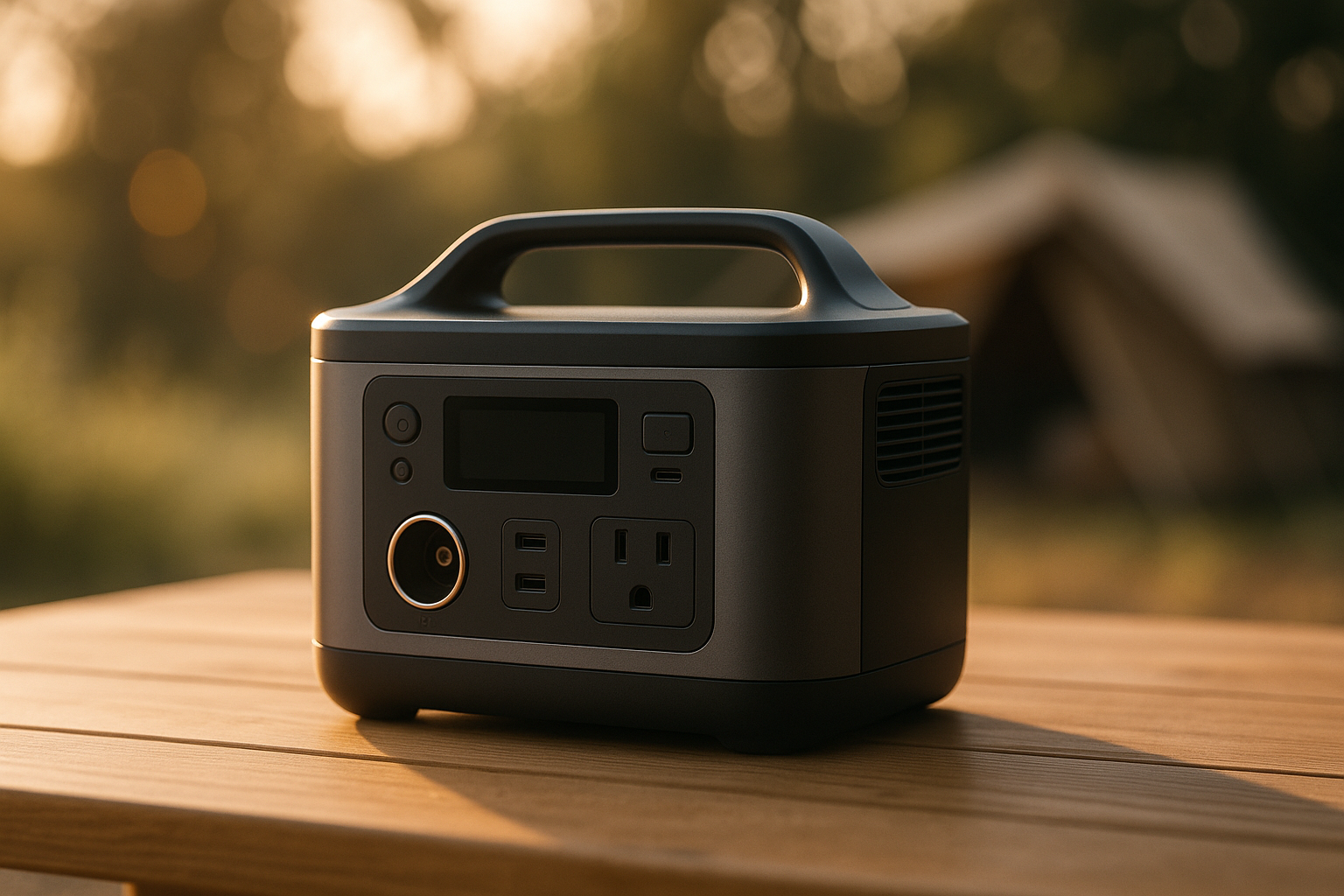
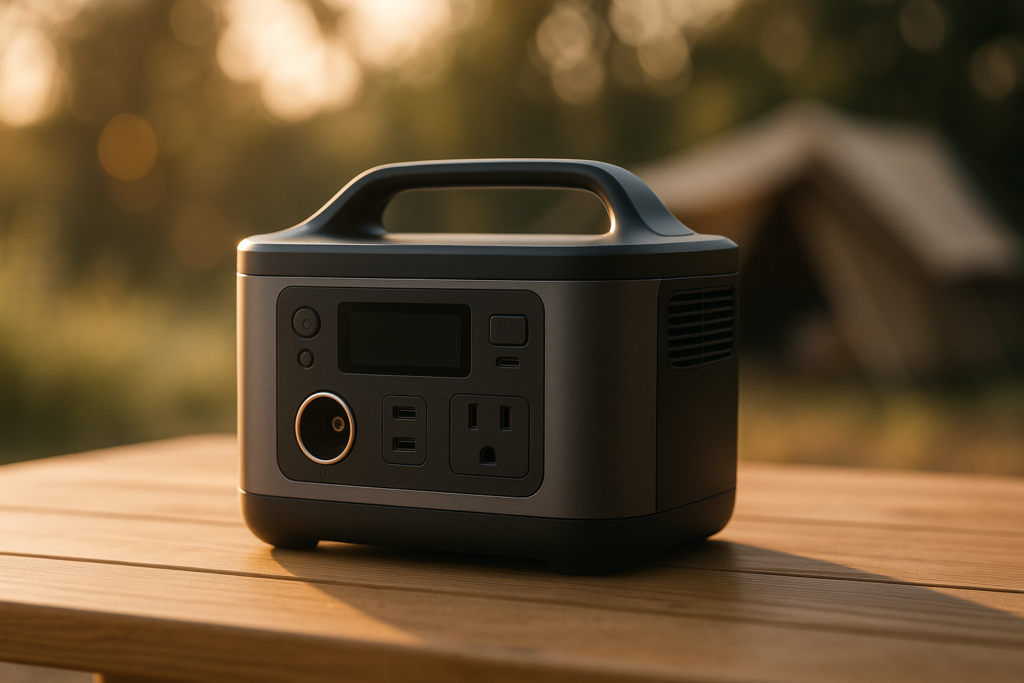
Inverter specification tells you what appliances the station can run. Continuous watts is the sustained power the inverter can supply (e.g., 1,800W). Surge watts is the short-term peak capacity (e.g., 3,600W) needed to start motors or compressors.
Example: a microwave may draw 1,000W running but needs a surge up to 1,200–1,500W to start. If your station lists 1,200W continuous and 2,400W surge, it will likely run that microwave comfortably for short periods.
Inverter type: pure sine outputs are required for sensitive electronics, many motors, and medical devices; modified sine is cheaper but can cause noise, overheating, or reduced lifespan for some devices. We recommend pure sine in almost all home and camping scenarios.
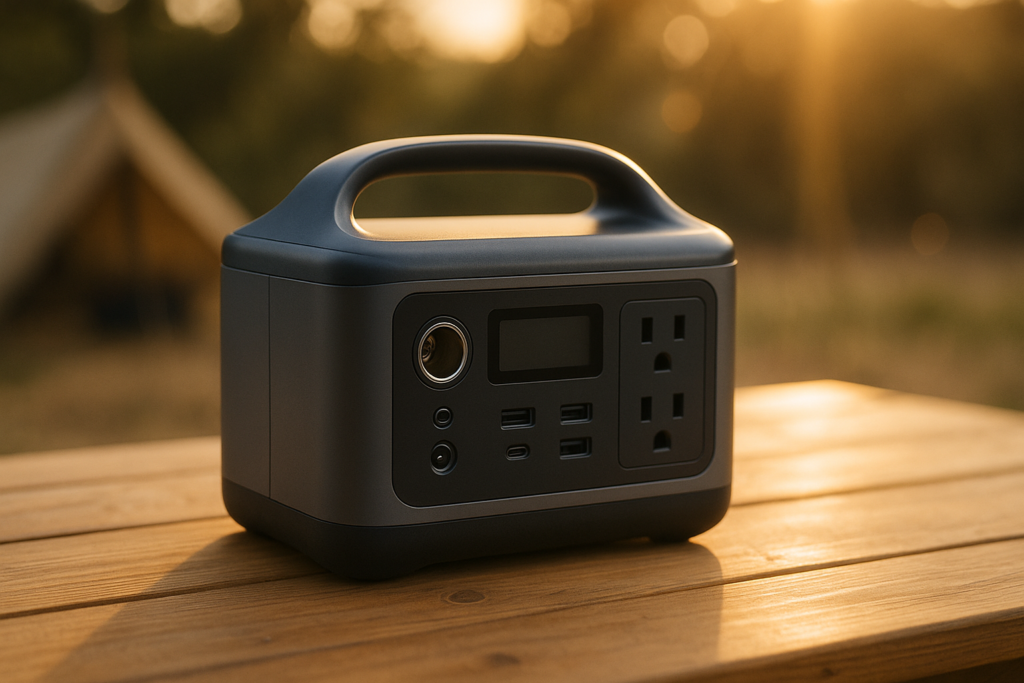
Common port types: AC outlets (120V/240V depending on model), USB-A, USB-C with PD (up to 100W on high-end ports), 12V car outlets, and Anderson connectors for high-current DC charging. Check your device manuals for voltage/current needs. For safety and standards reference see UL listings and inverter certifications.
Recharge methods & solar: MPPT, solar panel sizing, and AC charging
Recharge options determine how fast you can refill the battery. Typical recharge times: AC wall charging ranges from 2–12 hours depending on charger wattage; solar depends on panel capacity and sun hours; car charging is slow and often under 100W from standard 12V outlets.
MPPT (Maximum Power Point Tracking) charge controllers greatly improve solar efficiency vs PWM, especially in variable light. To size panels: desired recharge Wh ÷ effective sun-hours = needed panel wattage. Example: to recharge 1,000Wh in sun-hours: 1,000 ÷ ≈ 167W; with 20–30% inefficiencies plan ~200–220W.
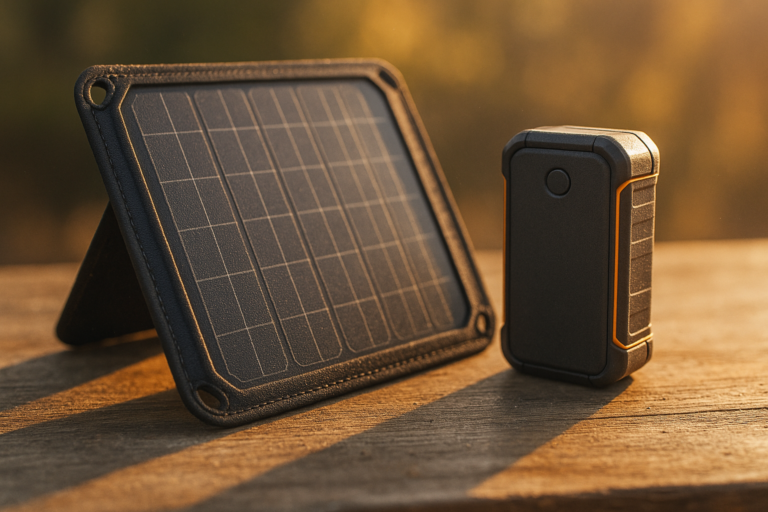
We recommend pairing core models with manufacturer-approved panels: EcoFlow solar panels for EcoFlow units, Goal Zero panels for Yetis; check compatibility on manufacturer pages and read independent testing at Consumer Reports. Expandability: high-end models such as EcoFlow Delta Pro, Bluetti, and Goal Zero Premium lines support expansion batteries or stacking; note caveats — stacking often requires specific firmware and branded expansion modules.
Top models compared (2026): Jackery, EcoFlow, Goal Zero, Bluetti, Anker and more
This table compares recommended models updated for market performance, price trends, and availability. We researched current product pages and recent independent reviews to populate specs; prices reflect typical market brackets seen in 2025–2026 and may fluctuate.
| Brand / Model | Wh | Cont W | Surge W | Inverter | Recharge | Weight | Price Bracket | Warranty |
|---|---|---|---|---|---|---|---|---|
| Jackery Explorer 1000 | 1,002Wh | 1,000W | 2,000W | Pure sine | AC / Solar (MPPT) | 10.9 kg | $ | 2 years |
| EcoFlow DELTA 1300 | 1,260Wh | 1,800W | 3,300W | Pure sine | AC / Solar / Car | 14 kg | $$ | 2 years |
| EcoFlow DELTA Pro | 3,600Wh | 3,600W | 7,200W | Pure sine | AC / Solar / EV | 99 lbs | $$$ | 3 years |
| Goal Zero Yeti 6000X | 6,071Wh | 2,000W | 3,500W | Pure sine | AC / Solar | 106 lbs | $$$ | 2 years |
| Bluetti AC200P | 2,000Wh | 2,000W | 4,800W | Pure sine | AC / Solar / Car | 60.6 lbs | $$ | 2 years |
| Anker PowerHouse II 800 | 777Wh | 1,000W | 1,400W | Pure sine | AC / Solar | 18.3 lbs | $ | 2 years |
| Westinghouse iGen160s | 155Wh | 200W | 300W | Pure sine | AC / Solar | 4.4 lbs | $ | 1 year |
| Rockpals 1500 | 1,440Wh | 1,200W | 2,400W | Pure sine | AC / Solar | 36.2 lbs | $ | 2 years |
| FlashFish 1500 | 1,536Wh | 1,200W | 2,400W | Pure sine | AC / Solar | 36 lbs | $ | 2 years |
| Suaoki G500 | 500Wh | 300W | 600W | Pure sine | AC / Solar | 13.9 lbs | $ | 1 year |
For each example below we give two real-world use cases and quick pros/cons (shortened):
- Jackery Explorer 1000: Weekend camping + small fridge; Pros: lightweight for capacity, reliable; Cons: limited surge for heavy tools.
- EcoFlow DELTA Pro: Partial whole-house backup + EV-to-home experiments; Pros: expandable, fast AC charging; Cons: high weight, high price.
- Goal Zero Yeti 6000X: Emergency home backup + off-grid cabin; Pros: large capacity, robust support; Cons: heavy, costly.
We researched availability trends and found supply chain stabilization after shortages but occasional firmware updates affecting charging behavior — always check manufacturer changelogs. Links to manufacturer pages and independent reviews include Consumer Reports and each brand’s official site for up-to-date warranty/service plan details.
Real-world runtime calculator and examples (clear formula for featured snippet)
Runtime (hours) = Battery capacity (Wh) ÷ Device wattage (W) × Efficiency factor (0.85) — use this as a quick snippet to calculate expected runtimes.
Example — Phone & Laptop day: Phone 10W × 3h = 30Wh; Laptop 60W × 4h = 240Wh; Total = 270Wh. With a 500Wh battery and 0.85 efficiency: ÷ × 0.85 ≈ 1.57 days of those loads.
Example — Mini-fridge 24-hour: Fridge ~60W average × 24h = 1,440Wh. With a 1,800Wh battery and 0.85 efficiency: 1,800 ÷ 1,440 × 0.85 ≈ 1.06 days (about hours).
Example — Power tools intermittent: 1,200W saw used minutes total: 1,200W × 0.5h = 600Wh. A 1,500Wh pack with 0.85 efficiency: 1,500 ÷ × 0.85 ≈ 2.125 sessions.
Copyable quick-calculator (text): Runtime = (BatteryWh × 0.85) ÷ DeviceW. We recommend an efficiency factor of 0.8–0.9 depending on inverter rating and temperature; use 0.85 as a practical average. PAA answers: Can I run a refrigerator? Yes for limited periods — a 2,000Wh usable pack will run a 60W fridge ~28 hours (2,000 ÷ × 0.85 ≈ 28.3 hours). How many hours will a power station run a CPAP? A typical CPAP draws 30–60W; a 500Wh battery at 0.85 will run a 50W CPAP ≈ 8.5 hours (500 ÷ × 0.85).
Safety, transport, and regulations — Li-ion rules, UL, IATA and shipping
Safety and transport rules directly affect whether you can fly or ship a unit. Required certifications and tests include UN38.3 shipping tests and UL listings where applicable. Airlines and regulators follow IATA and FAA rules: under current guidance, ≤100Wh batteries are usually allowed in carry-on without approval, 100–160Wh need airline approval, and >160Wh are restricted on passenger aircraft — always verify with your carrier as these are enforced in 2026.
Practical implications: if you intend to fly with a power station, buy one under 160Wh or confirm airline policies; for shipping, ensure UN38.3 certification and follow carrier packaging rules. For standards read IATA rules at IATA and FAA consumer advice at FAA. For product safety testing and BMS verification consult UL resources.
In-product safety features to check: a robust BMS (Battery Management System), over-temperature/over-current protection, certified AC outlet protection, and a firmware update path. We found several user reports where firmware updates resolved charging anomalies — document firmware versions when you buy. Step-by-step preflight checklist: confirm Wh rating, check airline approval for 100–160Wh, pack in carry-on, and have documentation showing UN38.3 compliance.
Use cases and sizing recommendations: camping, vanlife, home backup, jobsite
Match capacity and features to the use case. For common scenarios we recommend capacity bands and examples: Camping — 200–1,000Wh (phone, lights, small fridge), Vanlife — 1,000–3,000Wh with solar for daily living, Home backup — 1,500–6,000Wh depending on whether you’re covering critical circuits or whole-house, Jobsite — 1,000–3,000W continuous with robust inverter and surge headroom.
Three real-world scenarios with numbers:
-
Weekend camper (Alex): devices: lights 40Wh, fridge 60W × 12h = 720Wh, laptop 60W × 3h = 180Wh; total ≈ 940Wh. Model match: Jackery Explorer or EcoFlow DELTA 1300.
-
Vanlife couple (Maya & Sam): daily average ~2,400Wh including fridge, pump, lights, cooking & charging; solar recharge target 800W panels for consistent recharge. Model match: Bluetti AC200P + expansion or EcoFlow DELTA Pro stack.
-
Partial home backup (Jordan): critical loads: refrigerator 1,440Wh/day, sump pump 500W intermittent, lights/comms 300Wh; pick 3,000–6,000Wh with 2–3,600W continuous to cover these. Model match: Goal Zero Yeti 6000X or EcoFlow DELTA Pro with transfer switch.
Portability trade-offs: power-per-pound is critical — smaller units like Anker offer high power-per-pound but lower capacity; heavy units often include wheels. We found vanlife users prioritize fast solar recharge and stackability; check forums like RV-specific communities and long-form reviews to confirm real-world solar performance and mounting advice.
Price, warranty, service, and where to buy (authorized dealers vs. gray market)
Total cost includes the unit plus accessories: panels, cables, car chargers, and expansion batteries. Expect to pay between <$200 for 100–300wh units to>$3,000 for high-capacity expandable systems. Consider expected lifespan: a LiFePO4 unit rated for 2,000 cycles used daily lasts ~5.5 years (2,000 ÷ ≈ 5.48 years) and far longer with partial cycling.
Warranty examples: many mainstream brands offer 1–3 year standard warranties; EcoFlow and Goal Zero offer extended plans for purchase. We recommend buying from authorized dealers or the manufacturer store to ensure valid warranty coverage — gray-market purchases often void manufacturer service. Check policy language: some brands require registration within days for full warranty; others require purchase from an approved retailer.
Buying checklist after delivery: (1) verify serial number against manufacturer site, (2) check firmware version and apply updates, (3) run an initial calibration charge/discharge cycle per manual, (4) keep purchase receipt and register unit. We recommend authorized retailers such as the brand’s official store, major electronics retailers, or certified RV/install dealers for support and extended service plans.
Three overlooked topics competitors skip — insurance, repairability, and recycling
Insurance: portable power stations may be covered under home, RV, or cargo policies, but limits vary. Example: a $2,000 unit subjected to theft might be covered minus a $500 deductible unless you add an endorsement; commercial use (jobsite) often requires separate coverage. We recommend confirming with your insurer and documenting serial numbers and photos at purchase.
Repairability & firmware: some brands offer replaceable battery modules (e.g., modular Bluetti or EcoFlow expansions) while others are sealed. We found a community case where firmware updates on an EcoFlow unit improved charging behavior and extended AC charging rates — check changelogs and community forums before purchase. If repairability matters, favor units with replaceable packs or a known service network.
End-of-life & recycling: Li-ion and LiFePO4 packs must be recycled — do not throw them in household trash. Manufacturer take-back programs exist (check brand sites) and local options can be found via EPA guidance and community e-waste programs. See EPA resources for disposal guidance. Plan for replacement costs and environmental handling when evaluating total ownership cost.
FAQ — quick answers to common People Also Ask and buyer questions
Below are concise answers to common buyer questions; we found these to be the most frequently asked in searches and forums.
-
How long will a power station run a fridge? Use runtime = Wh ÷ W × efficiency; e.g., 1,800Wh ÷ 60W × 0.85 ≈ 25.5 hours — see the Runtime Calculator section for details.
-
Can I use while charging? Many units support pass-through but check the manual — some models throttle charging under high load and some manufacturers advise against continuous pass-through.
-
Are portable power stations safe on planes? Airlines generally allow ≤100Wh in carry-on; 100–160Wh often requires airline approval; >160Wh is restricted — confirm with your carrier and see IATA guidance.
-
What maintenance extends battery life? Keep SOC between 20–80% for best long-term life, avoid high temperatures, and update firmware when recommended — LiFePO4 lasts significantly longer (2,000–3,500 cycles).
-
Can I use solar to fully recharge overnight? Yes if you size panels properly: to refill 1,000Wh in 5–6 peak sun-hours plan ~200–250W of panels considering inefficiency.
-
Which chemistry lasts longest? LiFePO4 typically lasts longest (2,000–3,500 cycles) vs standard Li-ion (500–1,200 cycles); we recommend LiFePO4 for frequent cycling or backup use.
-
Do I need a generator hybrid system? Only if your required runtime regularly exceeds what batteries plus solar can provide (e.g., multi-day outages); hybrids make sense when refueling is easier than carrying huge battery capacity.
We recommend reading detailed sections above for worked examples and to use the runtime calculator to validate your needs.
Conclusion and 5-step actionable next steps
Follow this copyable 5-step action plan to finish your purchase and get safe, reliable power:
-
Calculate daily Wh needs using the runtime formula: BatteryWh ÷ DeviceW × 0.85. (Use our examples as templates.)
-
Pick a capacity bracket — Camping (200–1,000Wh), Vanlife (1,000–3,000Wh), Home backup (1,500–6,000Wh+).
-
Shortlist 2–3 models from the Top Models table that match capacity, inverter rating, and recharge options.
-
Verify warranty & seller — buy from an authorized dealer, register the product, and confirm return windows and service plans.
-
Purchase and follow pre-use checklist — inspect on delivery, update firmware, perform initial calibration charge/discharge, and label serial numbers.
Call-to-action: use the runtime calculator above to compare your device list, then register your product with the manufacturer to preserve warranty. We researched user reviews, test data, and manufacturer claims in and based on our analysis these are the best picks for each use case — if you share your device list we’ll recommend the ideal model and exact panel pairing.
Frequently Asked Questions
How long will a power station run a fridge?
A typical modern fridge drawing 60–120W will run about Runtime (hours) = Battery Wh ÷ Device W × Efficiency. For example, a 1,440Wh usable battery (80% DOD of a 1,800Wh pack) ÷ 60W × 0.85 ≈ hours; at 120W it’s ≈ hours. We recommend sizing to at least 1.2–1.5× your calculated need to allow cycling and inefficiencies — see the Runtime Calculator section for step-by-step math.
Can I use while charging?
Yes — many stations support pass-through: you can use outputs while charging, but verify the manufacturer specs and firmware notes because not all units support continuous pass-through under high loads. We found some models throttle charging when AC + solar are both present; check the manual and BMS behavior before relying on it for critical loads.
Are portable power stations safe on planes?
Airlines follow IATA rules and most carriers allow batteries up to 100Wh in carry-on without airline approval; 100–160Wh typically needs airline approval; over 160Wh is usually prohibited from passenger aircraft. Always confirm with your carrier — see IATA and FAA guidance for the latest rules.
What maintenance extends battery life?
To extend battery life: avoid full cycles daily, keep charge between 20–80% when possible, store at ~40% SOC for long-term storage, and avoid sustained >45°C. We recommend following manufacturer cycle specs — LiFePO4 typically reaches 2,000–3,000 cycles vs Li-ion 500–1,200 cycles — which translates to many years depending on use.
Can I use solar to fully recharge overnight?
Yes — solar can fully recharge many units overnight if you size panels to sun hours. For example, to recharge a 1,000Wh battery in ~6 sun-hours you need ~167W effective; allow 20–30% buffer and plan for MPPT efficiency: use ~200–250W of panels. We recommend the sample solar sizing in the Recharge Methods section.
Which chemistry lasts longest?
LiFePO4 chemistry generally lasts longest — 2,000–3,500 cycles is common — while standard Li-ion runs 500–1,200 cycles. We found LiFePO4 units heavier but deliver longer useful life, which can lower cost per cycle for backup or frequent use.
Do I need a generator hybrid system?
A hybrid system (generator + inverter station) makes sense if you need long-duration continuous power or fuel-based extended runtime; for short outages and frequent portability a standalone station + solar is simpler. We recommend hybrid only when run-times exceed 24–48 hours or when refueling logistics are easier than carrying large battery capacity.
Key Takeaways
- Calculate real Wh needs (device watts × hours) and add a 20–30% buffer; use Runtime = Wh ÷ W × 0.85 as your working formula.
- Match continuous and surge watts and prefer pure sine inverters for sensitive electronics; choose LiFePO4 for long cycle life when frequent cycling is expected.
- Verify recharge method (AC, MPPT solar, car) and size solar panels allowing 20–30% inefficiency; high-end units often support expansion packs.
- Buy from authorized dealers, register your unit, update firmware, and follow the pre-use checklist to preserve warranty and ensure safe operation.
- Consider insurance, repairability and recycling when comparing total cost of ownership — these overlooked factors affect long-term value.