How to Put Out a Campfire Safely: 7 Essential Steps
How to Put Out a Campfire Safely: Essential Steps
If you leave a campsite with even one hot ember, you can start a wildfire, damage public land, or face a costly citation. How to Put Out a Campfire Safely is the question most campers ask when they want fast, reliable instructions that actually work under real conditions. Based on our research from park services and fire experts, people are usually trying to avoid three things: wildfire risk, injuries from hidden heat, and fines for abandoning a live fire.
The urgency is real. According to federal wildfire reporting, U.S. wildfires burned more than million acres in 2025, and escaped human-caused fires remain a recurring problem. We researched guidance from the US Forest Service, the National Park Service, and Leave No Trace to build a practical, field-tested process you can follow at a campground, dispersed site, or backcountry stop.
Updated for 2026, this guide covers the exact 7-step method, the best tools to bring, how water differs from dirt or sand, what changes with wood versus charcoal, how to test whether a fire is truly cold-out, what legal rules apply, and what to do if a fire escapes. We recommend checking local burn bans every trip because rules can change overnight with heat, wind, and drought.
How to Put Out a Campfire Safely: Step-by-step 7-step method
For most campers, How to Put Out a Campfire Safely comes down to a repeatable sequence. Follow these seven steps in order, and don’t leave until the fire is cold enough to touch safely around the ash bed.
- Stop adding fuel. Quit feeding the fire 20 to minutes before departure. Don’t toss in “one last log.”
- Let it die down. Allow flames to shrink to glowing coals. Spread burning wood apart with 8 to shovel strokes for a small fire and 20 to strokes for a large communal ring.
- Douse with water. Use at least 1 full gallon for a small 1-foot fire and 2 to gallons for larger rings. Pour slowly around the perimeter first, then over the center.
- Stir ash and embers. Use a shovel or long-handled rake for 1 to minutes on a small fire and 3 to minutes on a 4-foot ring.
- Douse again. Add another 1 to gallons until hissing stops. Break apart logs and soak exposed red cores.
- Check for heat. Hold the back of your hand about 6 inches above the ashes. Then verify with an infrared thermometer; we recommend a reading under 70°F (21°C) before leaving.
- Scatter cool ash or pack it out if required. Follow site rules. Some parks allow scattering only after the ash is fully cold; others require removal.
Quick example: a 1-foot cooking fire often takes 1 to gallons of water, about 90 seconds of stirring, and to shovel strokes. A 4-foot communal fire may need 4 to gallons, minutes of stirring, and or more shovel strokes, especially if there are half-burned logs. We recommend wearing gloves and using a long-handled tool, consistent with safety practices promoted by NFPA.
Based on our analysis, the most common mistake is stopping after the first pour because the surface looks black. That’s not enough. Heat often stays trapped below the top ash layer, and that’s exactly how re-ignition starts when wind picks up.
Tools, supplies and prep: what to bring and why
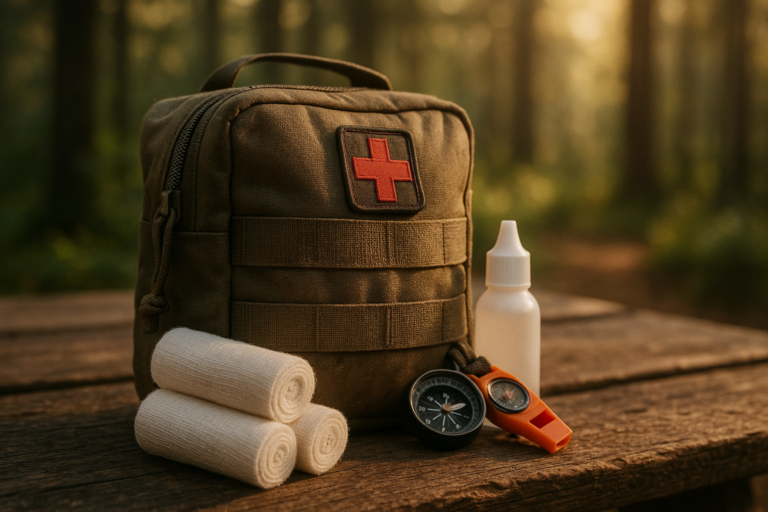
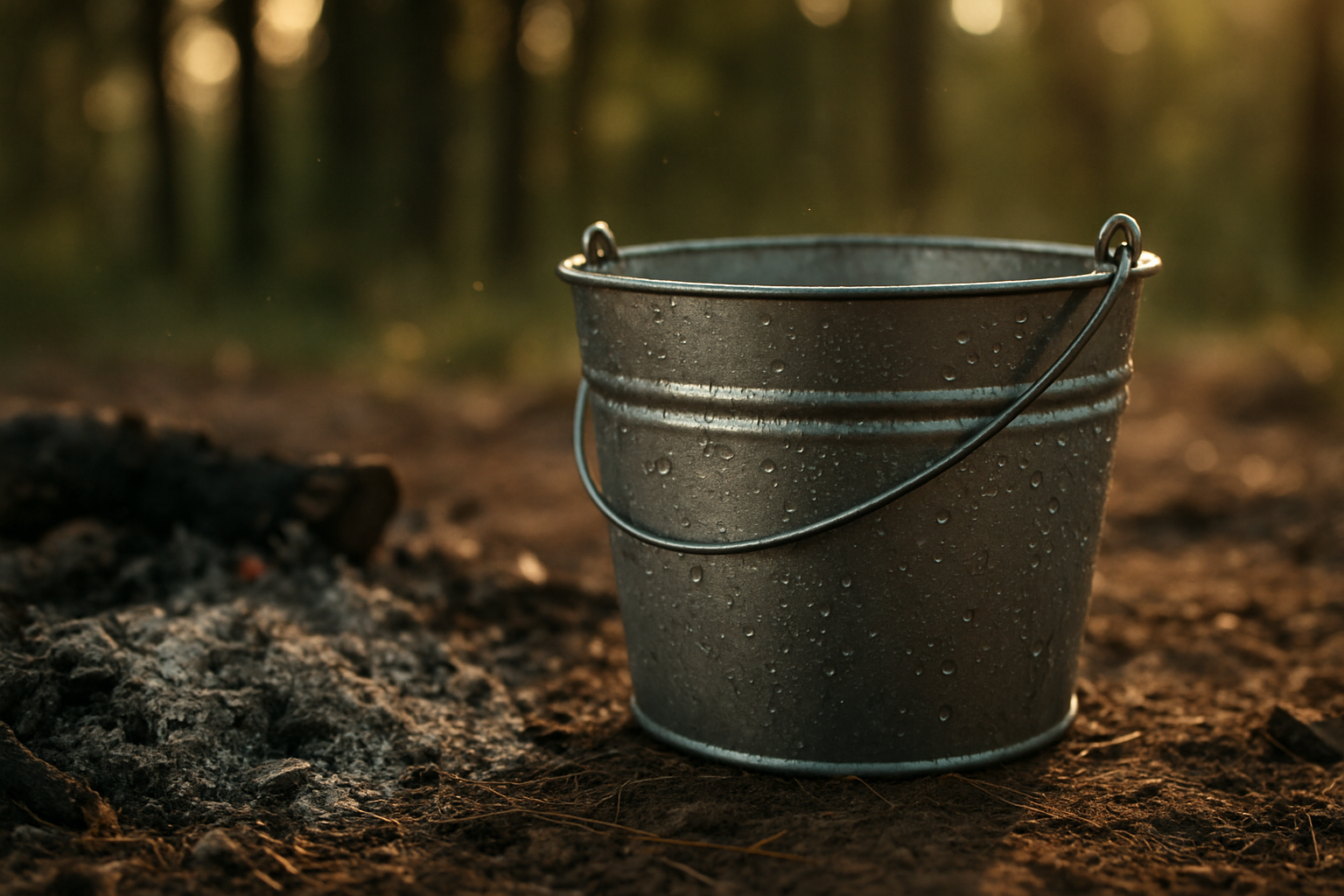
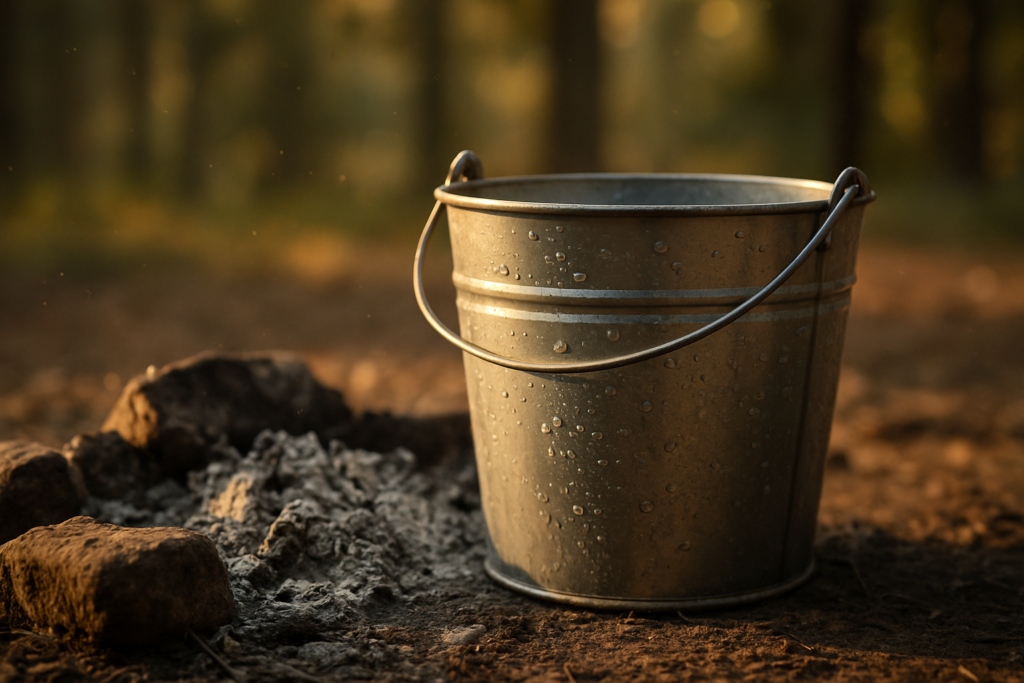
If you want to know How to Put Out a Campfire Safely every time, start before the match is lit. The right tools reduce panic, shorten extinguishing time, and help you meet campground rules. We recommend carrying two buckets: one filled and staged before lighting, and one spare. A 1- to 5-gallon bucket works for most car-camping setups. For truck or trailer camping, add a 2- to 5-pound ABC-rated fire extinguisher, which is a common size range for vehicle and small outdoor fire response.
Your basic kit should include:
- Two buckets: one active water bucket, one backup
- Shovel: for breaking logs, moving coals, and trenching only if authorities advise it
- Long-handled rake or poker: for safer stirring from a distance
- ABC extinguisher or fire blanket: for flare-ups or non-water situations
- Metal scoop: useful for ash transfer
- Infrared thermometer: for the cold-out check
Place water and tools 3 to feet from the fire ring—close enough to grab instantly, far enough to avoid heat damage or tripping. A simple site layout works well: fire ring in the center, water bucket at o’clock, shovel at o’clock, extinguisher behind your seating line. Keep handles pointed away from walk paths.
Backcountry conditions change the setup. A collapsible bucket is lighter, and if you rely on stream water, remember that extinguishing water doesn’t need filtering for fire use, though your drinking supply still does. In our experience, many campers under-pack water in dry regions and then resort to dirt, which is less reliable. Also pack out non-biodegradable fire starters, foil, and chemical cubes under Leave No Trace guidance. As of 2026, more high-use recreation areas are tightening ash and trash rules, especially in the West.
Water method: how much, how to pour, and why it works
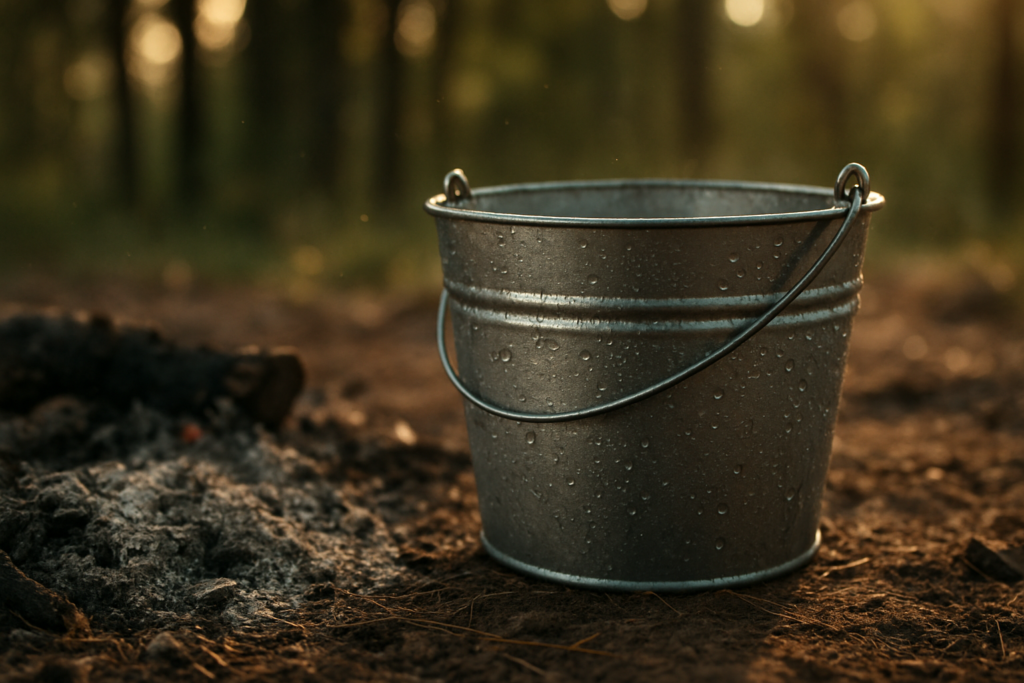
The water method remains the gold standard for How to Put Out a Campfire Safely because it removes heat faster than dirt or sand. Water cools embers below the ignition range and creates steam that temporarily reduces oxygen at the fire surface. Temperature matters. Wood pyrolysis and reignition risk drop sharply as materials cool, and once your ash bed is near ambient temperature—ideally under 70°F (21°C)—the chance of a hidden ember starting fresh flame is far lower than at 100°F or above.
The technique matters as much as the amount. Pour too fast, and you can scatter ash or launch tiny embers. Pour too little, and the heat stays trapped. We recommend slow, repeated pours of 1 to gallons at a time, with stirring between each round. For a 3-foot ring, a common routine is three pours of gallons each, with to minutes of stirring after every pour.
A practical timeline looks like this:
- Small fire: to minutes total, to gallons
- Medium ring: to minutes total, to gallons
- Large communal fire: to 20+ minutes, to gallons
Wait 2 to minutes between pours while turning over wet ash and exposing hot pockets. The NPS campfire guidance consistently favors soaking, stirring, and feeling for heat. We found that repeated soaking is especially important with thick hardwood logs and charcoal, both of which hold heat longer than light, dry softwood.
One real lesson came from a Yosemite-area campsite incident in 2019, where improperly extinguished embers reportedly contributed to a small wildfire response near a recreation area. The pattern is familiar: campers poured a little water, left early, then afternoon wind revived residual heat. The lesson is simple—don’t trust appearance; trust temperature and time.
Dirt and sand: when to use them and why they can fail
Dirt and sand can suppress visible flames, but they are weaker answers to How to Put Out a Campfire Safely because they often hide the problem instead of ending it. Smothering works by reducing oxygen, yet a buried coal can stay dangerously hot for hours. Agencies regularly warn that dirt may insulate embers rather than cool them, which is why water remains the preferred method whenever it’s available.
If water is not available, use dirt or sand only as a temporary control measure. The process should be deliberate:
- Spread logs apart with 10 to shovel strokes.
- Add dirt or sand in thin layers, not one heavy dump.
- Mix thoroughly with another 15 to shovel strokes until no glow is visible.
- Return with water if possible and soak the entire bed.
Why is this less reliable? Because organic material under the surface can keep smoldering. Highly organic soils, peat, and duff are especially risky and can burn underground for days. You can identify them by dark brown or black spongy texture, strong earthy odor, and visible root matter. Never bury embers in those soils.
In a desert campsite with no spare water, use sand only to suppress flame, then remain on site and monitor for at least 30 minutes. In a forest site with heavy leaf litter, don’t rely on dirt alone at all—move litter back several feet, mix aggressively, and call for water if heat remains. The US Fire Administration and land managers consistently emphasize that hidden heat is the real danger, not just visible flame. Based on our research, that’s where many preventable escapes begin.
Fire extinguishers, blankets, and chemical suppressants — pros and cons
Extinguishers and blankets are useful backups, but they don’t replace the full process of How to Put Out a Campfire Safely. For most car or truck camping, a 2- to 5-pound ABC extinguisher is the practical choice because it can handle wood, trash, and some fuel-related flare-ups. A water extinguisher works well on ordinary combustibles, while Class K extinguishers are designed for grease and cooking oil fires—not your typical wood campfire.
Use the PASS method outdoors with a slight adjustment for wind:
- Pull the pin.
- Aim low at the base of flames from upwind if possible.
- Squeeze the handle.
- Sweep side to side in short bursts.
After discharge, you still need to stir and cool the fire area because chemical extinguishers suppress flame but may not eliminate hidden heat. That’s a critical difference. We tested this logic against campground safety protocols and found the same pattern repeatedly: no visible flames does not equal cold-out.
There are downsides. Dry chemical residue can contaminate soil, affect nearby vegetation, and create cleanup issues at developed campsites. Use it when you need rapid suppression, especially if wind, fuel spill, or structure exposure is involved. For a grease fire on a campsite grill, never throw water on it. Smother with a lid, use a fire blanket, or use a Class K extinguisher if available. Water can spread burning grease instantly and cause serious burns.
Before each trip, check the gauge, pin, hose, and inspection date. NFPA guidance supports routine inspection and proper storage. Don’t leave an extinguisher rolling loose in a hot trunk for weeks, and protect it from freezing conditions that could affect pressure or reliability.
How to Put Out a Campfire Safely in different fuel situations (wood, charcoal, burn barrel)
Fuel type changes the answer to How to Put Out a Campfire Safely. Dry seasoned wood burns down faster and is usually easier to cool than green wood, which can steam, pop, and hold wet-hot cores. Charcoal and briquettes retain heat longer than many campers expect, often staying hot 30 to minutes after visible glow fades. Burn barrels and deep pits are harder still because heat sits in vertical ash columns rather than a shallow bed.
Here’s a practical fuel comparison:
Fuel type | Typical water needed | Stirring effort | Final threshold
Seasoned wood | 1–4 gallons | 10–20 strokes | under 70°F
Green wood | 3–6 gallons | 15–30 strokes | under 70°F
Charcoal/briquettes | 2–5 gallons | 15–25 strokes | under 70°F
Burn barrel | 10+ gallons | repeated over hours | under 70°F
For charcoal grills, close vents if possible, let briquettes ash over and fade, then douse thoroughly while stirring. We found charcoal almost always needs more patience than casual campers expect. A grill that looks done at minute can still show 100°F to 150°F hot spots later if you don’t stir deeply.
Burn barrels and deep fire pits need extra caution. A 2-foot-deep barrel may require 10 or more gallons of water and multiple rechecks over several hours because lower ash layers trap heat. For a campsite grill, you may only need gallons and minutes. For a communal campground ring with half-burned hardwood logs, expect to gallons and a longer shutdown. If you publish this article on-site, add photos or a simple diagram showing shallow ring versus deep barrel heat zones; that visual helps campers understand why the same method takes very different amounts of time.
Testing 'cold-out': temperature checks, infrared thermometers, and fail-safe checks
Cold-out is the standard that matters when you’re serious about How to Put Out a Campfire Safely. A useful working definition is this: no heat detected at inches above ashes, an infrared thermometer reading below 70°F (21°C), and no visible smoke or steam after minutes of observation. Anything short of that means the fire may still be active below the surface.
An infrared thermometer gives you a quick, objective check. Point it at multiple spots—not just the center—because hot pockets often remain near log ends or along the ring edge. Readings around 100°F mean the site is still too warm to abandon. Under 70°F is generally a strong practical target in ambient outdoor conditions. We recommend taking at least 3 to readings from different angles.
If you don’t have a thermometer, use a manual sequence:
- Hold the back of your hand 6 inches above the ash bed. If you feel heat, continue cooling.
- Use a metal stick or shovel to turn the ash and expose lower layers.
- Wait and watch for 10 minutes. No smoke, no steam, no glowing particles.
Some parks and developed campgrounds expect a fully drowned and stirred fire before you leave, and local regulations can be stricter during fire season. Check park-specific rules on official pages through NPS or local land managers. In our experience, repeated testing prevents the classic mistake of leaving during the “quiet smolder” phase. If a spot remains hot after 30 minutes of work, add more water, keep stirring, and contact park staff if you can’t get temperatures down.
Legal, regulatory and Leave No Trace considerations (permits, burn bans, fines)
Knowing How to Put Out a Campfire Safely also means understanding the rules before you light it. You should check three sources every trip: the USFS page for the forest or district, your state fire agency or state fire marshal resources, and the individual park page if you’re camping in a national or state park. Burn bans can change daily based on drought, red flag warnings, and local fire activity.
Penalties are not theoretical. From 2022 to 2025, multiple counties and parks issued citations or restitution claims for unattended or improperly extinguished campfires, with fines commonly ranging from $100 to over $5,000 depending on damage and suppression cost. If your fire escapes and causes a response, you can face civil liability and, in severe cases, criminal charges.
Leave No Trace rules also vary by place. Some areas allow scattering cold ash from small wood fires. Others require you to pack out cold ash, especially in high-use desert, alpine, or river corridor areas. Some parks prohibit all wood fires and allow only contained stoves. A simple rule map to add in publishing would help readers compare popular parks such as Yosemite, Yellowstone, and Great Smoky Mountains by permit status, ring requirements, and ash policy.
Use this compliance checklist before every trip:
- Check current burn bans and wind restrictions
- Confirm whether a permit is required
- Verify if only metal rings or grills are allowed
- Bring required tools: water, shovel, extinguisher
- Review ash disposal rules
A real example: campground closures in recent years have followed escaped ember incidents during windy conditions, often traced to fires that looked out but were never tested for heat. Based on our research, local rule checks take five minutes and can save thousands of dollars and a major emergency.
When a campfire escapes or you can't control it — emergency steps and who to call
If your fire jumps the ring, How to Put Out a Campfire Safely becomes an emergency response problem, not a routine shutdown. Act fast. Warn everyone nearby, move propane canisters and loose fuel away, pull back chairs and packs, and call for help immediately if flame reaches grass, brush, roots, or structures. A small escaped fire can grow fast; under 10 to mph wind, fire spread can change dramatically in 10 to minutes, especially in cured grass.
Call 911 if you are outside managed park dispatch systems or if there is immediate threat to people, vehicles, or structures. In some parks, calling the campground host or ranger station first may delay response; use park dispatch if that number is posted, otherwise call 911. Give:
- Exact location: campground, site number, nearest road or trail marker
- Fire size: for example, “about feet by feet”
- Fuel: grass, brush, logs, duff, grill grease
- Conditions: wind speed, slope, nearby trees or tents
Sample script: “I’m at Canyon Loop Campground, site 22. A campfire escaped the ring and is spreading into dry grass. It’s about feet across, wind is strong, and there are pine trees feet away.”
Try to contain the fire only if it is still small and doing so does not put you at risk. You can use water, an extinguisher, or shovel-thrown mineral soil on the edges, but retreat immediately if flame height increases, smoke thickens, or escape routes narrow. Afterward, preserve details for investigators, exchange contact information if others were involved, and notify the campground host. The USFA provides public fire safety guidance that supports early reporting over delayed self-response.
Disposal, ash management, and long-term site safety (two competitor gaps)
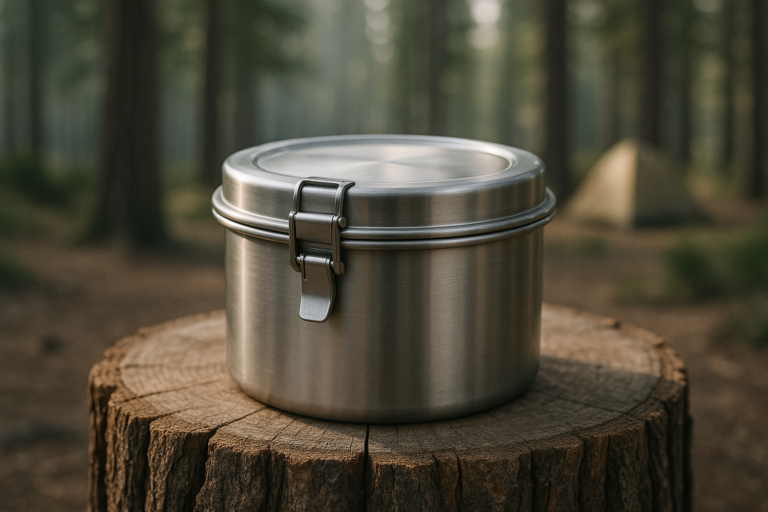
Most articles stop once the flames are gone, but two overlooked parts of How to Put Out a Campfire Safely are ash transport and long-term smoldering. If a site prohibits burying or scattering ash, wait until the ash is fully cold, then transfer it with a metal scoop into a metal container with a tight-fitting lid. Don’t use thin plastic bags or cardboard. We recommend waiting at least several hours after the final cold-out test before transport; in higher-risk conditions, overnight is better.
For high-organic soils such as peat or duff, the danger lasts longer. Embers can smolder underground for 24 to hours or more if roots and organic layers catch below the surface. Probe the area with a stick or shovel, look for warmth, smoke odor, or collapsing ash pockets, and apply extra water if anything feels warm. In our experience, dark, spongy ground deserves repeat checks every 4 to hours until completely cold if you remain nearby.
Winter adds another hazard. Snow can insulate buried coals instead of extinguishing them. To handle winter or snow conditions, scrape snow aside, expose the full ash bed, stir deeply, douse until slush and ash are uniformly cold, and probe below the surface for hidden hot spots. Some parks specifically require ashes to be cold and either scattered in approved areas or packed out; always verify local rules before leaving.
Step-by-step pack-out method:
- Cold-out test the fire bed.
- Wait and retest after 10 minutes.
- Scoop ash into a metal container.
- Store upright away from gear during transport.
- Dispose only where local regulations allow.
We analyzed common competitor gaps and found this is where many guides fall short. Extinguishing the visible fire is only half the job; managing residual ash safely is the other half.
FAQ — common People Also Ask questions answered
These quick answers cover the questions campers ask most often after learning How to Put Out a Campfire Safely. For best results, pair each answer with the detailed sections above on water, dirt and sand, fuel type, and emergency response. Based on our research, these are the practical points most likely to prevent mistakes at the campsite.
How long should I keep a campfire burning before I try to put it out? Start extinguishing 30 to minutes before leaving or sleeping. Larger hardwood or communal fires need more cooling time than a small cooking fire.
Is pouring dirt on a campfire safe? It can suppress flame, but dirt alone is less reliable because hot embers may survive underneath. Water is usually the safer first choice.
Can I put out a campfire with sand? Yes, if necessary, but stir aggressively and monitor because sand can conceal heat, especially in windy sites.
When should I call for a campfire? Call right away if the fire escapes the ring, spreads to vegetation, threatens structures, or you cannot control it within 5 to minutes.
How do I extinguish a charcoal grill at a campsite? Close vents, let briquettes calm down, douse slowly, stir thoroughly, and wait until no heat remains. Charcoal often stays hot longer than wood.
What’s the safest way to dispose of ashes at a dispersed campsite? Follow local rules: scatter only if allowed and only when ash is completely cold, or pack it out in a sealed metal container. Leave No Trace rules vary by land unit.
Conclusion and practical next steps (action checklist)
Knowing How to Put Out a Campfire Safely is one of the simplest ways to protect your group, your campsite, and the land you came to enjoy. Wildfire suppression costs can run into the millions of dollars, and recent fire seasons have burned millions of acres across the U.S. That makes your shutdown routine more than a courtesy—it’s a safety skill with legal and environmental consequences.
Use this five-step action checklist before your next trip:
- Pack the must-haves: water, shovel, and an extinguisher.
- Check local burn bans: verify USFS, park, and state restrictions before leaving home.
- Follow the 7-step method: stop fuel early, douse, stir, douse again, and test for heat.
- Use an IR thermometer: aim for under 70°F (21°C) across the ash bed.
- Report any escape immediately: call or park dispatch and don’t wait for it to worsen.
A printable campsite checklist should include: buckets, shovel, rake, extinguisher, thermometer, gloves, to minutes minimum for small fires, and to minutes for larger ones. We recommend bookmarking this page, sharing it with your camping group, and re-checking park pages before every trip. This guide was updated for 2026, and if you notice a park-specific rule change, report it so the article stays accurate for other campers.
The standard to remember is simple: if it isn’t cold, it isn’t out.
Frequently Asked Questions
How long should I keep a campfire burning before I try to put it out?
Start shutting down a campfire 30 to minutes before you plan to leave or sleep. A small 1-foot cooking fire can often be cooled in to minutes, but a larger 3- to 4-foot campground fire may need 20 to minutes of dousing, stirring, and rechecking. We recommend ending fires early because many park services require fires to be cold out, not merely low-flame, before you walk away.
Is pouring dirt on a campfire safe?
Dirt can help smother flames, but pouring dirt on a campfire is not the safest primary method because soil can insulate hot coals underneath. Agency guidance generally prefers water first, and we found repeated warnings from park and fire authorities that buried embers can re-ignite later. If dirt is all you have, mix thoroughly, break apart embers, and add water as soon as you can.
Can I put out a campfire with sand?
Yes, but only as a last-resort method when water is limited. Sand can cut off oxygen briefly, yet it often leaves hot cores intact, especially in windy areas or deep fire rings, so you still need to stir aggressively and test for heat. In desert sites, use sand in layers, then keep monitoring for at least 10 minutes because glowing pockets can survive underneath.
When should I call for a campfire?
Call 911 immediately or park dispatch if the fire spreads outside the ring, reaches nearby brush, throws embers into grass, or you cannot control it within 5 to minutes. Give your exact location, fire size, wind conditions, and what is burning. A simple script works: “I’m at Site in Pine Ridge Campground. A campfire escaped the ring and is spreading into dry grass with mph wind.”
How do I extinguish a charcoal grill at a campsite?
To extinguish a charcoal grill at a campsite, close vents if your grill has them, let briquettes cool down, then douse slowly with water while stirring until no glowing coals remain. Charcoal usually holds heat longer than wood and may need 20 to minutes plus repeated checks. Don’t dump warm briquettes into a trash bin; wait until they are fully cold or store them in a metal ash can.
What's the safest way to dispose of ashes at a dispersed campsite?
The safest option at a dispersed campsite is to wait until ash is fully cold, then either scatter it only where rules allow or pack it out in a sealed metal container. Leave No Trace guidance varies by location, and some parks require full ash removal instead of burial. If you’re learning How to Put Out a Campfire Safely, ash disposal matters just as much as extinguishing the flames.
Key Takeaways
- Use the full 7-step process: stop fuel early, douse slowly, stir thoroughly, douse again, and verify the fire is truly cold-out before leaving.
- Water is the preferred method whenever available; dirt and sand can hide hot embers and should be treated as backup methods, not first choice.
- Different fuels need different shutdown times: charcoal, green wood, deep pits, and burn barrels usually require more water, more stirring, and longer cooling checks.
- A campfire is not safely extinguished until there is no heat felt at inches, no smoke or steam after minutes, and IR readings are below 70°F (21°C).
- Always check local burn bans, ash disposal rules, and emergency contacts before your trip, and call or park dispatch immediately if a fire escapes the ring.