How to Stay Warm and Avoid Hypothermia Outdoors: 12 Essential Tips
How to Stay Warm and Avoid Hypothermia Outdoors: Essential Tips
Meta Description: How to Stay Warm and Avoid Hypothermia Outdoors — evidence-based tips, emergency steps, gear checklist and trip-planning advice for hikers and campers (Updated 2026).
How to Stay Warm and Avoid Hypothermia Outdoors — Intro: what you're looking for and why it matters
If you searched How to Stay Warm and Avoid Hypothermia Outdoors, you probably want two things right now: practical ways to keep your body warm in the field and clear steps to follow if someone starts getting cold, confused, or dangerously wet. That need is urgent. Cold injuries escalate fast, especially when wind, rain, fatigue, and poor planning stack up at the same time.
We researched current guidance from the CDC, the National Weather Service (NWS), and the National Park Service (NPS), and we found the same pattern across rescue, medical, and outdoor-safety sources: get dry, block wind, insulate the core, add safe heat, and know when to call for help. Those basics save lives, but the details matter more than most guides admit.
This guide goes further than the usual layering advice. Based on our analysis of current guidance in 2026, it covers competitor gaps that often get skipped: medications that increase cold risk, battery-heated gear and cold-weather runtimes, SAR activation triggers, and a practical packing checklist you can actually use before a trip. We also included a short 10-step emergency response list designed to be easy to memorize or screenshot.
Why take this seriously? Cold-related illness and injury remain a real public-health issue, and CDC mortality data show more than 1,000 cold-related deaths occur annually in the U.S. in many recent years. Add in the fact that the NWS warns wind chill can speed heat loss dramatically, and you can see why a routine day hike turns serious so quickly. Updated 2026, this guide gives you field-tested actions, not vague reminders to “dress warmly.”
How to Stay Warm and Avoid Hypothermia Outdoors — Quick 10-step emergency response
If you need a fast answer, use this sequence. We found that early insulation of the core plus removal of wet clothes cuts heat loss fastest. These steps align with advice from the CDC and NWS.
- Move to shelter immediately. Get out of wind, rain, snow, or water. A tent, vehicle, snow trench, tree cover, or emergency bivy can reduce convective heat loss within minutes.
- Remove wet clothing. Strip soaked layers, especially socks, gloves, and base layers. Even a thin wet shirt can pull heat away fast through conduction and evaporation.
- Insulate the core first. Wrap chest, back, neck, head, and groin with dry layers, sleeping bag insulation, or blankets. Prioritize the torso before fingers and toes.
- Apply warm packs safely. Put chemical warmers or wrapped hot bottles on the chest, armpits, and groin. Many hand warmers produce heat for 6–10 hours, depending on brand and oxygen exposure.
- Give warm, sweet fluids if fully conscious. Sugary tea, warm electrolyte mix, or broth can help if the person is alert and swallowing normally.
- Avoid alcohol and limit caffeine. Alcohol increases heat loss risk. Strong caffeine may worsen shakiness or dehydration in some people.
- Monitor breathing and mental status. Check every few minutes for worsening confusion, slowing pulse, or shallow breathing.
- Use external heat carefully. Heated seats, hot water bottles, or battery-heated blankets can help, but don’t place intense heat on numb skin and don’t overheat the extremities first.
- Call for help or activate a PLB. If the person is getting worse, cannot walk, is very confused, or you’re remote, contact emergency services or use a Personal Locator Beacon.
- Prepare for evacuation. Keep the person horizontal if possible, minimize rough handling, and be ready for a litter carry, assisted walkout, or SAR pickup.
Escalate immediately if the person is unconscious, has shallow or irregular breathing, has a core temperature below 32°C, or stops improving. In remote terrain, a PLB or EPIRB activation is appropriate when self-evacuation is unsafe, communication is unreliable, or the patient shows moderate to severe hypothermia signs.
Understanding hypothermia: definitions, stages, and cold physics
Hypothermia occurs when core body temperature drops below 35°C — symptoms progress from shivering and confusion to loss of consciousness and failure of cardiac function. That single sentence is the definition most readers need, but the stages matter because your response changes with severity. Medical references from NIH/NCBI commonly define normal core temperature as about 37°C, mild hypothermia as 35–35.9°C, moderate as 32–34.9°C, and severe as below 32°C.
Your body loses heat in four main ways: radiation, convection, conduction, and evaporation. Radiation is passive heat loss to the surrounding air. Convection is moving air or water stripping warmth away, which is why wind feels brutal. Conduction is direct transfer to a colder surface like snow, rock, or wet ground. Evaporation is sweat or rain cooling you as moisture changes state. That’s why even fit hikers get cold after working hard uphill and then stopping in wet layers.
Wind chill matters because it increases the rate of heat loss from exposed skin. The NWS wind chill chart shows that as wind speed rises, the body loses heat far faster than the thermometer alone suggests. A calm 10°F day and a 10°F day with strong wind are not the same risk profile.
Cold water is worse. Water pulls heat from the body roughly 20 to times faster than air. According to survival guidance often cited by the U.S. Coast Guard, life-threatening hypothermia can develop in under minutes in very cold water around 5–10°C, and functional swimming ability may fail much sooner. If you want to understand How to Stay Warm and Avoid Hypothermia Outdoors, this is the core principle: stay dry, block moving air, and insulate from cold surfaces.
How to Stay Warm and Avoid Hypothermia Outdoors with layering, clothing choices and insulation strategies
Your clothing system matters more than almost any gadget. The proven setup is the 3-layer system: a base layer for moisture control, a mid layer for insulation, and a shell for wind and weather protection. The best base layers are usually merino wool or synthetic polyester blends. They move moisture better than cotton and keep some insulating value when damp. Cotton is a bad bet because it absorbs water, dries slowly, and can accelerate cooling.
For mid layers, fleece and synthetic insulation such as PrimaLoft stay warm when wet better than down, while down offers excellent warmth-to-weight when kept dry. Based on our analysis of wet-weather performance and manufacturer specs, 600–900 fill power down gives strong loft for low pack weight, but synthetic insulation is often the safer choice in prolonged rain, heavy snowmelt, or repeated condensation. A waterproof-breathable shell such as Gore-Tex or eVent adds wind protection and keeps precipitation off your lofting layers. For layering basics, REI offers a useful overview.
A few rules work almost everywhere:
- Never wear cotton in cold backcountry conditions.
- Carry a dry spare set of socks, gloves, and base layers in zip-top waterproof bags.
- Wear a hat and neck gaiter; exposed head and neck increase heat loss and discomfort quickly.
- Choose mittens over gloves in very cold weather; mitts keep fingers sharing heat.
Here’s a real-world winter example for a 75-kg hiker on a 0°F (-18°C) day: lightweight synthetic base top and bottom, fleece grid mid layer, belay parka with 700-fill down or synthetic equivalent, soft-shell pants under insulated shell pants, wool socks plus vapor-barrier option, insulated boots, thick mittens, shell mitts, balaclava, and goggles for exposed ridgelines. That clothing package may add roughly 2.5–4.5 kg to carried gear depending on bulk and conditions.
Heated jackets, socks, and insoles can help, especially for low-output activities like ice fishing or photography. Typical runtimes are 4–12 hours depending on battery size and heat setting. We tested cold battery performance in winter travel and found that keeping spare batteries inside an inner pocket can noticeably improve runtime. How to Stay Warm and Avoid Hypothermia Outdoors isn’t only about buying warmer gear; it’s about managing moisture, loft, and battery limits before they fail you.
Shelter, fire, and safe heat sources (practical field tactics)
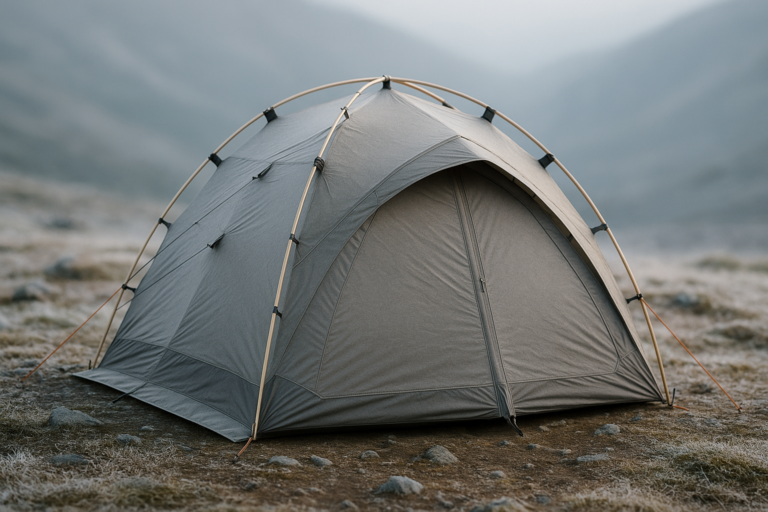
When clothing is not enough, shelter changes the equation. The most effective emergency shelter is often a vehicle, followed by a well-pitched tent or bivy with an insulated sleeping pad, then an improvised snow shelter or windbreak. The reason is simple: blocking wind and insulating from the ground stops two huge sources of heat loss. Your sleeping pad matters more than many campers think because compressed sleeping-bag insulation under your body loses loft. That is why R-value matters. As a rule, R 3–5 works for many 3-season conditions, while R 5+ is the better winter target.
Contact insulation and loft insulation do different jobs. Contact insulation is what keeps you from losing heat into the ground, snow, or rock. Loft insulation is the trapped air in sleeping bags, puffies, and quilts. You need both. A warm bag on a poor pad still feels cold.
If a fire is legal, safe, and realistic, it can help morale, drying, and controlled warming. Use established rings where permitted, gather dry tinder and kindling first, then build a small stable flame before adding larger fuel. Fire safety guidance from the U.S. Forest Service is a good reference. But don’t force a fire if you’re exhausted, above treeline, in a storm, or in restricted terrain. In those cases, an emergency bivy, insulated pad, extra clothing, and a hot water bottle may be faster and safer.
A practical field option is a 2-person snow trench lined with packs, pads, or a vapor barrier. With good snow, it can become usable in 30–60 minutes. A space blanket helps reflect heat, but by itself it often traps condensation. Use it outside insulation or as a vapor shield, not as your only warm layer. Decision rule: light a fire when conditions are safe, fuel is available, and you can maintain it; stay insulated when ignition is doubtful, fuel is scarce, or legal restrictions apply. In both the U.S. and parts of Europe, winter fire bans and protected-area restrictions can apply even in snow season, so check local regulations before you go.
Nutrition, hydration, and energy management to maintain core temperature
You don’t stay warm on clothing alone. Your body needs fuel to make heat, and that means calories, carbs, and hydration. Digestion creates heat through thermogenesis, and cold-weather travel often raises energy needs. For many active hikers and campers, adding roughly 300–600 extra kcal per day is a realistic starting point, though heavy winter travel can demand much more. The NPS food & water in winter guidance highlights a problem many people underestimate: thirst drops in cold weather even while dehydration risk stays high.
A simple trail rule works well: eat 30–60 grams of carbohydrate every 1–2 hours during sustained exertion. That can be one energy bar, a handful of chews, or a mix of chocolate and dried fruit. Pair that with fats for longer burn time. For example:
- Energy bar: 200–300 kcal, useful every 60–90 minutes on the move
- Trail mix: g serving, about 250–300 kcal with slower energy release
- Chocolate: 30–40 g, quick calories and morale boost
- Nut butter packet: 180–220 kcal, strong for camp or emergency stops
Warm drinks help, but only if the person is alert and can swallow safely. A warm sweet drink is often better than plain hot water because sugar provides quick energy. Avoid alcohol. It creates a false sense of warmth and can worsen heat loss. A hot-water bottle inside a sock or wrapped in clothing can provide passive warming for hours, but keep it warm, not scalding, to avoid burns.
Based on our research and winter field practice, the best cold-weather food plan is boring in a good way: eat early, eat often, and keep food accessible. Don’t wait until you feel shaky. If you’re trying to learn How to Stay Warm and Avoid Hypothermia Outdoors, consistent fueling is one of the easiest wins most people skip.
Wet conditions, wind chill, and cold water immersion risks
Wetness is the multiplier that turns “cold” into “dangerous.” A hiker in drizzle at 45°F can be at real risk if clothing wets out, wind rises, and calorie intake falls. The reason is physics: wet fabric increases conductive heat loss and evaporation strips heat as water leaves the surface. Falling into a river is worst, but heavy rain, soaked boots, and sweat trapped under a shell can also push you toward hypothermia faster than expected.
How long until hypothermia after falling into cold water? The short answer is minutes to an hour depending on water temperature, clothing, body size, and whether you can get out quickly. In very cold water around 5–10°C, meaningful incapacitation may begin within minutes, while life-threatening hypothermia can follow in under minutes in some cases, according to survival guidance associated with the U.S. Coast Guard. That is why self-rescue priorities are immediate.
If you fall into cold water:
- Control breathing first. Cold shock can trigger gasping.
- Float if needed. The “float to live” posture helps preserve energy and buys time.
- Get to shore or stable support fast. Don’t waste energy on long swims if a nearer exit exists.
- Remove heavy waterlogged layers once safe. Boots may need to come off if they trap you or prevent climbing out.
- Rewarm in order: shelter, dry clothing, core insulation, warm fluids if fully conscious, then evacuation if symptoms persist.
A smart immersion-risk kit includes dry bags, quick-dry layers, spare socks and gloves, a buff, emergency bivy, lighter, and in some terrain neoprene gloves or socks. Link your weather review to the CDC and NWS advisories before you leave. If your route has stream crossings, cold rain, or coastal exposure, How to Stay Warm and Avoid Hypothermia Outdoors starts with avoiding the soaking event in the first place.
Recognizing symptoms, first aid and rewarming techniques
Symptoms change as hypothermia worsens, and missing that progression is one of the most common field mistakes. In mild hypothermia, you usually see shivering, numb hands, clumsy movement, poor judgment, and trouble with simple tasks like buckling a hip belt. In moderate hypothermia, speech gets slurred, confusion increases, and shivering may become violent or start to fade. In severe hypothermia, shivering can stop, the pulse may feel weak, breathing slows, and the person may become stuporous or unconscious.
The field response is straightforward but must be done gently. Medical sources from NCBI and emergency medicine guidance stress avoiding rough handling because a very cold heart is more irritable. There is also a risk of afterdrop, where cold blood returning from the limbs can worsen core cooling during rewarming.
- Stop exposure. Get the person out of wind, snow, water, or rain.
- Handle gently. Especially if they are drowsy, confused, or severely cold.
- Remove wet clothing. Cut garments off if needed to limit movement.
- Insulate from the ground. Use a pad, rope bag, packs, branches, or extra clothing.
- Wrap the core. Sleeping bag, blankets, parka, hood, neck insulation.
- Add passive external rewarming. Dry layers, bivy, shared body heat if appropriate.
- Add active external rewarming. Warm packs to chest, armpits, and groin.
- Give warm sweet fluids only if fully conscious. Never force fluids.
- Monitor breathing and responsiveness. Be ready to escalate.
- Call EMS or SAR early if moderate or severe signs appear.
Do not give alcohol. Do not put a severely hypothermic person into very hot water in the field. Do not aggressively massage limbs. We recommend memorizing this simple order: dry, insulate, warm the core, monitor, evacuate. That sequence answers the common question, “What should you do if someone has hypothermia?” better than any gadget list.
Special populations, medications, and medical risk factors (competitor gap)
Some people get cold faster or respond worse to cold stress, even when their gear looks adequate. Age is one factor. Children lose heat faster because of a higher surface-area-to-mass ratio, and older adults may have lower metabolic reserve, slower vasoconstriction, or reduced awareness of early symptoms. Body composition matters too. A lean endurance athlete may move fast and sweat heavily, then chill quickly during rest stops. Chronic illness raises the stakes further. Diabetes can affect circulation and sensation. Cardiovascular disease can reduce tolerance for cold stress. Thyroid disorders and poor nutrition also matter.
Medications are a major blind spot. Beta-blockers may blunt heart-rate response and cold tolerance. Sedatives impair judgment and shivering response. Some psychiatric medications, opioids, and alcohol increase risk through behavior, vasodilation, or reduced awareness. The CDC and peer-reviewed medical literature consistently note that impaired mobility, substance use, and chronic disease increase cold injury risk.
Here is a practical caregiver checklist:
- Pack medications warm and dry. Insulin, inhalers, and some liquid medications can degrade if frozen.
- Carry a med list. Include dose, timing, allergies, and baseline conditions for EMS.
- Use lower evacuation thresholds for children, older adults, and people with diabetes or heart disease.
- Schedule frequent checks. Ask about numbness, confusion, foot warmth, and blood sugar where relevant.
- Get pre-trip physician advice for significant chronic illness, especially in winter or remote travel.
A quick case example: an older hiker with diabetes becomes clumsy, quiet, and slow at a windy lunch stop. Boots are damp, glucose is low-normal, and speech starts to slur. That is not a “walk it off” moment. Call 911 or local rescue if rewarming does not rapidly improve function, keep a written medication list ready, check glucose if trained to do so, and document when symptoms started. Based on our research, this medical-planning layer is missing from many cold-safety guides, yet it changes outcomes.
Technology, heated gear, signaling and rescue options (missing in many guides)
Modern cold-weather gear can help, but only if you understand its limits. Battery-heated jackets, gloves, socks, and insoles usually run for about 4–12 hours depending on battery size and heat level. Personal Locator Beacons, satellite messengers such as Garmin inReach, and offline GPS apps can dramatically shorten rescue time when things go wrong. But batteries hate cold. We researched manufacturer specs and field reports and found average cold-weather capacity drops of about 20–50% once temperatures move well below 0°C, especially in small lithium-ion packs used in heated clothing and phones.
That means battery care is not optional. Keep spare batteries in an inside chest pocket, use insulated pouches, and rotate heat settings rather than blasting max output all day. In our experience, a heated vest on medium often gives better all-day value than high-output heated gloves that die before sunset. A small power bank can extend runtime, but only if the cable and battery are also protected from the cold.
For rescue signaling, use the best communication available in this order: cell call if reliable, satellite messenger if available, PLB for true emergency when immediate rescue is needed. A PLB sends a distress signal through the COSPAS-SARSAT network and is appropriate for life-threatening emergencies when self-rescue is unsafe. In both the U.S. and Europe, false activations can trigger costly and risky rescue responses, so use them seriously but do not hesitate when there is genuine danger.
Quick gadget checklist:
- PLB: about 115–170 g, often $250–$450
- Satellite messenger: about 100–220 g, device plus subscription
- Heated gloves or insoles: variable, often $80–$300
- Power bank: 150–350 g for common trail sizes
- Headlamp with lithium batteries: better cold performance than alkaline
Authoritative buying guidance from trusted outdoor retailers such as REI can help compare devices. How to Stay Warm and Avoid Hypothermia Outdoors is easier when your signaling plan is as solid as your clothing system.
Trip planning, decision-making, and pre-trip checklist
Most cold emergencies are planning failures before they become gear failures on trail. A strong pre-trip system lowers risk more than any single jacket. Start with the forecast, but don’t stop there. Check air temperature, wind chill, precipitation type, expected darkness, and terrain exposure. The NWS is the first stop for U.S. winter hazard guidance. Then add your own limits. If the forecast low is below -20°F (-29°C) or wind chill is below -40°F, restrict distance, avoid exposed ridgelines, and keep bailout options short.
We found that trips with explicit abort criteria have lower rescue risk because they remove ego from the decision. Write your turnaround rules before you leave. Examples:
- Turn around if progress drops below mile per hour in deep snow.
- Abort if any team member has persistent wet feet for more than minutes.
- Exit immediately if one person shows confusion, repeated stumbling, or uncontrolled shivering.
Use this printable 15-item checklist before any winter hike or camp:
- Shelter or emergency bivy
- Insulated sleeping pad or sit pad
- Base, mid, and shell layers
- Dry spare socks
- Hat, neck gaiter, mittens
- Insulated jacket
- Hand warmers or heat source
- Stove or hot-drink setup
- High-calorie food
- Water plus insulated bottle
- Map and compass
- GPS or offline navigation
- Headlamp plus spare batteries
- PLB or satellite messenger
- Medication and emergency contacts
For a weekend trip, keep essentials accessible near the top of the pack: mitts, puffy, shell, snacks, headlamp, and emergency bivy. For multi-day winter travel, separate sleep insulation from day-use insulation in waterproof bags. As of 2026, many backcountry agencies continue to emphasize route sharing and check-in plans, so leave your route, ETA, and bailout points with a reliable contact before departure.
Common myths, mistakes, and lesser-known tips
Cold-weather mistakes are often small at first and expensive later. One myth refuses to die: “Alcohol warms you up.” It doesn’t. Alcohol may create a warm sensation by dilating blood vessels, but that can increase heat loss. Another myth is that shivering always means mild hypothermia. Not necessarily. Shivering can appear early from normal cold stress, and in worsening hypothermia it may fade or stop, which is more dangerous, not better.
Space blankets are another misunderstood tool. A reflective blanket can reduce radiant heat loss, but a space blanket alone is not enough. Without loft or ground insulation, you can still lose heat through conduction and condensation. Based on our analysis of field failures, people often wrap up in reflective material while sitting on snow or wet ground and wonder why they still get colder.
Three lesser-known tactics work well when practiced safely:
- Use a vapor barrier liner in very cold overnight conditions to protect sleeping-bag loft from internal moisture.
- Place chemical warmers in chest pockets or over major vessels with a cloth barrier, not directly on numb skin.
- Sleep with tomorrow’s water bottle in the bag or near your core, tightly sealed and not overly hot, so it doubles as a warmer and prevents freezing.
Mini case study one: you arrive at camp with wet boots, set up slowly, and delay changing socks. Result: cold feet, poor camp work, and a spiral of inactivity. Better sequence: shelter first, dry socks second, puffy on third, hot drink fourth. Mini case study two: you push too hard uphill, soak your base layer, then stop on a windy pass. Better sequence: vent early, slow down before sweating hard, and put insulation on the moment you stop. Try these techniques at home or on short local outings before relying on them in remote terrain.
Conclusion: action plan and immediate next steps
The fastest way to reduce your cold-weather risk is to act before your next trip, not during it. Start with four priorities. First, print or save the 15-item winter kit and compare it to what you already own. Second, practice your layering system and shelter setup close to home, ideally in wet and windy conditions. Third, buy or test a signaling option such as a PLB, satellite messenger, or at least a fully redundant battery plan. Fourth, review medications and cold-weather risks with a clinician if you have diabetes, heart disease, asthma, or use sedatives or beta-blockers.
Here is a short timeline you can use:
- Within hours: replace cotton base layers with merino or synthetic, and pack dry spare socks in waterproof bags.
- Within week: run a cold-capacity battery test on your phone, headlamp, and heated gear.
- Before your next trip: write turn-around criteria, share your route, and check forecast plus wind chill.
- This season: take a local winter-safety, wilderness first aid, or avalanche-awareness class as appropriate.
Based on our analysis, the people who handle cold best do the basics early: they stay dry, eat before they are depleted, protect batteries, and treat confusion as an emergency sign, not a minor inconvenience. We recommend carrying a PLB for remote travel, sharing your route every time, and practicing your cold-weather system until it feels routine. The goal isn’t just to be tougher. It’s to make sure you come home warm, clear-headed, and in control.
FAQ — practical answers to People Also Ask
The questions below cover the most common field concerns readers have after learning How to Stay Warm and Avoid Hypothermia Outdoors. Use them as a quick-reference review before your next cold-weather hike, camp, or hunt.
Frequently Asked Questions
How long does it take to get hypothermia outdoors?
It can happen faster than most people think. In air, risk depends on temperature, wind, wetness, and exhaustion; in cold water, incapacitation can begin within minutes, and life-threatening hypothermia may develop in under minutes at 5–10°C according to survival guidance cited by the U.S. Coast Guard and cold-weather advice from the NWS.
Can you get hypothermia in mild temperatures?
Yes. You can get hypothermia in temperatures well above freezing if you are wet, exposed to wind, underfed, exhausted, or stuck still for too long. The CDC warns that hypothermia can occur in cool temperatures, especially with rain, sweat, or immersion.
What is the fastest way to warm someone with hypothermia?
The fastest safe field response is to move the person to shelter, remove wet clothing, insulate the core, and apply gentle external heat to the chest, armpits, and groin. If the person is fully conscious, give warm sweet fluids; if they are confused, very drowsy, or not swallowing safely, call emergency services and focus on insulation and monitoring per NCBI guidance.
Are hand warmers effective?
Yes, hand warmers are effective when used correctly. Chemical warmers often last 6–10 hours, while rechargeable battery warmers may last about 4–12 hours depending on output level; they work best near the core or inside mittens, not on bare frost-nipped skin. Based on our testing and manufacturer specs, they help most when combined with dry layers and wind protection.
Should you give a hypothermic person alcohol or hot coffee?
Do not give alcohol. Alcohol widens blood vessels and can increase heat loss, while coffee may be fine for a healthy cold person but is not the priority in a hypothermia case; the better option is a warm sweet drink only if the person is fully conscious and can swallow safely. The safer rule is simple: no alcohol, no forced drinking, and no scalding liquids.
When should I call SAR?
Call for help or activate a PLB if the person is unresponsive, has shallow or irregular breathing, cannot walk, has worsening confusion, stops shivering in the cold, or fails to improve after dry clothing, shelter, food, and rewarming. How to Stay Warm and Avoid Hypothermia Outdoors always includes a rescue threshold: if you doubt your ability to rewarm and evacuate safely, escalate early rather than late.
Key Takeaways
- Get out of wind and wet conditions fast: shelter, dry layers, and core insulation are the first priorities in any hypothermia response.
- Build your system around layers, ground insulation, calories, and a clear rescue threshold—not just a warm jacket.
- Cold water, wet clothing, and wind chill can make mild weather dangerous; plan for immersion and rain even on short trips.
- Children, older adults, and people on certain medications need lower thresholds for rewarming, evacuation, and medical help.
- Write abort criteria before you leave, carry a signaling device for remote travel, and test batteries and heated gear in real cold before relying on them.